
Yasotarō Mōri
Chapter Four: Facing a Harsh Reality
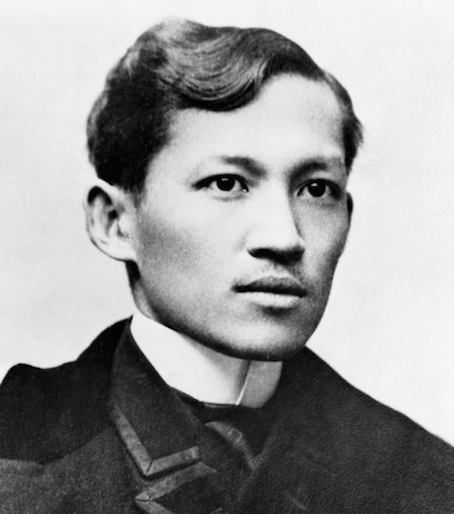
As news of his beloved Leonor’s marriage spread, sympathy for him poured in from every quarter. Dr. Blumentritt, as if the matter concerned him personally, was outraged, and even went so far as to write in a letter: “Why would a woman betrothed to a man like Rizal break her promise and marry another? My own wife tells me she cannot understand Leonor’s state of mind as a woman, and that she despises her for it.” Rizal, thinking that one way to heal his wounded heart was to seek another love, recalled Adelina, the younger sister of Nellie Boustead, his fencing partner in Paris some years before. He therefore called on the Boustead family, who were then summering at their villa in Biarritz. He found Adelina’s character, learning, and appearance all entirely to his liking as a lifelong companion, and Adelina, for her part, held him in warm affection as well.
Watching for his chance, he proposed marriage to Adelina. She accepted, but on one condition: that Rizal convert from Catholicism to Protestantism. He refused. This was not a matter of liking one faith over the other — it stemmed from a view of religion that went far beyond such preferences — but because he would not accept Adelina’s condition, the marriage never came to pass. (It is said that Adelina’s mother also opposed the marriage, on the grounds that Rizal, even if married, had no steady income sufficient to support a household.)
Had the two sides found some way to compromise and the marriage had gone through, what might have come of it? Rizal, with a family of his own, might never have returned to the Philippines. Indeed, he might not have been able to return at all. A man of his rare gifts would no doubt have made a name for himself in some field or other regardless — but the Rizal who devoted his very life to saving his countrymen, and who in later years would be revered by the islanders almost as a god, might never have existed. For some years he had carried a premonition that he would “die at thirty,” and he spoke of it from time to time. He came, at last, to recognize that it was his fate to go resolutely to the Philippines for the sake of his countrymen and fight there with his own body.
He wanted to return to the Philippines at once. But thinking of his parents and the rest of his family, he could not, and he agonized deeply over it. News from home told of the friars’ tyranny toward the people of Calamba growing ever more severe, and reported again and again that the residents were gripped by an indescribable terror. Rizal understood that all of this was retaliation aimed squarely at him — that his novel had provoked the friars’ resentment to precisely this degree.
There was no benefit in remaining in Europe, yet he could not return to the Philippines immediately either, so he resolved to settle for the time being in Hong Kong and, in order to make an independent living, to first open a practice as an eye doctor. But he was so destitute that he lacked even the fare for the passage to Hong Kong, and so he implored Basa — a Spaniard resident in Hong Kong and his closest friend — to guarantee payment of his passage. Basa readily agreed, but Rizal was careful to insist that the guarantee include the clause “payable only if the person in question actually boards the ship.”

コメント