
By Yasotarō Mōri
▲ Tasting the Danger of Persecution
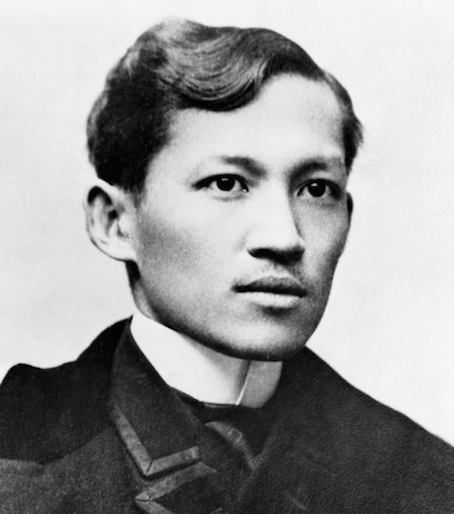
Rumors began to spread that Rizal was a dangerous element. There may well have been informants who reported him to the authorities. It was said that his name had been placed on the government’s black list. The atmosphere at the University of Santo Tomas grew hostile toward him. Once, when he had returned home to visit his family, he came back one night and, just as he was about to step into the house, he passed a man in the dark — a member of the Civil Guard. He had witnessed, many times before, Filipinos being beaten by guards along the road simply for being slow to remove their hats, and even as a boy he had burned with indignation at such injustice. He, too, had every intention of removing his hat, but on this occasion he had already stepped inside the doorway, so he simply continued on into the house. At that, the guard suddenly drew his sword and struck Rizal a single blow across the back. Fortunately he was not seriously wounded, but the next morning he went to the town authorities to protest the injustice and demand an explanation. The authorities’ curt reply was that the guard would have been within his rights to kill him outright, and that he should be grateful merely to have survived.
With each passing day, the circumstances surrounding him grew more unfavorable. Given what had happened to his mother, he even sensed the danger that some misfortune, unforeseeable in nature, might befall him at any time. The one most troubled by this state of affairs was his uncle — also the father of his sweetheart — Rivera. His uncle now urged him that it would be wise to slip out of the province. Rizal himself had long wished to study abroad, and so he agreed at once. Since obtaining a passport would have been difficult under his own name, he had his cousin arrange the paperwork under the false name José Mercado. His elder brother Basio gave him 700 pesos as a farewell gift for expenses, and his eldest sister Saturnina parted with a diamond ring and sent it to him, to be used should he ever find himself in financial need. Only his uncle, his sweetheart, his brother, and his cousin knew of his plan to leave the country. Not even his parents were told. One day, when a festival was being held in his hometown of Calamba, he took the opportunity to return home, and there he quietly said his farewells to his parents, siblings, and others. The sorrow of his parting from Leonor can only be imagined. He was never again to have the chance to see this sweetheart. It is said that, five years later, the noble young woman named Maria Clara who appears in the novel he wrote, Noli Me Tángere (“The Social Cancer”), was modeled on her.
And so, as it happened, on the very day of Japan’s Boys’ Festival (Tango no Sekku), he departed from Manila carrying a solemn resolve (in 1882, at the age of twenty-one). The thorny path had brought him this far. But what awaited him next was an age of trial, both material and spiritual.
X X X
Among the Filipino students with whom Rizal became especially close during his time at the University of Santo Tomas was a young man named Aglipay. He had been studying to become a lawyer, but Rizal urged him to devote himself instead to religion. Aglipay took this advice to heart and became a clergyman. In later years, it was this same man — Bishop Aglipay — who raised the banner of an independent church, broke away from the old faith, fought through a long series of persecutions, and endured to the end. The great majority of Filipinos supported him. He understood Japan and disliked the United States, and so he took a dim view of Quezon’s America-dependent policies. For this reason, he ran boldly in the first presidential election of the Philippine Commonwealth (against General Aguinaldo), fully prepared to lose. It is said that he put himself forward as a candidate expressly to show the United States that Filipinos did not, to a man, willingly submit to Quezon’s line — since Quezon had hoped to be elected president by island-wide unanimity. When the author visited Manila for an inspection tour in April of Showa 11 (1936), he happened one evening to meet and speak with Bishop Aglipay, who, despite his considerable age, was full of vigor. It is a matter of regret that he passed away two or three years ago. I only wish I could have shown him the Philippines’ brave advance onto the new path of Greater East Asia, and let him rejoice in it.
コメント