
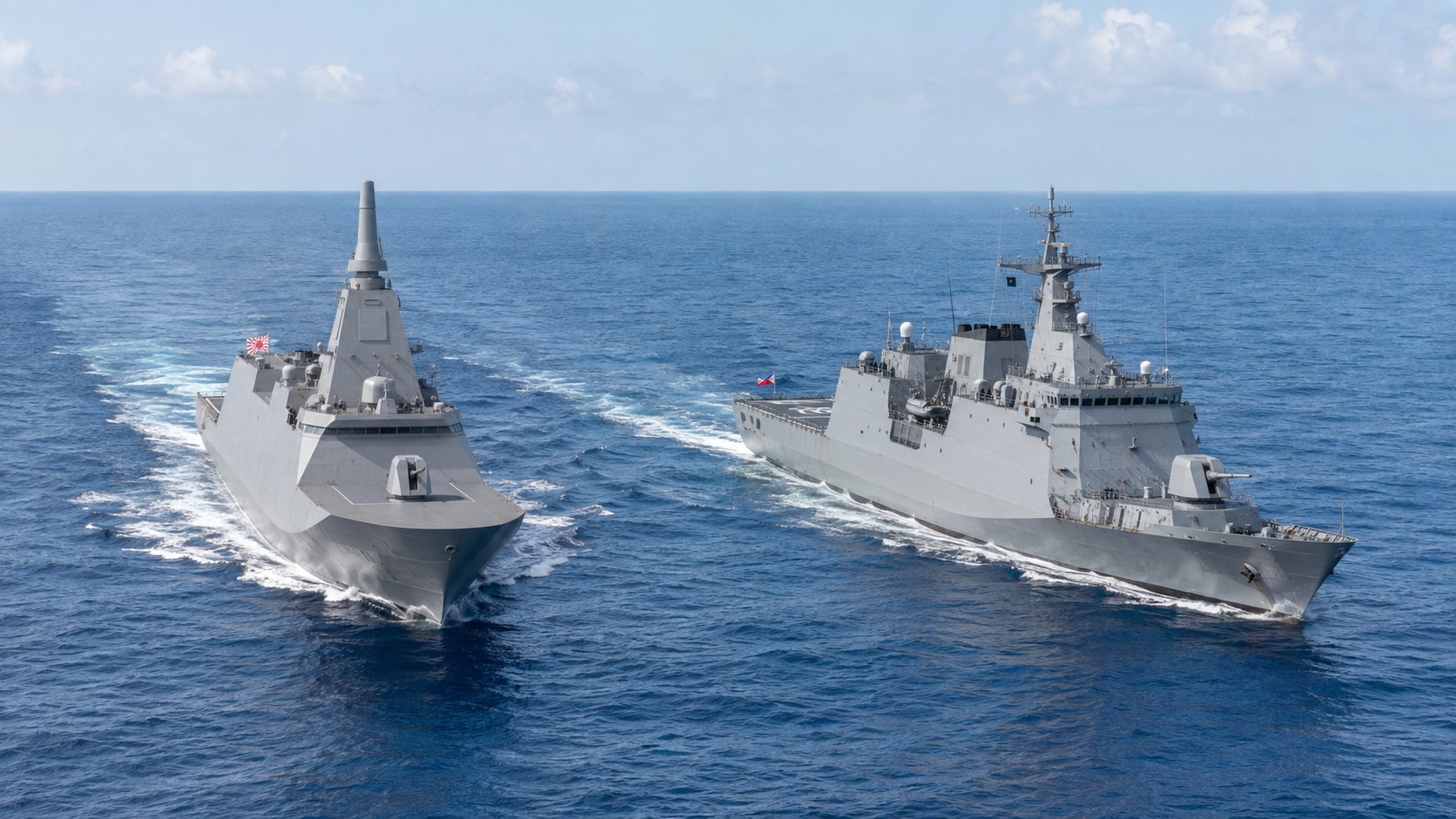
On August 22, 2026, the Japan-Philippines Acquisition and Cross-Servicing Agreement (ACSA) entered into force. The agreement was signed in Manila on January 15, and its entry into force was confirmed following an exchange of diplomatic notes on July 23.
The Philippines is the first ASEAN member state with which Japan has concluded an ACSA, making this a landmark agreement in the sense that Japan’s security cooperation has now expanded in earnest from the United States and European countries to Southeast Asia.
ACSA is not a mutual defense treaty. Rather, it is a “logistics agreement” that sets out the settlement procedures for the reciprocal provision of supplies and services needed when the Japan Self-Defense Forces and the Philippine military conduct joint exercises, disaster relief operations, UN peacekeeping operations, and the like.
Covered items include food, water, fuel, lodging, transportation, communications, medical care, use of facilities, storage, repair and maintenance, and airport and port services. Ammunition may also be covered, but the provision of “weapons themselves” — such as vessels, aircraft, and missile launchers — is not included. The entry into force of ACSA alone, therefore, does not make it possible for Japan to transfer destroyers or combat equipment to the Philippines.
Even so, its practical significance is considerable. Under the Japan-Philippines Reciprocal Access Agreement (RAA), which took effect in 2025, it became easier for the Self-Defense Forces and the Philippine military to enter each other’s countries, bring in weapons, and conduct joint exercises. ACSA puts in place the mechanism to supply those forces with fuel, food, transportation, maintenance, and more.
In other words, if the RAA is the agreement that “moves the forces,” ACSA is the agreement that “sustains the forces once they have moved.” With both agreements now in place, Japan and the Philippines can conduct joint exercises — as well as multilateral exercises such as Japan-US-Philippines or Japan-US-Australia-Philippines drills — over longer periods and in a more operationally realistic manner. In the event of typhoons, earthquakes, or tsunamis, transport aircraft, vessels, fuel, medical support, and port facilities can also be shared to speed up relief operations.


コメント