
Timeline
| 2019 | Groundbreaking ceremony for the Metro Manila Subway (February 27). Construction begins on the Philippines’ first subway, backed by Japanese ODA (yen loans) |
| 2020 | The global COVID-19 pandemic severely restricts travel between Japan and the Philippines (the Philippines suspends visa-free entry on March 22) |
| 2022 | U.S. Vice President Kamala Harris boards the Japan-donated large patrol vessel BRP Teresa Magbanua in Palawan (November 22) |
| 2022 | Two JASDF F-15 fighters land at Clark Air Base — the first visit by Japanese fighter aircraft to the Philippines since the war (December 6) |
| 2023– | Under the Defense Equipment and Technology Transfer Agreement, Japan begins providing Japanese-made air surveillance and control radars to the Philippines |
| 2024 | Japan and the Philippines sign the Reciprocal Access Agreement (RAA), an agreement forming the practical foundation for defense cooperation by making it easier for the Self-Defense Forces and the Philippine military to visit and train with one another (July 8) |
| 2025 | Japan’s National Diet approves the RAA, and it enters into force (June). The 57th “Okinawa Davao Memorial and Exchange Trip” takes place, accompanied by Vice Governor Hajime Oshiro |
| 2026 | Japan provides an additional ¥220 billion yen loan for the Metro Manila Subway, and construction moves into full swing. 70th anniversary of the normalization of Japan-Philippines diplomatic relations (July 23) |
Contemporary Defense Cooperation: The Provision of Radars and Patrol Vessels
In recent years, against the backdrop of rising tensions in the South China Sea, Japan and the Philippines have rapidly deepened cooperation in the security field. In maritime safety, since 2013 Japan has, through its ODA (Official Development Assistance/yen loans), progressively provided the Philippine Coast Guard (PCG) with large Multi-Role Response Vessels (MRRVs).
In November 2023, the provision of five additional large patrol vessels was announced; in May 2024, an exchange of notes was signed for the “Project for Enhancement of Maritime Safety Capability of the Philippine Coast Guard”; and in May 2025, the procurement of five more vessels was announced, with sequential delivery scheduled to begin in 2027 and be completed by 2030.
The international profile of these Japan-provided patrol vessels was underscored on November 22, 2022, when U.S. Vice President Kamala Harris visited Palawan. Vice President Harris boarded the roughly 97-meter-long large patrol vessel BRP Teresa Magbanua, a newly built ship provided by the Japanese government, expressing support for the Philippines amid rising tensions in the South China Sea. This was the highest-level visit to Palawan ever made by a sitting U.S. Vice President, and it was a symbolic event demonstrating how Japan’s support for the Philippines also resonated in tandem with the U.S.-Philippines alliance.
In the area of defense equipment, under Japan’s Official Security Assistance (OSA) framework, launched in 2023, the Philippines was designated one of the top-priority recipient countries.
A milestone in personnel exchange was also reached on December 6, 2022, when two JASDF F-15 fighters landed at Clark Air Base for a unit-to-unit exchange with the Philippine Air Force. This was the first time since the war that Japanese fighter aircraft had landed at Clark — a base once used as a launching point by the Japanese military and the site of fierce fighting during the Pacific War. Until then, overseas visits by JASDF fighters had been limited to ally the United States and quasi-ally Australia; the Philippines became the third country to receive such a visit.
The FPS-3ME air surveillance and control radar was provided in October 2023, and the mobile TPS-P14ME air surveillance and control radar in April 2024, with the Philippines planned to receive a total of four such radars. These radars give the Philippines high-resolution surveillance capability covering aircraft, drones, and vessels, and experts have credited them with contributing to the construction of an air-surveillance network spanning roughly 3,000 nautical miles. Furthermore, on July 8, 2024, the Reciprocal Access Agreement (RAA), which makes it easier for the Self-Defense Forces and the Philippine military to visit one another, was signed, and it was approved by Japan’s National Diet and entered into force in June 2025.
The Philippines’ First Subway: Japanese Technical Cooperation
Beyond the security field, Japan has also made major contributions to the Philippines’ development through economic infrastructure. A prime example is the Metro Manila Subway, the Philippines’ first-ever subway system. With a total project cost on the order of ¥1 trillion (roughly $7 billion) and a length of about 36 kilometers, this massive project is supported by Japanese ODA (Official Development Assistance/yen loans). Financing has proceeded in stages, beginning with the first yen loan (¥104.5 billion) in March 2018, followed by the second (¥253.3 billion) in February 2022, and a further yen loan (¥220 billion) signed in March 2026. Construction involves a joint venture of Shimizu Corporation, Fujita Corporation, Takenaka Corporation, and the Philippine firm EEI.
On February 27, 2019, a groundbreaking ceremony was held in Quezon City, attended by then-President Duterte, and construction began in earnest. For Metro Manila, which suffers from chronic traffic congestion, the opening of the subway is a long-cherished project expected to transform urban functionality; partial opening of some sections is expected in 2029, with full-line completion to follow. That a subway, built with Japanese technology and financing, now runs through Manila — a city that was once the tragic stage of the Battle of Manila — can be seen as symbolic of how far the relationship between the two countries has come.
Conclusion
The history of Japan-Philippines relations began with the tragic conflict of Hideyoshi’s demand for submission and the martyrdom of the Twenty-Six Saints, and etched a deep religious and human bond through Takayama Ukon and Lorenzo Ruiz — two martyrs who each lost their lives in the other’s land. The gentle romance between Dr. José Rizal and O-Sei-san symbolizes an exchange of hearts between Japan and the Philippines on a plane apart from politics. The Japanese immigrants who traveled to the Philippines often astonished the Filipino people with their outstanding fighting ability, leadership, technical skill, and perseverance. The laborers who accomplished the arduous construction of Kennon Road, the pioneers who built Davao into a major industrial center, and the descendants of the wokou who helped keep order in Manila — the accumulated efforts of these unnamed forebears were undeniably real.
The Pacific War, however, was a brutal era that threatened to overturn all of this in a single night. Beginning with the bombing of Clark Air Base on the same day as Pearl Harbor, the simultaneous existence of Filipinos who took starkly opposing positions — the Makapili, who collaborated with Japan, and the Hukbalahap, who fought fiercely against it — along with the horrific civilian casualties of the Battle of Manila, tell the story of how Japan divided Philippine society itself and inflicted immense sacrifice upon it. Anti-Japanese sentiment worsened as never before. And yet the fact that Manuel Roxas was saved from execution at the last moment by the conscience of a single Japanese military officer, and that figures who had cooperated with Japan — such as President Laurel and Benigno Aquino Sr. — were later held at Sugamo Prison in Tokyo, shows just how intricately this war twisted the fates of individuals.
After the war, healing this deep wound required steady, patient efforts to rebuild trust from both sides. On the Philippine side, President Quirino made the magnanimous decision to grant clemency to the 105 Class B/C war criminals and allow their repatriation to Japan. On the Japanese side, it was the Imperial Family that first took the lead in promoting reconciliation. In 1962, the Crown Prince and Princess (now the Emperor Emeritus and Empress Emerita) visited the Philippines and stood on the very “Balcony of Independence” at the Aguinaldo Mansion where Philippine independence had been declared in 1898, waving to the crowds below. Photographs capturing this symbolic scene made the front pages of newspapers across the Philippines, and the moment continues to be recounted to this day.
The government, too, advanced infrastructure development through postwar reparations, contributing to the Philippines’ economic growth. In the private sector, numerous Japanese companies, led by the automotive industry, set up operations and contributed to local job creation. And at the grassroots level of human exchange, while phenomena such as “Japayuki-san” and prostitution tours at times worsened anti-Japanese sentiment once again, this was more than offset by the deep penetration into Filipino daily life of subculture flowing in from Japan — songs, anime — along with the boom in Japanese food and the tourism boom.
The Imperial Family, the government, private companies, and culture — these were never coordinated under a single plan. Yet, as a result, these four forces came together, however unintentionally, and steadily pushed Filipino sentiment toward Japan from hostility to genuine friendship.
Now, 70 years later, Japan and the Philippines have become partners so close — through the provision of patrol vessels and radars, the conclusion of the Reciprocal Access Agreement, and even cooperation on a national infrastructure project like the Metro Manila Subway — that it would have been unimaginable given their history of past conflict. This 70th anniversary can be seen as the culmination of a rare relationship of trust, built by overcoming a history of conflict, sacrifice, and division.
Having traced the history of Japan-Philippines relations in this way, my own sense is that, apart from the era of Hideyoshi and the years of the Pacific War, relations between the two countries have generally been good. This is not mere sentimentality — it is also borne out by the statistics. In the 2025 “Survey on Views of Japan,” Filipino favorability toward Japan came in at 100% for the second consecutive year, tied with Indonesia, and the Ministry of Foreign Affairs’ opinion surveys on ASEAN countries have also consistently ranked the Philippines among the countries with the highest levels of trust in Japan.
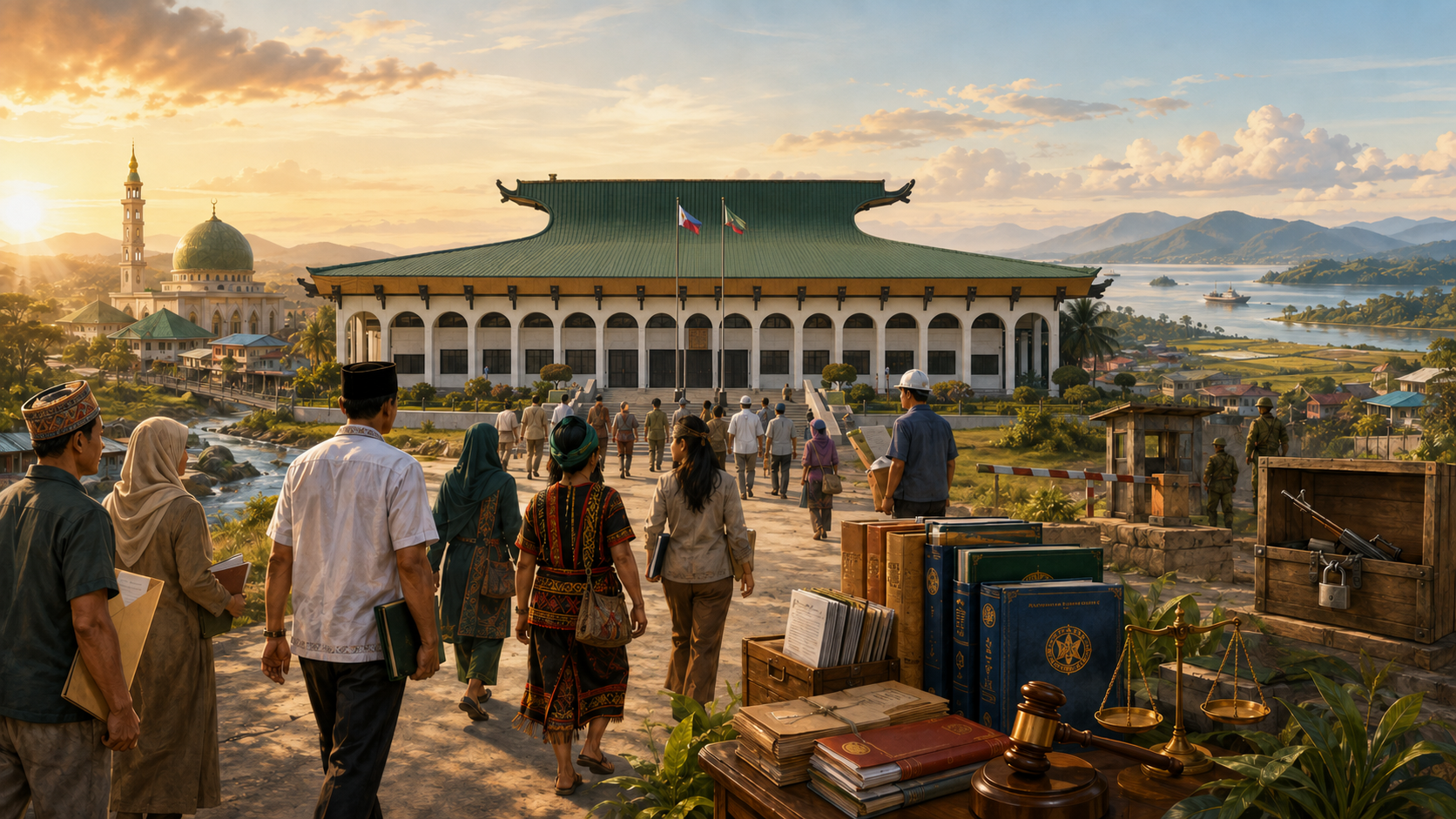
In recent years, in the process of establishing the Bangsamoro Autonomous Region on Mindanao, JICA has, through capacity-building projects, supported the long-term development of administrative personnel, with Japanese experts deeply involved in laying the foundations of the new government. There could be nothing more gratifying than to see a country we once fought a war against place its trust in us at such a fundamental moment — the establishment of a self-governing regional government. This trust is a crystallization of the sincerity accumulated by those who came before us, and I believe it is an inheritance that each of us who follows must carry forward to the next generation. Since 2017, the Japanese ambassadors who have served in the Philippines — former Ambassador Koji Haneda, former Ambassador Kazuhiko Koshikawa, and current Ambassador Kazuya Endo — have all said that “Japan-Philippines relations are entering an unprecedented golden age.” Having watched over the Philippines for 40 years myself, I completely agree, and I sincerely hope that this state of affairs continues for many years to come.
(Asahiko Yara, Chairman, Japanese Business Club, Philippines [JBCP], a non-profit organization)
コメント