
Yasotarō Mōri
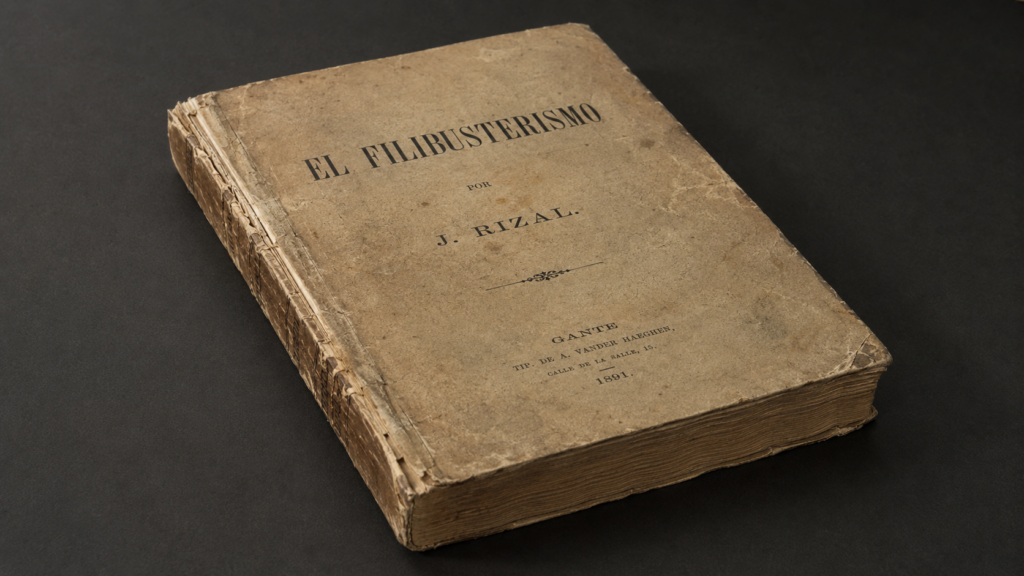
▲ A Stinging Blow Against the Philippines’ Misgovernment
According to an account published at the time by a respected critic, the state of the Philippines under Spanish rule, as seen through this novel, was as follows:
- An intelligent Filipino cannot live in the Philippines, because he and the friars are as incompatible as fire and ice.
- The Philippines exists not for the Filipino people but for Spain — it is a Philippines for the friars.
- Abuse of authority by the constabulary is extreme; they create more criminals than they catch.
- The Spaniards stationed in the Philippines show no trace of thoughtful bearing whatsoever, and most have degenerated into scoundrels.
- Christianity (Catholicism) is being used as a tool for the oppression of the Filipino people.
- Native Filipinos are being kept in a state of permanent ignorance by design.
- A Filipina cannot marry a Spaniard. Yet her own parents, as a means of self-protection to escape the friars’ tyranny, offer her up as a human sacrifice.
- Under misgovernment such as this, the Filipino people cannot remain under Spanish rule for long. The Filipino people demand the rights that are rightfully theirs.
- The chief cause of unrest is that the Filipino people are driven to desperation. When a person is stripped of everything he possesses, he turns and bites the hand that fed him.
Those who had been watching for a chance to destroy Rizal were hardly likely to let this pass. Someone reported to the Governor-General that this novel was suspicious. The Governor-General thereupon ordered the University of Santo Tomas (Dominican) to form a committee to examine its contents. The committee scrutinized the work in minute detail. One senses that they were driven less by a wish to render a fair judgment than by a determination to hunt out every possible fault, but in any case, after a rigorous investigation they produced a report stating: “The content is extremely improper; it disparages every institution the government has established in the Philippines — military, civil, religious, cultural, and social — and if the circulation of this book is permitted, the Filipino people will lose their reverence and affection for Spain, inviting a most deplorable state of affairs.”
The Governor-General thereupon immediately issued a proclamation strictly banning the circulation of this book, decreeing that anyone who discovered another in possession of it should report the fact to the authorities, and that the possessions of anyone found with the book would be confiscated and awarded to the informer as a reward. This proclamation had the opposite of its intended effect, stirring up general curiosity about the book and causing it to be read all the more widely in every quarter. About five months later, the Governor-General invited Rizal to the palace for a private talk, and told him of the committee’s report. Rizal explained that while the book’s content touched on the outrageous conduct of the friars, it did not in any way disparage the Spanish government, and he asked that the Governor-General read it himself before forming any judgment on the book. The Governor-General agreed. Having read it, he is said to have been secretly pleased that Rizal had so boldly exposed the friars’ misconduct. When the Governor-General met with Rizal again, his treatment of him was notably courteous, and he assigned him a bodyguard to ensure no danger would come to him (the captain of this guard, a Spaniard named Andrade, became one of Rizal’s most sincere admirers).
▲ The Governor-General’s Powerlessness
Having read the book through, the Governor-General resolved to investigate the actual state of one grievance among the islanders — the inequitable levying of taxes — and ordered that a detailed report be prepared and submitted on the traditional tax system in Rizal’s home town of Calamba. Rizal welcomed this as a first step toward reforming misgovernment. He urged the townspeople to state the facts plainly and without fear, and laid out clearly and logically why reform of the tax-assessment method was needed. All the leading figures of the town signed this report. The Governor-General, however, took no action whatsoever. Worse still, the friars named in the report began inflicting various forms of persecution on those who had co-signed it. Alarmed, the townspeople, seeking to protect themselves, submitted a second petition to the Governor-General. This too brought no response, while the friars’ persecution only intensified.
Rizal’s disappointment was beyond description. His hope of bringing about a better Philippines through the education of the Filipino people in general and through gradual, step-by-step reform, suffered a heavy blow. It is said that his trust in the Spanish government began to erode from this point on. Seeing the hardship that had befallen the town of Calamba as a result of this petition, Rizal felt the sorrow of disillusionment, and is even said to have made a ninety-degree turn in his previous outlook. When he wrote Noli Me Tángere, he had believed that the Filipino people could accomplish a great deal, so long as they had the resolve to stand firm on the strength of truth alone. The Calamba affair revealed the error in what he had believed.
The exposure of the misgovernment at Calamba spread further than expected. As was its customary practice, the Spanish government made a habit of covering up unpleasant matters rather than reforming what was wrong — out of fear of a Filipino uprising, and even more out of fear of provoking the friars’ fury. One day the Governor-General advised Rizal that it would be wise for him to leave the Philippines at this juncture. The advice was, in effect, an order. He had no choice but to accept this “advice.” Six months after returning home from Europe, he was to set out once more on a wandering journey.
This beloved town of Calamba, so full of cherished memories — would the day ever come when I return to see it again, alive? Rizal quietly asked himself. He would never set foot there again.
コメント