
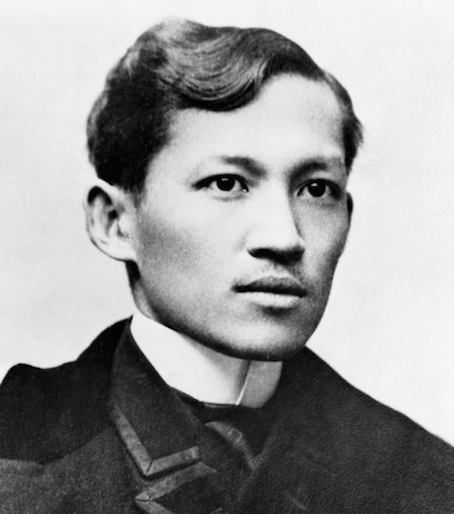
Yasotarō Mōri
Once Again a Prisoner
Barely six weeks after leaving his place of exile in Dapitan and regaining his freedom, Rizal found himself a prisoner once again. This time, moreover, he faced the grave charge of inciting revolution, and was placed under an intimidating armed guard. From there he was sent to Barcelona and confined in the military prison there; a week later he set out for the return voyage to Manila aboard the steamer Colón. (The commandant of this prison turned out, by an odd coincidence, to be none other than Governor-General Despujol, the very man who had four years earlier lured Rizal from Hong Kong back to Manila under false pretenses. He had the effrontery to visit Rizal in his cell, and it is said that Rizal received him with unruffled courtesy, without a single word of sarcasm or reproach.)
News of Rizal’s capture quickly spread across all of Europe. Voices condemning the illegality of the Spanish authorities’ actions arose on every side. His friends in London, in particular, threw themselves frantically into efforts to save him: raising ample funds, they retained a capable English lawyer in Singapore, intending, on the grounds that “Rizal has been unlawfully imprisoned without any hearing and without being informed of any charge,” to have him removed from the ship under the writ of habeas corpus when it called at that port, and placed under the protection of British law. Under ordinary circumstances this plan should have succeeded smoothly, but because Spanish troops were aboard the Colón carrying Rizal, and the royal ensign flew from its masthead, the vessel was deemed, in this instance, to be an extension of Spanish territory itself — and so, in the end, the plan failed.
The ship thus reached Manila on November 3, and Rizal was immediately confined in Fort Santiago. Around the same time, his brother Paciano was subjected to torture and pressed to testify that Rizal was involved in the revolutionary movement. A pen was forced into his right hand while his left hand was tormented with instruments of torture, and he was ordered to sign a written statement — but he stubbornly refused. He fainted once, and fainted a second time, to the point where his mind grew somewhat disordered, yet he held out to the end and refused to sign. This unyielding, resolute temperament — never giving an inch once convinced of what was right — was a striking trait shared by the whole Rizal family.
Rizal was confined in a room on the ground floor, but had to provide his own desk, chair, bed, and other personal furnishings. All three of his daily meals were brought in by his family, delivered by one of his former Dapitan pupils. He boiled water and warmed his food using an alcohol lamp that had been given to him by an acquaintance during his time in Paris.
Opposed as he was to the revolutionary movement, he drafted a manifesto in prison and sent it out to the Filipino people (December 15). In it, he condemned the present uprising in the strongest terms and stressed that the Philippines’ revival could come only through the power of education. This was not so much to prove his own innocence of the uprising, but because — his own long-held principles having failed to take hold, and this uprising being, in his eyes, nothing but reckless and ill-considered action — he grieved from the bottom of his heart that the authorities’ persecution of the Filipino people would only intensify as a result, and that all Filipinos would suffer for the shortsightedness of a few. This manifesto, however, was never made public, and remained held in the hands of the prosecutor.

コメント