
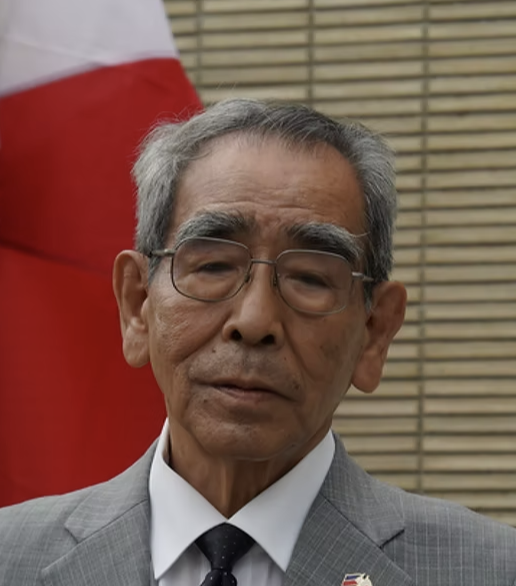
Pinoy-Hapon United Foundation (PHUF), a non-profit organization, Honorary Chairman Takeshi Asanuma
General Tomoyuki Yamashita of the Imperial Japanese Army, known as the “Tiger of Malaya,” landed in the north of what was then British “Malaya” as commander of the “25th Army” when the “Greater East Asia War” broke out in December 1941 (Showa 16). Advancing south down the peninsula with overwhelming momentum, he forced the surrender of the British forces on “Singapore Island” — then Britain’s proudest “strongest fortress in the East” — on February 15. A famous painting of the surrender negotiations survives. It is said that General Yamashita pressed his opposing commander, Lieutenant General Percival, demanding simply “Yes or no?”, though in fact General Yamashita reportedly spoke to him courteously.
On December 10, naval air units sank the British battleship “Prince of Wales” and the battlecruiser “Repulse” off Malaya — a historic feat, aircraft sinking battleships.
On June 5, 1942, the Combined Fleet set out to capture Midway but clashed with a “US carrier task force” in the so-called “Battle of Midway,” in which the Japanese Navy lost four of its main carriers and was defeated. From this point the tide turned in America’s favor, and in April 1943 Admiral Isoroku Yamamoto, Commander-in-Chief of the Combined Fleet, was killed in action. The islands of the Pacific fell one after another to American forces, which then advanced toward the “capture of Luzon (present-day Philippines).”
In September 1944, General Yamashita was dispatched to Manila as “commander of the 14th Area Army” to take overall command of the “defense of the Philippines.” By then, however, Japanese forces in the southern Philippines had already collapsed, the Combined Fleet was nearly annihilated, and Japan was losing air superiority as well. Some 700,000 to 800,000 civilians were living in the great city of Manila, and General Yamashita is said to have considered declaring Manila an “open city,” but the Navy objected, and there was in any case no way to quickly remove the weapons, ammunition, and military supplies stored in the city. He therefore left the defense of Manila to the “Naval Landing Force” and deployed a force of about 100,000 men, including tank regiments and artillery units, to the mountainous Baguio region some 200 kilometers north of Manila.
General Yamashita also assigned the remaining forces of the Shinbu Group (perhaps 30,000 to 50,000 men) under Lieutenant General Shizuo Yokoyama to take up positions in the mountains southeast of Manila, around “Montalban,” though some accounts suggest part of this force was actually Naval Landing Force troops. After the fall of Manila, this “Yokoyama Force” came under relentless, concentrated American attack, running out of food and ammunition, and by the time of the defeat it had reportedly been almost entirely wiped out.
Positioned in the north, General Yamashita met the American forces (perhaps more than 200,000) that had landed at Lingayen, but the gap in equipment was simply too great. The tank regiments sortied as well, but the disparity in strength against the enemy’s tanks was severe, and they were destroyed one after another; even so, it is said the men fought on bravely, and when their tanks’ tracks were destroyed, they would remove the machine guns and keep firing from the roadside. The tank regiments were wiped out by May, the artillery positions were destroyed one after another, and the surviving soldiers went into hiding in the mountains.
The war ended on August 15. General Yamashita subsequently came down from the mountains and surrendered to American forces. General MacArthur went so far as to summon the British General Percival (the commander who had surrendered at Singapore) to Manila and had him face the detained General Yamashita; Percival is said to have remarked, “Only a defeated commander can understand the feelings of a defeated commander.”
General Yamashita was tried by an American “military tribunal” on charges of “war crimes,” and on December 7, 1945, was found “guilty” and sentenced to “death”: “Responsibility for all the atrocities committed by his subordinates lies entirely with the commander. Therefore, death.” It was a bewildering, seemingly vindictive verdict, yet General Yamashita made no forceful protest and calmly accepted it. The sentence was carried out on February 23, 1946.
Was General Tomoyuki Yamashita a “great villain” deserving of execution, or truly a man of honor, a “warrior”? Standing before the “thirteen steps,” he is said to have bowed reverently toward the east and climbed the steps in silence.
During the war, a total of 650,000 Japanese army and navy personnel were sent to this land one after another; after the defeat, only 130,000 were able to be repatriated home.

コメント