
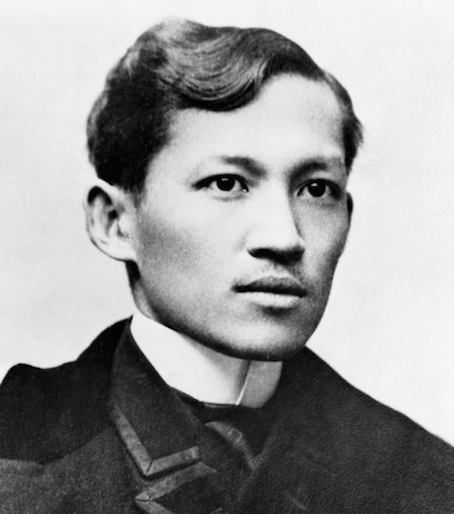
Yasotarō Mōri
Did Rizal Recant?
Whenever Rizal is discussed, one question inevitably arises: did he recant his views just before his death? This is a matter on which opinions clash sharply, and one that will, in all likelihood, never be settled — for it is the friar faction that insists he recanted, and no one has ever generally seen the original of the so-called retraction document that Rizal is said to have signed.
Dr. Austin Craig, who devoted over thirty years to the study of Rizal and is regarded as the foremost authority on him, has openly stated his belief that Rizal did recant. His reasoning is that Rizal never bore hostility toward Catholicism itself, but only bitterly denounced the harsh and abusive conduct of the friars; that the style of the document published as the retraction bears Rizal’s own characteristic hallmarks; and that its actual content is not really the sort of thing that warrants being singled out as a “recantation” at all — something Rizal, even during his exile in Dapitan, could have signed without any pang of conscience.
Moreover, as death drew near, when Rizal expressed his wish to be formally married to Josephine according to religious rites, the priests replied that this could only be granted on condition that he settle his past political and religious attitudes — and if the retraction document was the result of that condition, it would be no surprise that Rizal signed it; and since he was indeed formally married to Josephine, it stands to reason, Craig argues, that he did in fact recant.
Against this, Frank Laubach argues in his book Rizal: Man and Martyr that Rizal did not recant. According to the account of Father Balaguer, who claims to have pressed him to sign the retraction right up until a few hours before his execution, he warned Rizal that if he died as he was, he would surely be damned to hell — and Rizal, weeping like a child, is said to have finally drafted and signed the retraction himself. But it defies common sense that a man of Rizal’s caliber would dissolve into tears over talk of hell, and it seems most unlikely that Rizal — who had already won a religious debate against Father Pastells back in Dapitan — would surrender to such a childish scare tactic.
Some experts also hold that anyone, in the hours before execution, becomes agitated and suffers some degree of mental disturbance — so even granting, for argument’s sake, that he did sign, it would not mean that Rizal “changed his mind,” but rather that he had, for a moment, “lost his mind.”
Even Father Balaguer himself retreated into calling this conversion a “miracle.” It is also suspicious that such an important document should have gone missing at all. It is hard to believe that a document said to have been kept in the archbishop’s own strongbox of important papers could simply be lost — and it is even more suspicious that it should suddenly turn up again thirty-nine years later. A certain document examiner, having studied a photograph of it, once published his finding that this rediscovered retraction bore no resemblance whatsoever to Rizal’s actual handwriting, and was a forgery.
In the end, this retraction document contains nothing but what is convenient for the friar faction, while Rizal’s side was given no opportunity or material with which to respond to it. It is simply inconceivable that Rizal — a man of iron will, the very embodiment of a courage that feared nothing once he had taken his stand — could have recanted.
It is also said that Rizal was married to Josephine in a religious ceremony one hour before his execution, but there exists no church record to substantiate this. As evidence, some point to the inscription he wrote in his own hand in a copy of Thomas à Kempis’s The Imitation of Christ that he gave her as a keepsake — “To my dear unhappy wife, December 30, 1896” — but since Rizal had already lived openly with her as husband and wife back in Dapitan, there is nothing at all strange about his calling her his wife, whether or not any formal ceremony ever took place.
To sum up, the recantation controversy is, as described above, a debate that never truly reaches an end no matter how far it is pursued. Yet it should be said that ordinary Filipinos, for their part, remain convinced that Rizal did not recant.

コメント