
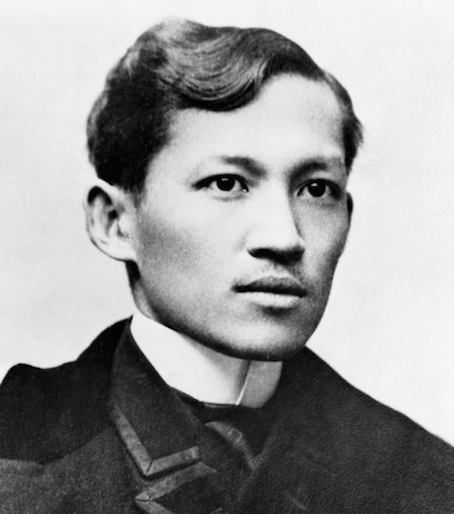
Yasotarō Mōri
Chapter Six: Toward a Tragic End
The world moves in ironic ways. While Rizal was still at anchor in Manila — exactly fifteen days before his own departure (August 20) — the “conspiracy” of the Katipunan (rendered here as the League of Filipino Youth) was exposed, sending shock waves through the small Spanish community. There is no reliable record of exactly how this inside information leaked out. It is generally held that it was carelessly let slip, by the wife or sister of a member named Patiño, to a certain friar, and that the story was considerably exaggerated and then used by the authorities to justify a crackdown on the League.
About four years had passed since the League’s founding, its membership had grown, and its influence had steadily expanded — though some members grumbled that they were only ever asked to pay dues, and no small number were disappointed once it became clear that Rizal had absolutely no connection to it. The League’s leaders were well aware of the danger of rashly taking action with poorly armed, untrained members, yet they also recognized the need to do something to strengthen the League’s unity. So on August 20 they met at Balintawak, near Manila, and resolved to finally raise the banner of revolt on the 30th of that month. It was this plan that leaked out beforehand.
This “conspiracy” was said to involve the mass slaughter of Spaniards. League members who were captured were tortured into giving up the names of other members, and arrests spread in a chain reaction — some of those swept up were apparently not even League members — until the total reached 4,377. In the sudden crisis, Bonifacio himself managed to escape, and with a spirit of desperate resolve raised the torch of revolution and declared the founding of the Philippine Republic.
Amid all this turmoil, Rizal was sailing toward Spain. Looking back on his own conduct, his conscience was entirely clear. He carried with him a warmly worded letter of introduction from Governor-General Blanco, who understood and sympathized with him, addressed to senior officials in the home country. Armed revolution was a principle he had long opposed. Yet the authorities and the friar faction, who had been looking for any opportunity to bring him down, were bitterly frustrated at having let the bird escape the cage by allowing Rizal to sail abroad, and were already seething with discontent at the Governor-General’s handling of the affair. Convinced, as they had long believed, that Rizal was secretly the movement’s leader, they could not help but tie this revolutionary uprising to him. It was widely put about, as though it were simply the natural course of events, that the uprising had been incited by Rizal.
When the ship called at Singapore, Rizal’s friends there, keenly aware of the danger closing in on him, urgently advised him to disembark and seek safety on British territory. He firmly rejected this advice, saying that to flee now would be tantamount to confirming the suspicions against him regarding the revolutionary movement, and he continued on his voyage, leaving his fate to providence. One Filipino traveling with him, however, sensing the danger, disembarked there and so escaped unharmed.
Meanwhile, in Manila, the campaign to summon Rizal back grew ever more intense. The disreputable Spanish residents of the Philippines who appeared, thinly disguised, as characters in his novel Noli Me Tángere — and who had long resented Rizal, suspecting they were the models for those portrayals — now joined in a chorus of condemnation against him. The Governor-General, however, knew Rizal well and believed that the authorities and the friars themselves bore much of the blame for provoking the uprising, and expected it to be quelled soon regardless; so he did not act as aggressively as the anti-Rizal faction wished.
At this point the anti-Rizal faction finally moved the military, and in the name of a special court-martial, ordered Rizal’s arrest and recall. The Governor-General, left with no choice, at last issued the order for his arrest and recall as well. Rizal received this order when the ship reached Suez.
コメント