
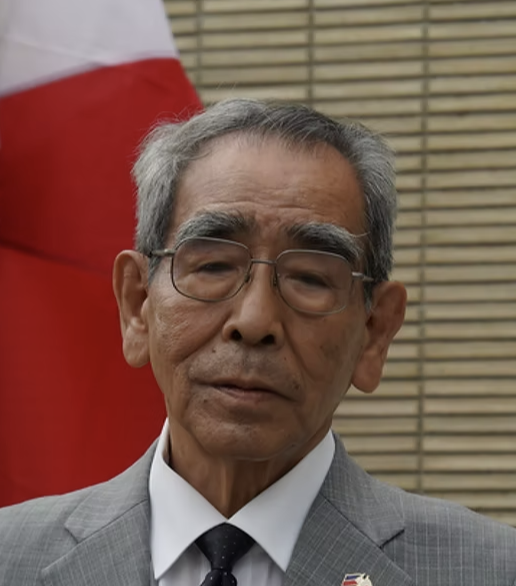
Pinoy-Hapon United Foundation (PHUF), a non-profit organization, Honorary Chairman Takeshi Asanuma
The unit was formed on October 20, 1944 (Showa 19). After several sorties and returns beginning on the 21st, on the 25th the five “Zero fighters” of the “Naval Special Attack Corps, Shikishima Unit,” commanded by “Lieutenant Seki Yukio of the Navy,” took off again from “Mabalacat Naval Air Base (now adjacent to Clark Airfield),” about 100 kilometers north of Manila, and carried out a “special attack” on the American fleet deployed in “Leyte Gulf,” achieving results that included sinking the American escort carrier “St. Lo.” In fact they had sortied on the 20th, but turned back because of bad weather, and sortied again on the 25th after the weather improved, leaving that record. It is already 82 years ago.
On October 20, special attack aircraft also sortied under the name “Yamato Unit” from the “Navy’s Cebu air base” and did not return, but no results were confirmed. The “Naval General Staff” announced the “Shikishima Unit,” commanded by “Lieutenant Seki, a regular officer of the 70th Naval Academy class,” as “Special Attack Unit No. 1,” which is thought to have been intended to raise the fighting spirit of the people.
The “Navy” continued the “special attacks” thereafter, employing not only “Zero fighters” but even obsolete aircraft and biplane trainers, and building and committing “dedicated special-attack aircraft” and “human torpedoes,” but Mabalacat is surely the “sacred ground” of the “Naval Special Attack Corps.”
”Lieutenant Seki” is said to have told a reporter from the “Domei News Agency” who came to interview him before the sortie: “I am not going only for the sake of the country. I am going for the peace and well-being of my wife and children.”
In 1974, the local sculptor and painter “Mr. Daniel Dizon,” who had lived near the “naval air base” as a boy, had come into contact with the “special attack pilots,” and had been moved by their “bushido-like” conduct, erected a “monument honoring the Special Attack Corps” at the site of what had once been the runway from which “special attack aircraft” took off. It is a solemn structure of reinforced concrete, about 10 meters wide and about 1.5 meters high.
Even now, every year on October 25, the Maritime Self-Defense Force holds a “memorial service” at “Lieutenant Seki’s” hometown, before his grave, and offers a “salute of rifle fire.”
In addition, every year on October 25, a “memorial visiting group (about 30 to 40 people)” organized by “Sankei Travel” comes here, and a “memorial service” is held with the participation of “Maritime Self-Defense Force veterans,” the local mayor, Philippine Air Force personnel, and others.
The “Army” also took part in “special attack operations.” The best known is “Chiran” in Kagoshima Prefecture. The largest number of “special attack aircraft” sortied from there, and the adjacent “Tomiya Shokudo” was a “rest house for the pilots” designated by the “military”; its proprietress, Ms. “Torihama Tome,” was called the “mother of the special attack pilots,” and the young men about to sortie gathered here and spent a moment of peace.
There are various stories, such as a special-attack soldier “from the Korean Peninsula” who agonized over his sortie, and a young man who sortied and returned to her as a “firefly,” and you may perhaps have seen them later in “films” and “television dramas.”
Today, a “memorial hall and museum” has been built at the former “Chiran base,” and the “semi-underground barracks” where the “pilots” spent their last days have been reconstructed; visitors from all over the country come without end.
”Tomiya Shokudo” has also been preserved as a “historical museum,” and Ms. “Torihama Tome’s” son and others continue to convey “the preciousness of peace” to visitors.
In both the “Army and Navy,” few of the “special attack volunteers” were “regular officers”; most were “student soldiers” whose studies had been cut short and young “Yokaren” soldiers who had received only a very brief period of training, who “scattered like blossoms” while praying for the eternal peace of the “Imperial land.” They are said to number “5,000 in the Army and Navy combined.”
The launch base of that “Unit No. 1, the Shikishima Unit,” was the “Mabalacat airfield” here in this very place.
コメント