
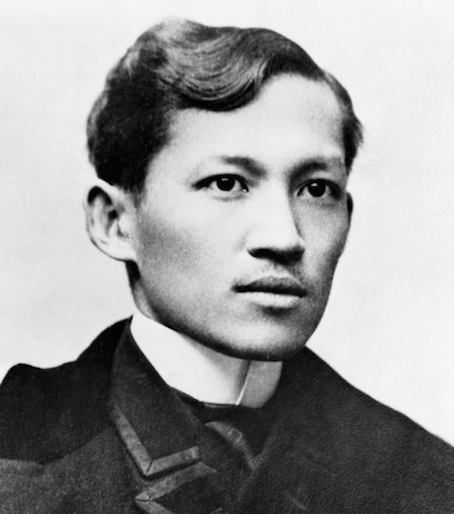
Yasotarō Mōri
At about that time, Rizal had exchanged fairly detailed opinions and arguments on religion with Father Pastells of Manila through an extended correspondence, in which Pastells tried to make Rizal reverse his views, only for Rizal to refute the priest’s arguments point by point with such clear logic that he ultimately demolished them. Even a few months before his execution, when Father Sánchez offered him a high ecclesiastical post, an allowance of one hundred thousand pesos, and a vast tract of land in exchange for his conversion, Rizal flatly refused, declaring, “Not even if you gave me half the Philippines.” The guardian evidently had no idea that a man who had rejected offers of that magnitude was hardly the sort to be won over to conversion merely by being handled kindly.
Dapitan at the time was, quite literally, a stagnant “sleeping town.” Yet Rizal was not the kind of man to grow despondent or give up in despair. Wherever he went he brought a certain warmth and brightness, and in every circumstance he remained unbending and unbroken, possessing a mind that turned every opportunity to good use, both for himself and for the public. Working together with Father Sánchez, he built a plaza in front of the town church, and there also constructed a relief map of the island of Mindanao (said to survive to this day). The guardian, gradually won over by what Rizal was accomplishing, wrote to the Governor-General and applied for the dispatch of twenty-four iron benches and 2,600 meters of copper wire to furnish this plaza.
Word of his extraordinary skill as an ophthalmologist had already spread widely, and the fact that he had restored his own mother’s sight in particular stirred among Filipinos a kind of reverent, almost mystical devotion toward him; people came from near and far competing to seek his treatment, and his door was said to be as crowded as a marketplace (eye disease was especially common among Filipinos at the time). He had no intention of making a fortune from this, so his fee was left to whatever the patient could afford, and as a rule he treated the poor for free. On one occasion, after treating a wealthy patient’s rather complicated eye condition, he was given 500 pesos in gratitude. He immediately used this money to install street lamps at the main thoroughfare of the town — the first time street lighting was ever set up there.
One day, at his guardian’s urging, Rizal bought one ticket out of a set of three from a lottery. The total prize came to 18,000 pesos, with the guardian and a friend of his each holding one of the other two tickets. Rizal was opposed to gambling as such, but he did not regard a government lottery run to promote public works as something that stirred mere greed for windfalls; rather, he saw it as a kind of seasonal, wholesome excitement given to the public. As it happened, this particular set of tickets won, and he came into 6,000 pesos.
After carefully considering how best to make good use of this 6,000 pesos, he first drained the nearby marshland to help eradicate malaria, and purchased modern farming implements from the United States to improve cultivation (something he had taken note of during an earlier visit to that country). What is particularly remembered as his achievement, however, is that he laid a waterworks system for the town of Dapitan. An American engineer who inspected this waterworks system some years later praised the excellence of its engineering, writing as follows:
“The water source is a mountain spring several kilometers from the town of Dapitan. Considering that there was no dynamite available to break through the rock, and that every obstacle was overcome purely through painstaking ingenuity, one can only admire the brilliance of Rizal’s mind. The water pipe was formed by laying old half-cylindrical roof tiles along the bottom and covering them with lime made by burning coral reef; over low-lying ground, bamboo pipes were run and supported on stone or brick, channeling the water into a reservoir.”
He also purchased sixteen hectares of land about thirty minutes’ walk from the town of Dapitan. Facing the sea and backed by hills, with no other houses nearby, this land seems to have suited him very well, given his love of nature. Here he personally took up the cultivation of fruit and vegetables. Naturally, given his scientific training, he devoted himself to improving cultivation methods using the farm implements he had purchased from the United States, and the place probably came to serve as a kind of experimental or model farm. He intended to bring his mother and relatives to live here, envisioning it as a new Calamba.
Seeing this expression of his public-spirited devotion, the guardian came to hold Rizal in ever greater esteem and treated him as an honored guest. The friar faction, who had originally had Rizal exiled precisely in order to make him suffer, were considerably disappointed to find that he showed not the slightest trace of regret or melancholy, but lived out his exile in remarkably good spirits. As a result, they urged the Governor-General to have the guardian replaced. Grieved at his guardian’s reassignment, Rizal composed a warm, friendship-filled farewell poem as a parting gift for him (August 26, 1893).

コメント