
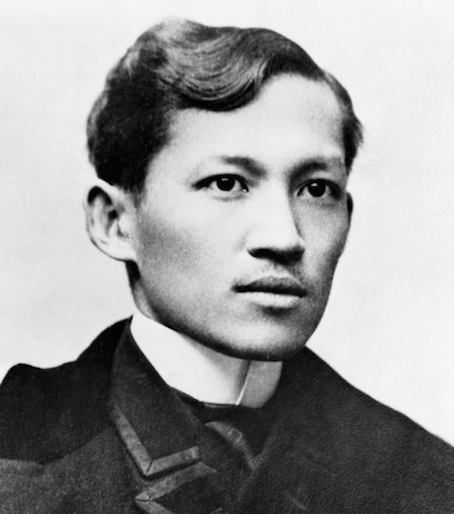
Yasotarō Mōri
It is easy to imagine that Rizal, who had always opposed armed revolution, found in this letter further confirmation of his own convictions and felt his views vindicated. He remained steadfast to this principle to the very end.
Bonifacio’s faction knew well that the Filipino people’s reverence for Rizal ran as deep as religious devotion, and were convinced that if Rizal ever raised the banner of revolution, the whole nation would flock to his side like grass bending before the wind. They therefore did everything they could to win him over to their cause. Bonifacio himself proposed a plan for Rizal’s escape. Rizal had earned the complete trust of his overseer and everyone around him, to the point that had he wished to escape, he could have done so at any time he pleased.
But Rizal was determined to do everything openly and above board. Had he fled, it would only have confirmed the friar faction’s slanders against him, and at the same time would have amounted to an admission that the authorities’ suspicion of him as the leader of the armed revolutionary movement had grounds after all. This he could not bear. Bonifacio and others later went so far as to denounce him as a spineless peace-worshipper and a coward — but to those who failed to understand his true intentions, he must indeed have appeared that way. It was simply an unavoidable consequence of his position.
The Fateful Voyage
Early that year (1896), a letter from Dr. Blumentritt informed him that yellow fever was raging in Cuba, and that the Spanish authorities were struggling with a severe shortage of doctors. On hearing that there were sick people with no one to turn to, it was not in Rizal’s nature to remain indifferent.
Though he suspected it would come to nothing, he offered his services to the then Governor-General, Blanco, to serve as a doctor in Cuba. Blanco, who sincerely admired and sympathized with Rizal and had secretly been looking for an opportunity to set him free as soon as possible, saw that sending him to Cuba would provide legitimate grounds for lifting his exile, and enthusiastically recommended Rizal to the home government. The government in Spain accepted Rizal’s offer and ordered him to serve at a Spanish government hospital facility in Cuba.
This was, in fact, an unexpectedly favorable outcome for Rizal. He immediately settled his household affairs, put his appearance in order, and on August 1 set out from Dapitan accompanied by Josephine and his sister. Reflecting once more on his fate as a wanderer setting out on another journey, he composed a poem, “Song of the Traveler.” It is counted among his most celebrated verses for the beauty of its sentiment, though a note of melancholy pervades the whole piece.
On the day of his departure, the townspeople turned out in great numbers to see him off, “solemn, as though joining a funeral procession, their eyes brimming with tears, sighing, ‘We shall surely never see our teacher again.'” Of his seventeen pupils, seven accompanied Rizal all the way to Manila to see him off, while the others, unable to do so, wept aloud at the dock, mourning the parting.
There were admirers of Rizal’s fame everywhere along the way. When the ship called at the port of Cebu, he shut himself up in his cabin, but such a huge crowd pressed forward demanding a glimpse of him that the captain began charging two pesos a head to let people see him. When his sister told him of this, Rizal immediately came out and appeared at the ship’s rail to greet everyone.
The ship reached Manila on August 6, and he immediately transferred to the steamer España. Bonifacio’s faction, who until then had not known that Rizal had effectively regained his freedom, made every effort to rescue him; one of their number, Jacinto, disguised himself as a Chinese sailor and boarded the ship to tell Rizal that everything was ready for his escape, but Rizal flatly refused, calling the idea unthinkable.
Then, to avoid any misunderstanding, he asked the Governor-General to let him transfer to the Spanish cruiser Castilla, then anchored in the harbor. Its captain treated him with great courtesy, but Rizal avoided receiving any visitors other than his family and relatives.
For various reasons, he thus remained anchored in the harbor for about a month before boarding the Isla de Panay and setting sail for Spain on September 3. The Governor-General wrote letters of introduction on Rizal’s behalf to the home country’s ministers of the army and of foreign affairs, praising in the highest terms both his character and his extraordinary, gifted talents. The farewell letter he wrote to his mother the day before his departure is regarded as a typical expression of his deeply filial character. (End of Chapter Five)

コメント