
Hisako Kamikita (maiden name: Kimura), born January 8, Shōwa 9 (1934), in Arakawa Ward, Tokyo — a repatriate from Korea. Mother of two daughters and one son. Her father was a craftsman specializing in special glassware. She now leads a two-residence life, dividing her time between her home in Takayama, Gifu Prefecture, and “Pension Krone,” a guesthouse she runs in the town of Samboan, Cebu Province, in the Republic of the Philippines.
Moving to Korea
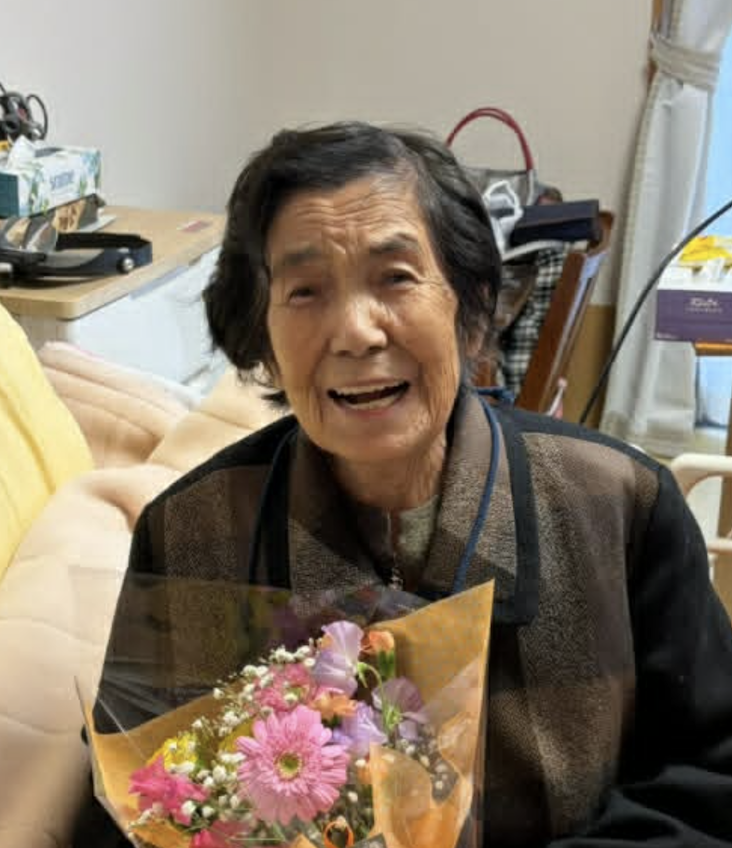
Hisako Kamikita (née Kimura) is one of what are known as the repatriates from Korea.
The term “repatriates” (hikiagesha) refers to the more than 5 million Japanese civilians who, following Japan’s defeat in World War II, had been living in Japan’s overseas territories and occupied regions and were able to return to Japan.
Hisako’s family crossed over to Korea in Shōwa 17 (1942), shortly after the outbreak of the Greater East Asia War, when Hisako was nine years old. The family lived in Yeongdeungpo District, Keijō Prefecture (present-day Yeongdeungpo District, Seoul). It was a district full of factories — a large ironworks stood next door to their house, and nearby stood the factories of leading Japanese manufacturers such as Kanebo, Toyobo, Teikoku Sanso, and Morinaga, one after another. It was a town with a large Japanese population.
Hisako’s father, Suezō Kimura, was from Akita, and was one of only a handful of craftsmen in Japan at the time skilled in making specialized glass products such as flasks and beakers. He was likely exempted from military service because he possessed the specialized skills needed to manufacture wartime materials. It was for these skills that, the year after the Greater East Asia War broke out (Shōwa 17), Suezō was ordered to set up a factory to manufacture specialized glass, and crossed over to Korea with his family. Hisako was in third grade at the time. The family that relocated numbered five: her birth father, her stepmother, and her two younger brothers.
The Worsening War Situation and the End of the War
Even though the war had begun, Korea itself was not a battlefield, so for several years Hisako’s family lived a life largely untouched by the turmoil of wartime. It’s true that at school the children were made to dig air-raid shelters and were put through evacuation drills, but these never actually proved necessary. By the time Hisako moved up to sixth grade, however, the war situation had deteriorated considerably, and the massive airframes of B-29 strategic bombers began appearing over Korean cities, throwing the Japanese community into an uproar with fears that the bombing might extend to Manchuria and Korea as well.
At noon on August 15, in Hisako’s household overseas, just as in households back in the home islands, all five members of the family sat formally in front of the radio, listened to the Emperor’s broadcast, and learned of Japan’s defeat.
Immediately After the Defeat, Their Household Belongings Were Seized
It happened less than an hour later. Four Korean men suddenly barged into the house without removing their shoes, and shouted:
“Japan has lost. Japanese property will be confiscated. Hand over anything of value!”
When they pressed him about where the money was, her father answered, “There’s no money. Instead, take whatever’s here.” At that, they took everything — chests of drawers and other furniture, bedding, tableware, and in the end even pried up and carried off the tatami mats.
In their emptied-out home, Hisako and her family packed what little food and clothing remained into backpacks and headed for the Japanese quarter. There, people they knew well had gathered — Dr. Nakao, who had long looked after the family, and Hisako’s homeroom teacher, Mr. Kawashima, among others — and everyone agreed on one thing: there was nothing to do but abandon everything and return to Japan.
Hisako says she will never forget, for the rest of her life, the sight of those Koreans forcing their way into the house that day.
“Korean people are meek one-on-one, unable to say anything they really think — but the moment they band together in a group, they’ll do horrible things like this without batting an eye. They’re a cowardly race.”
That was what Hisako, still a child, came to believe. And from that day to this, now in her eighties, her dislike of Korean people has never changed.
コメント