
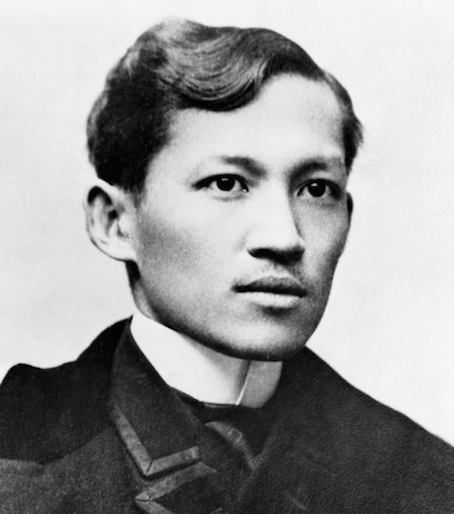
Yasotarō Mōri
▲ The Resolve to Boldly Face Death
At this, he resolved firmly to return to the islands, to see for himself whether he could truly accomplish anything there. Those around him were stunned, and tried to stop him. His relatives and friends in the Philippines, too, argued forcefully against his return, saying it amounted to courting death. But his mind was made up. Expecting death, he wrote out the two letters that follow (one addressed to his parents and friends, and one addressed to the Filipino people in general), appended to them the note “To be made public after my death,” and entrusted them to his close friend Dr. Marques. The substance of those letters is as follows.
To His Parents, Brother, Sisters, and Friends
“Whether the course I am now about to take was wise or not, only the future can judge, but the motive that has brought me to take it is the same affection I have always shown you all. Fate judges an action by its result, but whether that judgment proves favorable or unfavorable, I say only that it was my duty that commanded me to act as I have. And it is no matter to me even if, in obeying that command, it should cost me my life.
I know that you have all suffered greatly on my account. But I do not regret anything I have done up to now. If I were to begin it all again, I would do exactly the same, for it is my duty. I go willingly into danger — not to atone for any wrong of mine (in this matter, I believe I have done no wrong whatsoever), but in order to complete my work and to prove, with my own body, what I have always said.
A man ought to be willing to die for his duty and his convictions. I hold firmly to everything I have published concerning the present state and the future of our homeland. I die gladly for my country; and for the sake of defending justice and peace on your behalf, I die more gladly still.
I gladly lay down my life to save the many innocent people — nephews, nieces, and children among them — who have suffered on my account.
What am I, after all? A man with scarcely any family of his own, a bachelor who has come to know full well the disillusionments of life. I have often been deceived. The future that lies before me is dark, and it would be darker still were it not lit by the dawning light of my homeland’s future. At the same time, there are, no doubt, many people who will feel great happiness — indulging in their hopes and fantasies — when I die. It is my wish, then, that my enemies, once satisfied, will cease their persecution of innocent people. That they should hate me is, to some extent, reasonable. But to hate my parents and relatives is unjust.
If fortune does not favor me, my parents, relatives, and others will know, through my death, that their suffering has come to an end, and will know that I went gladly to my death. They may then return to our homeland and find happiness there.
Until the moment of my death, I shall think of you all, and I wish that every good fortune and happiness may come to you.”
To the Filipino People
The course I have taken (or am now about to take) is, without question, an extremely reckless one. That I have given this long and careful thought goes without saying. I know that almost everyone opposes this course. But I also know that almost no one knows what lies hidden within a man’s heart. I cannot rest easy knowing that so many people suffer unjust persecution on my account; I cannot go on living while I watch my brother and sisters and their families hunted down like criminals — I choose death instead. And I gladly offer up my life in order to save so very many innocent people from this unjust persecution. I know that, at present, the future of our homeland turns, to some degree, on me, and that when I die, there are many who will rejoice, and who are, for that very reason, waiting for my death.
What, then, should I do? I have a duty, above all else, to my own conscience, and I have an obligation to my suffering family, my relatives, and my aged parents, whose cries of grief pierce my heart. I know only that, by my death, I can let them return to our homeland, enjoy a peaceful household once more, and find happiness. I have only my conscience to answer to, but our homeland has many sons who can take my place — indeed, who are already, steadily, taking my place.
I wish, moreover, to show those who deny our patriotism how a man may die for his duty and his convictions. If a man dies for those he loves, for his homeland, and for those he holds dear, what is there in that death to fear?
If I imagined myself to be nothing more than a mere pillar of policy in the Philippines, and if I were convinced that my countrymen still needed my service to make it effective, I might perhaps hesitate to take this course. But there are many people who can take my place, and do so more effectively than I.
I have always loved our suffering homeland. Even if some people may treat me unjustly, I love my homeland to the very last. My future, my life, and all my joys have been offered up for my homeland’s sake. Whatever my fate may be, I die blessing my homeland, yearning for the dawning light of its resurrection.” The day after writing these two farewell letters (June 21, 1892), Rizal, accompanied by his sister Lucía, set sail from Hong Kong with a solemn resolve, and steadfastly made his way toward Manila.

コメント