
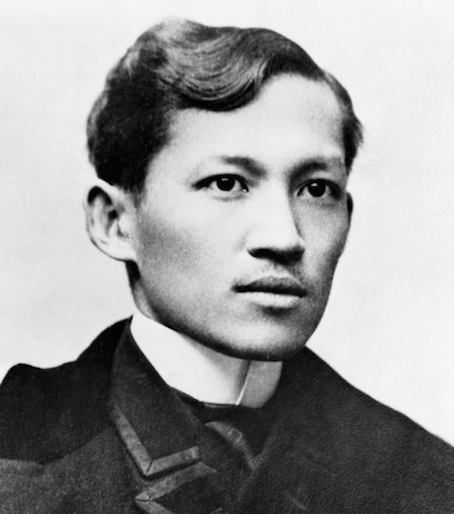
Yasotarō Mōri
▲ Guiding the Association’s Journal
Around that time, Filipinos residing in Barcelona banded together to launch the journal La Solidaridad. They earnestly asked Rizal to serve as editor-in-chief, but he firmly declined. He did, however, readily agree to contribute articles, and his commanding essays stood out brilliantly in every issue. Among them, the best known — “The Philippines a Century Hence” — was written around this time. Mariano Ponce and Marcelo del Pilar were chosen as members of the editorial board. Ponce revered Rizal to the point of near worship, while del Pilar would later come into conflict with Rizal over matters of editorial policy.
▲ Persecution Grows Ever More Blatant
Though he had left his homeland and thereby escaped the vexatious hand of persecution, the matters that troubled his heart followed close behind him. After he left, his novel was read ever more widely by the general public, and because it had so satisfyingly taken down the friars whom people had long resented, the chorus of praise for Rizal grew louder still. In proportion to this, the friar faction’s hatred toward the Rizal family and the town of Calamba only intensified. His brother-in-law Hidalgo was exiled on the charge of having incited townspeople to refuse to pay their taxes; no sooner had he finally been pardoned and allowed to return than he was exiled once again. He wrote to Rizal, pleading with him to negotiate with the Spanish government in Madrid to clear his name of this false charge.
The husband of his elder sister Lucia died of cholera, but because the religious formalities were said to be incomplete, he was denied burial in the designated cemetery; on top of this, she was ordered to vacate a house she had newly built after his death. Every single person suspected of sympathizing with Rizal’s views or supporting his cause was persecuted under one pretext or another. And the news that reached him from home told, again and again, of the friars’ overwhelming power, of judges left with no authority of their own, and of an urgent hope that Rizal would return to the islands as soon as possible to relieve this dire situation.
Looking further at the case of his own family back home — the matter of greatest concern to him — his father, for instance, had for years been on friendly, unreserved terms with the estate manager of their landlord friars. Every year, at the manager’s request, his father had made a practice of presenting him with a turkey during a certain season. One year, however, many of the turkeys had died of illness, so he kept the remaining few for breeding, and that year did not grant the manager’s request.
The very next day, notice arrived that his rent was being raised by a third. His father paid it without complaint. Next, on the grounds that he must be profitable enough to have purchased sugar-milling machinery, his rent was doubled again. His father took the injustice to court, but lost the case, and suffered the misfortune of having his house and machinery confiscated entirely. The whole affair had begun with a single turkey.
(At its core, the problem was a dispute between landlord and tenant, arising from the friars’ abuse of their power to behave as tyrannical landlords. Originally, they had been trusted as protectors of the islanders in dealings with the authorities, but in later years they abused that trust, colluding with the authorities to exploit the islanders’ ignorance for their own gain.)
▲ A Growing Sense of Urgency
As these outrageous facts reached his ears one after another, Rizal — who until then had been, in large part, an idealist with great hopes for the Philippines’ future — came to feel with growing conviction that these harsh realities could not be brushed aside, and hardened his resolve to fight this present evil without fail. Around this time, he wrote to a friend expressing sentiments to this effect: “Against these persecutions, I pray that with every new hardship the islanders may summon fresh courage and prevail through the trial. What we must rely on is the spirit of resolute action. Through these very persecutions, it is being proven ever more clearly that wrongdoing lies with the friars, and righteousness with us. What, then, is there to fear?”
コメント