
On the 70th Anniversary of the Normalization of Diplomatic Relations
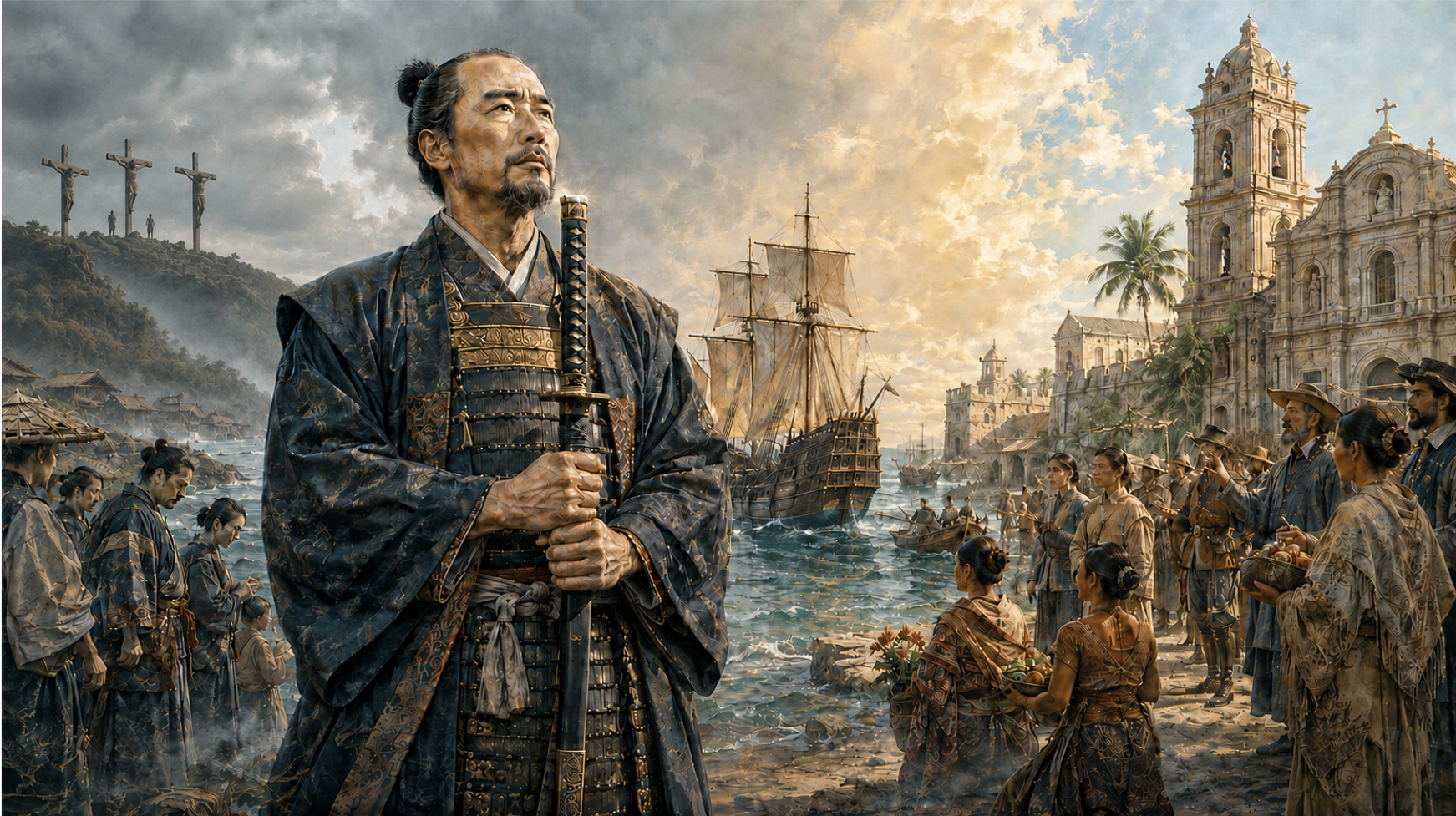
2026 marks the 70th anniversary of the normalization of diplomatic relations between Japan and the Philippines, which took place on July 23, 1956. In reality, however, the relationship between the two countries dates back much further, to the era of Nanban trade at the end of the 16th century. This report offers an overview of the history of Japan-Philippines relations, centered on major events, from the encounters of the Sengoku period through the devastation of the Pacific War, postwar reconciliation, and up to present-day defense cooperation.
This milestone year also holds special personal significance for the author. On February 4, 1986, shortly before graduating from Meiji University, I traveled to the Philippines to cover the presidential election between Ferdinand Marcos and Corazon Aquino — exactly 40 years ago from this year.
During the EDSA Revolution (the February Revolution), when President Marcos departed for Hawaii, I also had the rare experience of surging into Malacañang Palace together with the crowds.
Afterward, I enrolled in the graduate school of the University of Santo Tomas — where the founding father José Rizal himself had once studied — and, after completing coursework, withdrew before finishing the degree, going on to start a business with a Japanese friend in Makati City and becoming a businessman.
Through many twists and turns, I survived as an entrepreneur, and remain one to this day. Forty years since my move here — why, in a country where the Japanese military once inflicted such immense suffering during the last war, have I been able to live with barely a trace of anti-Japanese sentiment directed at me? The answer to this question, which I had long carried within me, has become clearer to me as I have traced the history of relations between our two countries in preparing this report.
Timeline
| Year | Event |
| 1571 | Spanish surveys confirm bases of Japanese pirates and traders in Manila and various parts of northern Luzon (Cagayan, Lingayen, etc.) |
| 1582 | Battle of Cagayan. A wokou (Japanese pirate) fleet clashes with Spanish forces; Spain wins and the wokou withdraw from Luzon. |
| 1591 | Toyotomi Hideyoshi sends a letter to the Spanish colonial government in Manila demanding submission and tribute (dated the 15th day of the 9th month of Tenshō 19; arrived in Manila the following year, 1592). |
| 1593 | The Japanese quarter of “Dilao” is officially established outside the walls of Manila. |
| 1597 | Triggered by the San Felipe incident, Hideyoshi has Franciscan missionaries and others executed. Martyrdom of the Twenty-Six Martyrs of Nagasaki (February 5). |
| 1603 | Sangley (resident Chinese) uprising. Japanese residents of Dilao join the Spanish side in suppressing it. |
| 1614 | Under the Tokugawa shogunate’s ban on Christianity, Takayama Ukon and about 300 others are exiled to Manila (November 8). |
| 1615 | Takayama Ukon dies of illness just over 40 days after arriving in Manila (February 3/5). |
| 1637 | Lorenzo Ruiz, born in Manila, is martyred at Nishizaka, Nagasaki (September 27). Canonized in 1987. |
Before Hideyoshi: Wokou Settlement in Luzon and the Keeping of Order in Manila
By the mid-16th century, many Japanese were already settled throughout Luzon. According to Spanish survey records from 1571, bases of Japanese pirates and smugglers existed not only in Manila but across a wide area, including the Cagayan Valley region of northern Luzon, the Cordillera, Lingayen, Bataan, and Catanduanes.
Around 1573, Japanese were engaged in the gold and silver trade throughout Luzon, and records indicate that around 1580 there were even wokou groups that forcibly subjugated the native inhabitants of the northern Cagayan region. Relations between these armed Japanese forces and the Spanish colonial authorities were not peaceful at first, however: in 1582, a wokou fleet led by a figure known as “Tay Fusa” clashed with Spanish forces along the Cagayan River in what became known as the Battle of Cagayan. The Spanish forces won, and the wokou were forced to withdraw from Luzon.
In 1593, the Spanish colonial government formally established the Japanese quarter of “Dilao” outside the walls of Manila (Intramuros), and Japanese merchants, mercenaries, sailors, and castaways came to live there. This Japanese community was initially an object of suspicion, watched over by a bastion mounting eight cannons, but it gradually came to serve as a force the Spanish authorities could rely on.
A symbol of this shift was the 1603 Sangley (resident Chinese) uprising. When Chinese merchants living in Manila launched a large-scale revolt, the Spanish forces mobilized the Japanese of Dilao alongside the Tagalogs to suppress it, and records describe the Japanese as having acted with particular ruthlessness. An estimated 20,000 Chinese are said to have died in the suppression. In contrast to Hideyoshi’s hard-line stance toward Manila, the Japanese who had settled there had themselves come to play a role in maintaining order under the Spanish colonial system.
Toyotomi Hideyoshi’s Demand for Submission and the Twenty-Six Martyrs of Nagasaki
The earliest recorded episode in the origins of Japan-Philippines relations was Toyotomi Hideyoshi’s demand that Manila submit to him. In 1591, ahead of his planned invasion of Ming China the following year (the Bunroku Campaign), Hideyoshi sent his envoy Harada Magoshichirō to the Spanish colonial government in Manila with a letter (dated the 15th day of the 9th month of Tenshō 19) demanding tribute and submission, threatening military invasion if his demands were not met. The letter actually reached Manila the following year, 1592. The Spanish outwardly feigned deference but did not actually comply, and this tense relationship continued to simmer for several years afterward.
The turning point toward decisive tragedy came with the San Felipe incident of 1596. Amid a dispute over the cargo of the Spanish ship San Felipe, which had drifted ashore at Tosa in a typhoon, the ship’s pilot is said to have made remarks to the effect that “missionaries first win people over through evangelization, and military conquest follows later.” Word of this reached Hideyoshi and enraged him.
The following year, 1597, Hideyoshi had 26 Franciscan missionaries and believers in Japan arrested — six Franciscan missionaries (four Spaniards, one Mexican, and one Portuguese), three Japanese Jesuits, and 17 Japanese Franciscan believers (including three boys) — and had them crucified on the hill of Nishizaka in Nagasaki. This was the Martyrdom of the Twenty-Six Martyrs of Nagasaki (February 5, 1597). Since the Manila-based Franciscan mission had been involved in evangelizing Japan, the incident can be said to have had its roots in tensions with Manila.
Takayama Ukon’s Exile to Manila and Death Abroad
In 1614, as the Tokugawa shogunate’s persecution of Christianity intensified in earnest, Takayama Ukon — known as a Christian daimyo — refused to renounce his faith and chose exile instead. On November 8 of that year, Ukon was exiled to Manila along with his family and about 300 other Japanese Christians. However, Ukon, whose health had already been damaged by years of hardship, passed away in Intramuros (within the walls of Manila) just over 40 days after his arrival, in February 1615. His death has since come to be regarded as tantamount to martyrdom, and he was beatified by the Roman Catholic Church in 2017. A monument honoring Ukon still stands in Manila today, marking an important point of connection in the Christian history of both Japan and the Philippines.
The Martyrdom of Lorenzo Ruiz
There were also Filipinos who were martyred in Japan. Lorenzo Ruiz, born in Binondo, Manila, to a Chinese father and a Filipina mother, traveled to Japan in 1636 accompanying a Dominican mission. He was arrested shortly after arriving in Japan, and after roughly two years of imprisonment and torture, was martyred at Nishizaka in Nagasaki on September 27, 1637. His death is said to have come after he steadfastly refused to renounce his faith.
On October 18, 1987, Lorenzo Ruiz was canonized in Manila by Pope John Paul II, becoming the first Filipino saint and the patron saint of the Philippines and of Overseas Filipino Workers (OFWs). By a striking coincidence, about 20 years after Takayama Ukon died in exile in Manila, a Filipino in turn lost his life in Nagasaki — a paired and tragic thread running through this shared history.

(Asahiko Yara, Chairman, Japanese Business Club, Philippines [JBCP], a non-profit organization)
コメント