
Chronology
| 1888 | Dr. José Rizal visits Japan and stays about six weeks in Yokohama and Tokyo. A brief romance blossoms between him and Usui Seiko (O-Sei-san) |
| 1890 | Rizal completes his annotated edition of Antonio de Morga’s Sucesos de las Islas Filipinas in Paris |
| 1896 | Katipunan leader Andrés Bonifacio and others request arms assistance from the captain of the visiting Japanese naval training ship Kongō, without success |
| 1898 | Emilio Aguinaldo becomes the first President of the Philippines (independence declared June 12 of the same year) |
| 1898 | The Philippine revolutionary government dispatches Mariano Ponce to Japan to seek arms |
| 1899 | The Nunobiki-maru incident: a ship privately purchased by Japanese sympathizers to carry arms to the Philippine revolutionary forces sinks in a typhoon (July 21) |
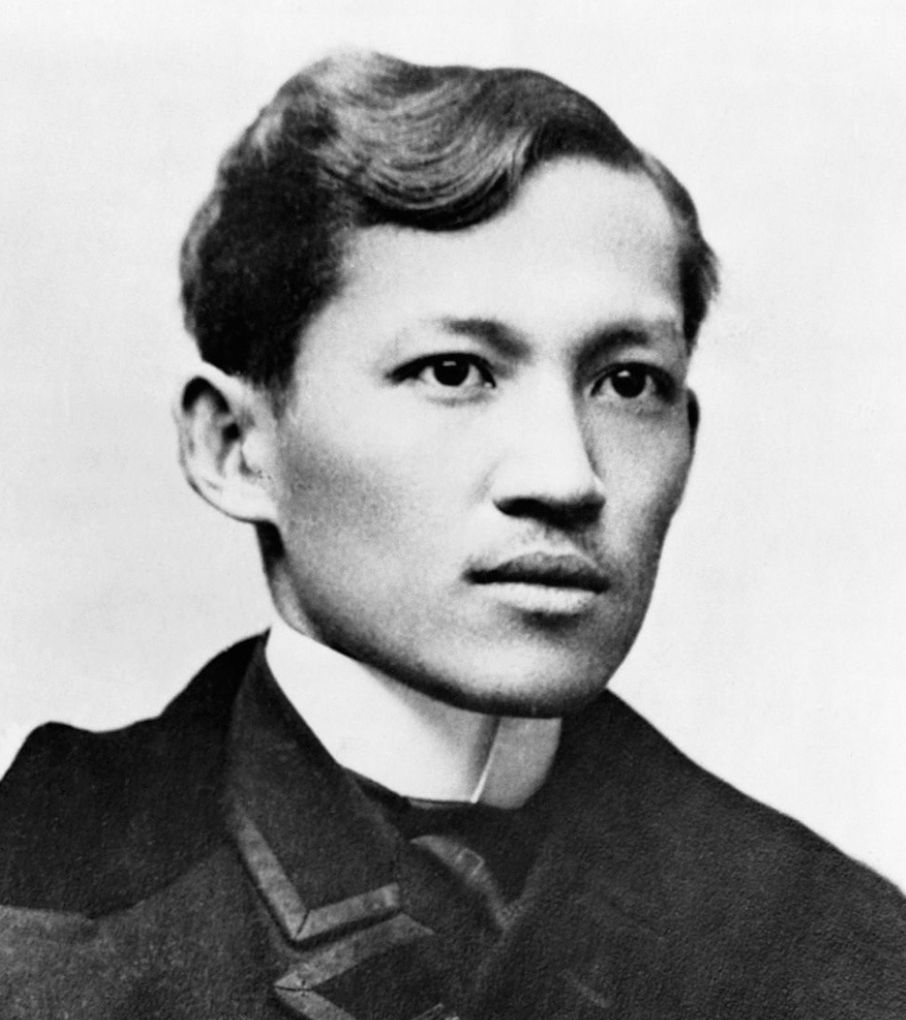
It is worth pausing to consider who José Rizal was as a person when he visited Japan. A child prodigy who had mastered Tagalog and Spanish by age eight, he is said to have gone on to command more than twenty languages in his lifetime — Spanish, English, French, German, Dutch, Portuguese, Russian, and Chinese, in addition to Latin, Hebrew, and Sanskrit.
His decision to study medicine was prompted by his mother, Teodora Alonso, who was wrongfully imprisoned for two years on a false charge of attempting to poison his uncle’s wife, and who subsequently faced the threat of blindness. After training in medicine in Manila, Rizal went on to Paris and Heidelberg, where he qualified as an ophthalmologist under Professor Otto Becker — and later treated his own mother’s eyes.
Though he was one of Asia’s great polymaths — equally versed in philosophy, sculpture, painting, agriculture, and linguistics — Rizal was also known for romances with women in many of the places he visited, and his time with Usui Seiko (O-Sei-san) during his stay in Japan was one such example.
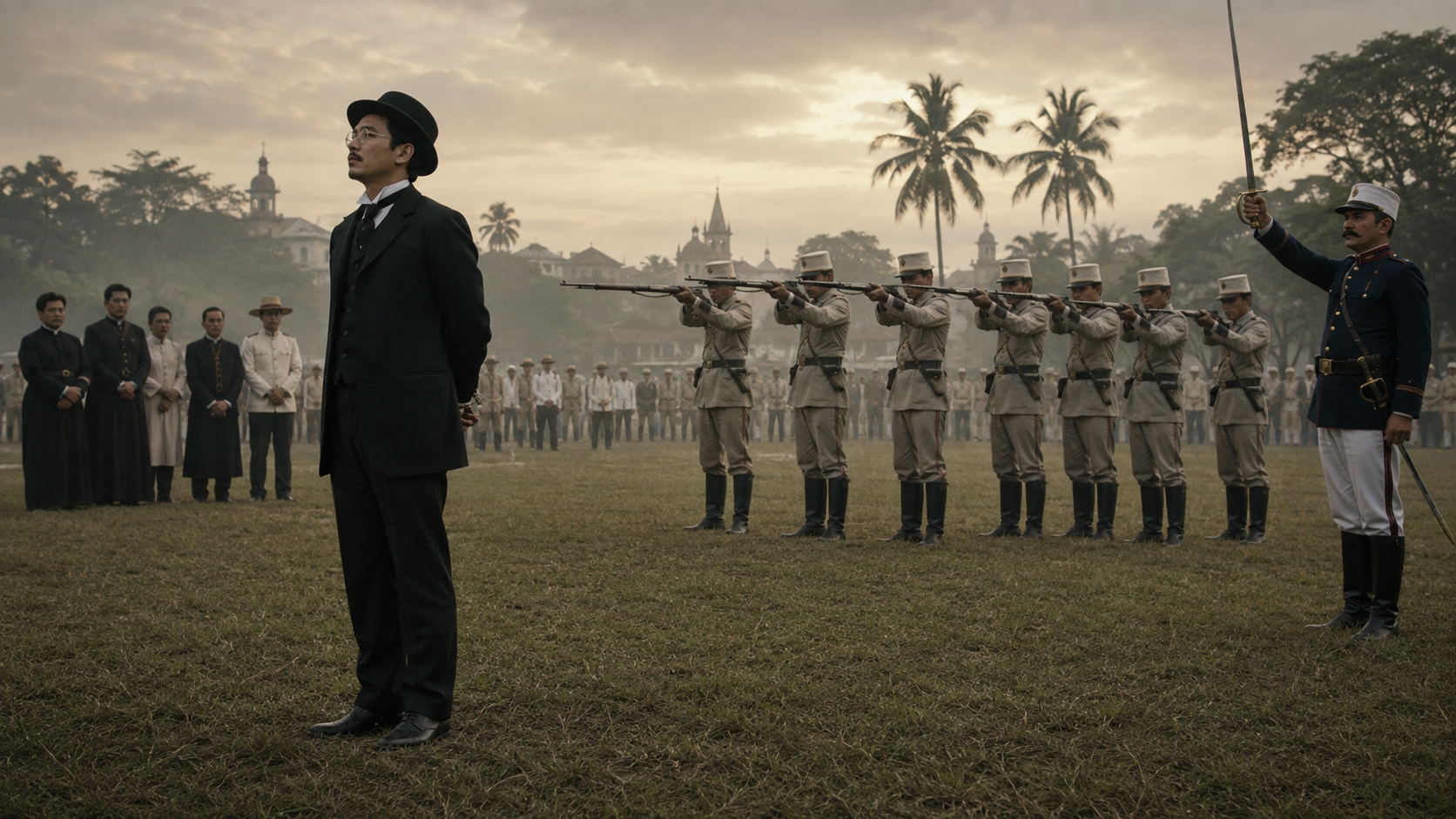
Dr. José Rizal, hero of Philippine independence, arrived in Japan on February 28, 1888, and stayed about six weeks in Yokohama and Tokyo. He had originally planned to stop for only two days while changing ships, but while lodging at the Spanish legation in Tokyo, he is said to have noticed a Japanese woman, Usui Seiko (O-Sei-san), passing by and approached her himself — the beginning of their acquaintance. Seiko, four years younger than Rizal, was the daughter of a former hatamoto (direct retainer of the shogun) family. The two conversed in French, and Seiko is said to have helped Rizal with his Japanese studies and introduced him to Japanese culture, including kabuki.
This relationship is recorded in Rizal’s diaries and letters, and his oft-quoted description of his stay — “Japan has captivated me: its beautiful scenery, its flowers and trees, and its peaceful, courteous, and agreeable people” — remains widely known today. On April 13 of that year, Rizal chose to prioritize his mission and left Japan, bringing the relationship to a close. This episode remains one of the most poignant chapters in the history of Japan-Philippines civilian and cultural exchange, and continues to inspire literary works and scholarship today.
Rizal was also deeply involved with Antonio de Morga’s Sucesos de las Islas Filipinas (1609), a work cited repeatedly throughout this series. While Rizal admired this book, written from a Eurocentric historical perspective under Spanish rule, he also felt it contained numerous errors of place names and fact, as well as Eurocentric bias, and resolved to publish a new edition with his own detailed annotations.
Rizal began the work in London and completed the annotated edition in Paris in 1890. It sought to demonstrate that the Philippines had possessed its own civilization before the arrival of the Spanish, correcting errors in the original text while also appealing on behalf of his homeland’s plight under the oppressive rule of Spanish friars. By positioning this scholarly verification work as part of the nationalist movement itself, Rizal revealed both the depth of his patriotism and of his learning.
The Meiji Era: The Nunobiki-maru Incident and the Japanese Government’s Response
As the movement for independence from Spain gained momentum in the Philippines toward the end of the 19th century, points of contact with Japan also began to emerge. In 1896, Andrés Bonifacio and other leaders of the Katipunan, the secret society behind the independence movement, made contact with Captain Seradaya Ryō of the Japanese naval training ship Kongō, then calling at a Philippine port, and requested arms assistance for the revolution — though this request went unfulfilled. Shortly afterward, the existence of the Katipunan became known to the Spanish authorities, and from August of that year events rapidly escalated into suppression and armed uprising.
In 1898, the Philippine revolutionary government dispatched Mariano Ponce to Japan to seek arms. With the cooperation of the Chinese revolutionary Sun Yat-sen, the Japanese politician Inukai Tsuyoshi, and the pan-Asianist Miyazaki Tōten, Ponce, working through House of Representatives member Nakamura Yaroku, succeeded in purchasing 10,000 old-model Murata rifles and field guns. The ship purchased to transport these weapons was the Nunobiki-maru. However, after departing Nagasaki on July 19, 1899, the Nunobiki-maru encountered a typhoon off Ningbo in the East China Sea on July 21 while en route to the Philippines and sank, killing the captain and eighteen others. The weapons were lost before ever reaching the Philippines, and the plan collapsed.
It is important to note that this arms procurement plan was strictly an unofficial undertaking by private pan-Asianist sympathizers and a handful of military figures, and that the Meiji government itself never officially involved itself at any point. At the time, Japan, having taken possession of Taiwan after the First Sino-Japanese War, was already viewed with suspicion by Spain and others as a potential southward-expanding power, and the government — seeking to advance treaty revision negotiations on favorable terms — took care to avoid damaging relations with the United States and Spain, both of which viewed such negotiations favorably.
As a result, the government continued to officially declare its “neutrality regarding the Spanish-American War and the Philippine independence movement,” and, after the Spanish-American War, its “support for American administration of the Philippines.” In other words, the Meiji government publicly distanced itself from the arms-supply activities of private sympathizers to the revolutionary forces, and consistently maintained a diplomatic posture of respecting the position of whichever power then held sovereignty over the Philippines — first Spain, later the United States.
(Asahiko Yara, Chairman, Japanese Business Club, Philippines, Inc.)
コメント