

MANILA NEWS DAILY
Escape from Korea — A Girl’s Experience of Defeat (Part 4)
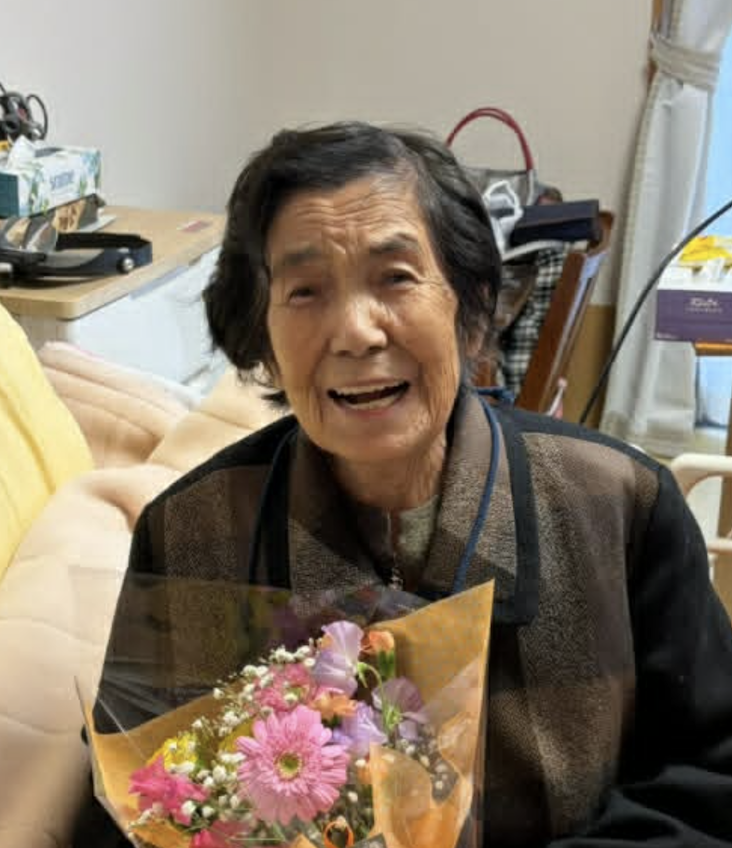
Hisako Kamikita (maiden name: Kimura), born January 8, Shōwa 9 (1934), in Arakawa Ward, Tokyo — a repatriate from Korea. Mother of two daughters and one son. Her father was a craftsman specializing in special glassware. She now leads a two-residence life, dividing her time between her home in Takayama, Gifu Prefecture, and “Pension Krone,” a guesthouse she runs in the town of Samboan, Cebu Province, in the Republic of the Philippines.
Reunited as a Family in Osaka
Three years after repatriating to Japan, her father and stepmother finally found stable work in Osaka, set up a new home in Ōyodo Ward, and sent for Hisako and her two brothers, whom they had left behind in Nagasaki.
Looking Back on Life in the Bombed City of Nagasaki
Even so, Hisako often wonders. It was said that in areas contaminated by radiation from the atomic bomb, no plants would grow and no crops could be raised for decades. And yet her family lived in Nagasaki for three years — so why, she wonders, did none of them suffer any ill health effects at all?
As it happens, her stepmother’s family home was in Nishiyama-machi, near Suwa Shrine, while the atomic bomb detonated over Matsuyama-machi, about three kilometers north of central Nagasaki City. The area around Suwa Shrine, to the south, lay in the shadow of Mount Kompira — a mountain of less than 400 meters — and was spared the bomb’s direct effects.
The Good Fortune That Let All Five Family Members Come Home Alive
Even so, it took a measure of good fortune for all five members of Hisako’s family to make it safely back to Japan without losing a single member, and without any serious mishap along the way. It was fortunate that her father, Suezō, had not been a soldier, and that they had not been residents of Manchuria or northern Korea, far from Busan, the port from which the repatriation ships departed.
Among those repatriating from Manchuria and northern Korea, no small number suffered sexual violence or were killed. In addition, some 575,000 former Japanese soldiers who had the misfortune of being captured by Soviet forces were interned in Siberia, and of these, 58,000 died of hunger and cold, never again to set foot on their native soil.
Marriage, and Life in Takayama
Some time later, Hisako met an electrician named Iwao Kamikita, who had come to Osaka from Takayama, Gifu Prefecture, to study motor repair, and the two married in Shōwa 30 (1955). Iwao owned an electrical contracting company in Takayama called Takara Denki, and before long he and a friend founded a construction company, Takara Kōken Construction, of which he later became president. Riding the wave of Japan’s period of rapid economic growth, Takara Kōken Construction expanded its business, and Iwao also served two terms as a village councilman, but died at the age of 75, partway through his second term.
Hisako became the mother of two daughters and a son, and three years after Iwao’s death, their son, Kazuhisa, took over Takara Kōken Construction, with their second daughter, Naomi, supporting him in running it. A few years ago, Hisako handed the company — by then one of the leading construction firms in the area — over to the two of them, declared to her children that she intended to spend her remaining years doing as she pleased, and traveled the country in search of a place where she might live alone in her old age. She even traveled through Okinawa, from Ishigaki Island to Yonaguni Island, but found that, as a woman living alone in her old age, she was met with wariness by the locals, and that the remote islands turned out to have an unexpectedly high cost of living — making them, in the end, less than ideal places to settle.
Discovering Samboan, Cebu
Then, about five years ago, when Hisako visited Samboan, in Cebu Province — the hometown of a Filipina named Irene, an acquaintance of her son’s classmate — together with her eldest daughter, Yukiko, she fell in love with the place at first sight, and immediately decided to buy a house that happened to be for sale there.
Moved by Hisako’s decision to move, all on her own, to Samboan — a rural corner of Cebu Province that even most Filipinos have scarcely heard of — her eldest daughter Yukiko and her husband, Gen Kuroyanagi, gave up their life in Japan and joined her there. Now the three of them divide their time between the five months from November to March in the Philippines, and the remaining seven months in Takayama. In Samboan, moreover, the daughter and her husband have opened a small guesthouse called “Pension Krone,” where, surrounded by ten mixed-breed dogs (askal), they welcome the occasional guest who comes to stay.
“They Should Try Living Through That Hell Themselves”
“When the local women in Takayama, who never suffered any hardship in the war, see me living this leisurely life and say, ‘Oh, how nice, I’m so envious’ — half admiring, half jealous — I want to tell them: then you should try living through that hell yourselves.”
Having survived the brutal ordeal of repatriation from Korea, there is nothing left in this world that frightens Hisako. We salute her remarkable life. (End)
“Great Men of the Philippines: José Rizal” (Part 19)
Yasotarō Mōri
Two days later (August 28), his beloved Leonor (now Mrs. Kipping) died in Manila shortly after giving birth to her first son. Because of social custom and her marriage, the two never had the chance to meet again, yet neither custom nor marriage nor anything else could cool the ardor of their mutual love.
X X X
The newly appointed guardian, Juan Sitges, arrived with secret orders to keep an extremely strict watch over Rizal. No sooner had he taken up his post than he issued Rizal a set of restrictive orders: he was to live apart from the guardian, to report to him in person three times a day, was forbidden to go out on boats for pleasure, forbidden to leave the town, and forbidden to exchange correspondence without permission. Rizal complied with these orders exactly. Yet this new guardian, like his predecessor, was soon won over by Rizal’s noble character, and the restrictions became a dead letter as he came to quietly tolerate Rizal’s complete freedom of movement. The guardian then reported to the Governor-General: “Rizal’s character is even-tempered, his conduct modest, his speech courteous — in every respect beyond reproach.”
▲ The Bright Moon over His Place of Exile
By tradition, the moon over a place of exile is said to stir an exile’s melancholy, yet for Rizal that moon always shone brilliantly. As long as he lived, he never lost hope. By this time he had already built three houses on his own land. Each had bamboo posts and a roof thatched with nipa palm leaves; in one he lived together with the mother, sister, and nephews he had by then summoned to join him, another served as a dormitory and classroom for his students, and the third he used as a poultry house. As for his daily routine at the time:
Rose at five in the morning and made his rounds of the fields and poultry house.
At half past seven, breakfast; afterward he went into town and treated patients as an ophthalmologist until noon.
After lunch, taught the young until four o’clock; after four, farm work; after dinner, reading and research.
— such was his regular routine. His work as an ophthalmologist had already grown extremely busy, and his income accordingly considerable, so he built a clinic in town and practiced there. His school, in scale, appears to have been no more than a modest village academy, but the spirit of its instruction was truly admirable.
That Rizal begrudged no spare moment and never neglected research in every field was said to be beyond the reach of any other man’s efforts. While in Dapitan, delighted at the opportunity to be close to the nature he loved most, he collected, studied, and classified the local plant life, and his discovery of plants that could serve as raw material for varnish and for perfume is regarded as a particularly notable contribution. He also extended his research to fish and shellfish, working to improve local fisheries. Insects, too, he collected, studied, and classified just as he had plants, donating specimens to museums in Dresden, Frankfurt am Main, and Manila; among the insects thereby first made known to Europe are some species named after Rizal in commemoration of his achievement. In gratitude for these specimen donations, he received shipments of the medical instruments he needed as an ophthalmologist.
This home was his only place of rest and his laboratory alike, and at his mother’s urging he composed a poem celebrating his life in this exile (October 22, 1895), titled “My Retreat.” Those who revere Rizal say it is a poem excellent and well-formed both in sentiment and in structure. Reading it through, one is filled with the sense of a man living at ease, neither hurried nor idle, delighting in life in accordance with his destiny.