
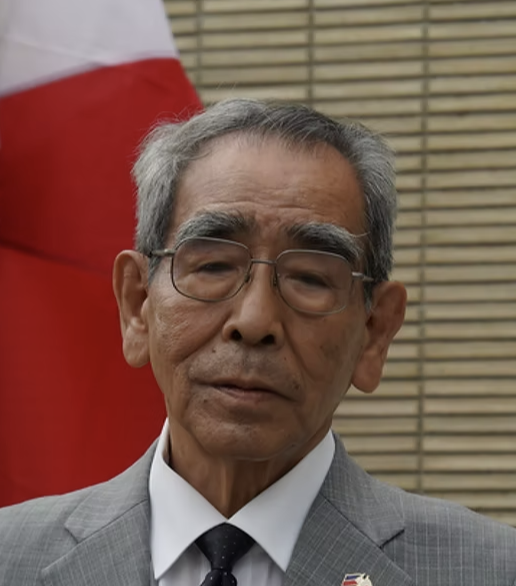
Pinoy-Hapon United Foundation (PHUF), a non-profit organization, Honorary Chairman Takeshi Asanuma
At the southern end of “Boracay’s White Sand Beach,” I have been running a small “resort hotel (14 rooms)” called “Surfside Resort” since January 2003.
We also opened an open-air “coffee shop” serving simple “Japanese food,” and we have a “spa” on the premises. The “hotel” faces the 7-kilometer “White Sand Beach,” and beyond it lies the wide-open “horizon.” Gazing slowly across it, one is struck by the thought: Oh? Is the Earth <round> after all?
In November 2003, I called my second son from Tokyo and entrusted him with the management. That was 23 years ago now.
”Boracay Beach” is divided by the monsoon winds into two entirely separate seasons. Roughly every year, from mid-November to around mid-June of the following year, it is the “high season (dry season)”: no wind, no waves, no rain, cool breezes blowing through morning and evening, and even when the midday sun is strong, the shade is comfortable. It is truly an “island of paradise.” It is one of the most famous “beach resorts” in the world, and guests gather here from home and abroad.
Around the middle of June each year, the season turns over. This is the “low season (rainy season).” It is what Japan calls “tsuyu,” except that it lasts for six months. Rainy days continue, and from late night until dawn the rain beats hard on the roofs. Every day a strong west wind blows from the sea onto the shore, whipping up the white sand of the beach and driving it into the shops.
What makes “Boracay” world-famous is its “sunset.” Of course, it is at its most straightforwardly beautiful in the fine weather of the high season, but the “low season” has its merits too. Depending on the weather, the look of the “horizon” changes daily, and one never sees “the same sunset” twice. The weather, the way the clouds gather, and the murmur of the waves change every day, and the sun goes down in many different ways.
When I started the hotel business at the beginning of 2003, it was not long after the “New York bombing incident,” and business was dead quiet. Gradually, however, tourists began to increase, and by “the beginning of 2024” it seemed to have returned to being a “world-famous tourist destination.”
From around 2005, I believe, “Russians” began to increase among the Westerners, and more and more “Russian guests” used our hotel as well.
Recent “Russian” guests are often families, and we have bookings from the high season onward.
Next, from around 2006, “Korean tour groups” increased, and we too received applications for accommodation, but we declined <group guests>.
The number of “Korean tour groups” visiting the island seems to have gradually increased after that, but since the “pandemic,” “tours” from Korea seem to have disappeared.
Then, from around 2010, “Chinese guests” began arriving on charter flights, and we politely accommodated reservations made in individual names. “Chinese guests” also increased at the “restaurant” and generally gave us high marks, but these days we hardly see them. “Taiwanese guests” also came quite often, but we do not see many of them now.
At present, both Japanese and Western guests seem to have become fewer, and local guests arriving on the more than ten “LCC” flights that come in each day have taken over the “island.”
Today, the “Boracay horizon” is covered with clouds.

コメント