

MANILA NEWS DAILY
“Great Men of the Philippines: José Rizal” (Part 23)
Yasotarō Mōri
Steadfast to His Principles
When word reached him that Rizal had been unlawfully detained by the Governor-General on the night of July 7, Bonifacio concluded at once that if even a moderate man like Rizal could be treated this way, reform in the Philippines could only be achieved through more forceful means, and he immediately organized the Katipunan (rendered here, for convenience, as the “League of Filipino Youth”). Its bylaws were much like those of the earlier League, but its aim — “to separate from Spain by peaceful means” — was fundamentally different from that of the League.
The League disbanded after about a year, but Bonifacio’s faction redoubled its efforts to rally supporters and strengthen unity, and by 1894 men such as Aguinaldo too had joined, greatly raising its momentum. Two years later, in 1896, they had grown bold enough to march in procession through the streets on a certain feast day.
In May of that year, Bonifacio sent a young fellow physician-activist, Pio Valenzuela, as a secret emissary to Rizal in Dapitan, to urge him to rise up (to allay suspicion, Valenzuela brought a blind man along and let it be known that he had come seeking treatment for the man’s eye ailment from Rizal). But when Rizal was told that the Katipunan had already elevated him to the position of deputy leader, he — who had long opposed armed revolution — was extremely indignant that his name had been used without his consent. His reaction was so vehement that Valenzuela, who had planned to stay a full month to talk Rizal around, hastily took his leave that same day, boarding the very ship that had brought him from Manila.
Some years before, Rizal had received a letter to the following effect from his revered friend and mentor, Dr. Blumentritt, whom he held in the highest regard.
“I urge you in particular not to become involved in inciting revolution. Anyone unwilling to bear the pangs of conscience for having shed blood needlessly ought to have reasonable confidence in success before starting a revolution. Numerous precedents demonstrate that when a colony rises against its mother country, it cannot prevail through its own strength alone. The United States won its independence with the help of France, Spain, and the Netherlands. Spain’s colonies in South America became republics by seizing the opportunity of civil strife in the home country. Greece became a free nation through the support of Britain, Russia, and France. If the Philippines were to raise the banner of revolt today, standing alone and without a navy, there would be no prospect of success. Moreover, the rebels do not possess enough ammunition to fight for more than five months. What is more, too many Filipinos still place their trust in the friars. A revolution would only bring honor to those who fall in it, while increasing the persecution inflicted by the oppressor.”
That War and Me (8) Remembering My Brother
Pinoy-Hapon United Foundation (PHUF), a non-profit organization, Honorary Chairman Takeshi Asanuma
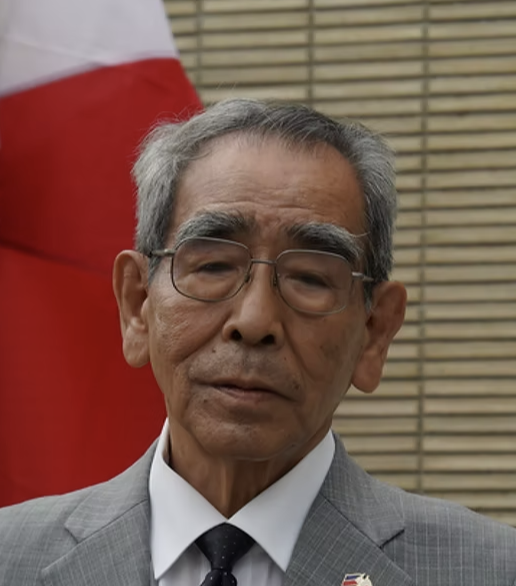
On June 15, Shōwa 20 (1945), my brother died in an American bombing raid during the Greater East Asian War. He was a third-grader at national school, nine years old. It happened right before my eyes. I was seven, a first-grader, at the time. Eighty-one years have passed since then, and now, at eighty-eight, I find myself dwelling deeply on the short years I spent with my brother.
My brother entered kindergarten in April of Shōwa 17 (1942), when I was four. I remember my mother taking me along to attend his entrance ceremony. Looking back on it now, ours was a short time together as brothers.
From as early as I can remember, I tagged along after my brother and he would play with me. Our family was a large household at the time: my great-grandmother, grandparents, parents, and two boys, with a baby sister born in October of Shōwa 17 (1942), plus two live-in maids — quite a number of people altogether — living in Ikutama-maecho, Tennoji Ward, Osaka City. We had a proper gated entrance, a front and back garden, and a two-story house. Next door was a temple called Eigen-ji, where a family had two brothers — a second-year junior-high student and a fifth-grader at national school — but they were somewhat older than us, and with no children our own age or cousins nearby, I always relied on my brother to play with me.
My mother’s constant refrain to my brother was, “Look after your little brother.” The two of us used to catch bugs in the back garden and dig holes to play at being soldiers.
My brother was clever, and seems to have done well once he started school; he taught me all sorts of things. After he entered kindergarten in April of Shōwa 17, he taught me, one after another, the nursery songs he had learned there — “Rain, Rain, Fall, Fall,” “A Secret Story,” “Why Does the Crow Cry,” “Mr. Seagull Sailor,” “The Cradle Song,” and more. At the time, both on NHK radio and among the adults around us, it was military songs, patriotic anthems, and morale-boosting war songs that filled the air — so even to my child’s ear, the nursery songs my brother sang for me stayed pleasantly with me, and I often hummed them to myself.
My brother was quiet and self-reliant, while I was something of a mischievous child, but whenever I got into trouble he always stood up for me — I have no memory whatsoever of the two of us quarreling.
On the afternoon of June 15, the great air raid struck Sakai and southern Osaka, with wave after wave of B-29 bombers. Our home was in the countryside, about 12 kilometers from that area, but even so, incendiary bombs occasionally fell on nearby fields and roads and started fires. Some incendiaries apparently even punched through roofs, but since the area wasn’t densely built up, no major fires broke out.
In a field near our house, my brother took a direct hit from an incendiary bomb. It pierced through from his back to his abdomen, his internal organs spilled out, and his body was bent double. My mother, rushing to him, called his name, and he is said to have faintly opened his eyes — but he was, in effect, killed instantly. My mother, trying to save him, was herself burned, and followed my brother in death about two months later. They were both victims of that Greater East Asian War.
Now, having reached old age in a foreign land, I find myself dwelling deeply on my gentle mother, and on my brother as a small child, singing “The Cradle Song” together with me.