
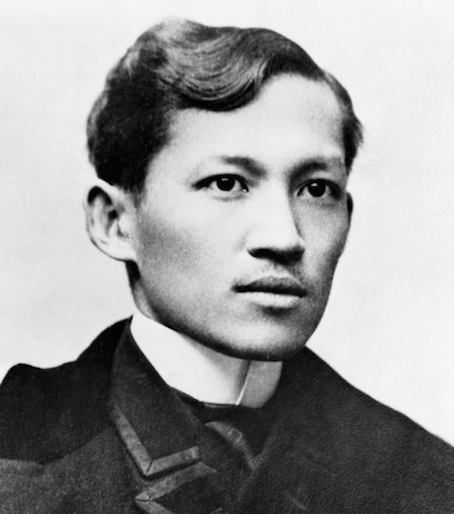
Yasotarō Mōri
Was Rizal a Revolutionary?
Was Rizal a revolutionary or a reformer? On this question, I offer below an abridged translation of a passage from Philippine Social Science, by Professor Maximo Kalaw of the University of the Philippines.
Rizal was, without doubt, a revolutionary at heart — but not a revolutionary of the extremist type. Before resorting to actual armed uprising, he sought first to move the heart of Spain, and then to exhaust every legal means available. One could say that Rizal was, and was not, the instigator of the revolutionary uprising of Bonifacio’s faction. His words — his writings — contributed enormously to that uprising. It was thanks to what he wrote that the Filipino people came to feel themselves a single nation, set aside their minor differences in favor of the greater common cause, and rose in a unified voice against the suffering of the whole people.
Yet he himself did not realize that his words were already stirring grave unrest among the whole nation. He did not know that the Katipunan — the League of Filipino Youth — inspired by his life and his writings, had elected him its honorary president and hung his portrait in its headquarters’ meeting room. Rizal underestimated the capacity of the masses. He always believed that, should a revolution ever come, it would have to be led and supported by the educated and the wealthy. When he said he had no connection to the actual movement, he was speaking the honest truth. As the very model of a scientist and a philosopher, he abhorred bloodshed, and never considered taking up arms until he was utterly convinced that no other course remained. A certain Spanish commentator once wrote of Rizal in words that hold true to a considerable degree:
“Rizal’s soul feared revolution. Yet in some deep corner of his heart, he hoped for it. He feared it because revolution threatened the work of civilization; and even as he feared it, he probably wished for it against himself.”
Rizal’s Spanish biographers claim that he never approved of the Philippines separating from Spain, yet no one denies that his work El Filibusterismo (the sequel to Noli Me Tángere) preaches a revolutionary spirit. That revolutionary spirit, however, was — as expressed through the opinion of Father Florentino in that book (said to represent Rizal’s own ideal) — one of separation or independence achieved through legitimate means, not brought about through criminal acts. It was to be accomplished through the united demand of a people conscious of its own rights and duties, not through impure, vengeful motives.
The greatest reason Rizal deserves to occupy the foremost place in the political history of the Philippines is that he was the true creator of Filipino nationalism. Where other heroes and martyrs, in resisting Spain’s misrule, had sown the seeds of political awakening, it was Rizal’s writings that cleared away the weeds around that sapling, his tears that nourished it, and his own precious blood, shed as a martyr, that hastened its growth. So swift and so remarkable was that growth that Rizal himself could scarcely have recognized the tree that had sprung, so vigorously, from his own labor. (End of Chapter Seven: His Noble Spirit Lives On Through the Ages) THE END
コメント