
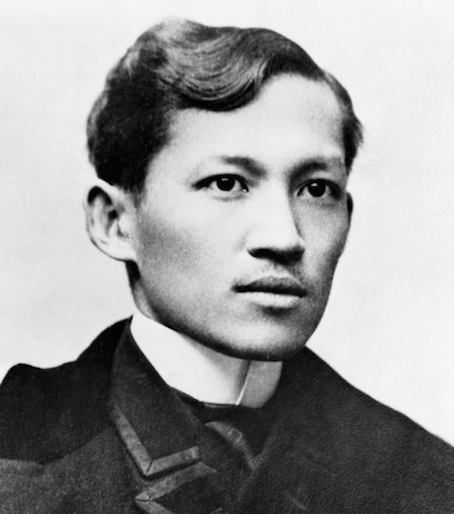
Yasotarō Mōri
A Historic Trial Opens
Rizal’s trial opened before a court-martial on December 3. It was, in every sense, a historic trial — historic in that it showed, for all who had the eyes to see, just how small-minded men had conspired and schemed in the shadows to bring down this great figure, and to what shameless lengths they were willing to go to destroy him; a spectacle that led thoughtful observers to lament that Spain’s decline was, after all, no accident of fate.
At the same time, it was also a farce — Rizal’s hands were bound throughout the proceedings, and abusive shouting directed at him from the public gallery was tacitly allowed to continue.
His family urged him to retain a lawyer, but he refused, declaring that he would fight the case alone, relying on justice and nothing else.
The authorities presented him with a list of a hundred army officers and ordered him to choose one from among them as his defense counsel. He knew none of these officers and doubted that any of them would be of the slightest use as a lawyer, so he was reluctant — but since it was an order, he had no choice but to select one.
The man he chose was Lieutenant Andrade — brother, and namesake, of the officer who had commanded the guard the Governor-General had, as a courtesy, assigned to protect Rizal some years earlier (1887), just before Rizal, on the Governor-General’s “advice,” set off once more for Europe by way of Japan after six months back home following his return from Europe.
Reasoning that, if it had to be a stranger, this man’s brother was at least a somewhat known quantity, Rizal chose him. The officer thus selected made touchingly earnest efforts on Rizal’s behalf, though it is said he followed Rizal’s own instructions in every particular regarding the materials for the defense and how to handle them. (There is also a theory that Rizal’s friends secretly hired a capable lawyer to advise this officer behind the scenes, though its truth is unconfirmed.)
The prosecutor submitted fifteen charges. They were, in truth, remarkably trivial accusations — for instance, that the Liga Filipina aimed to separate the Philippines from Spain; that among the papers in Rizal’s possession were found the fearsome Masonic slogan “Liberty, Equality, Fraternity”; and that at a Katipunan meeting, a leading figure named Jacinto had ended a speech by crying, “Long live our Rizal!”
Because the prosecutor’s arguments against Rizal were built almost entirely on such flimsy material, they were, one after another, thoroughly refuted by Rizal himself. Regarding the Liga Filipina, he testified that it had no revolutionary character whatsoever, and that its sole aim was to foster closer cooperation between Spaniards and Filipinos for their mutual coexistence and prosperity — leaving the prosecutor at a complete loss for words. At this rate, it even began to seem as though the trial might end in Rizal’s favor.
It was the anti-Rizal faction who, alarmed at this turn of events, feared that the scheme they had so carefully engineered might, if it failed now, be beyond redemption. Through a furious campaign of behind-the-scenes maneuvering, they had Governor-General Blanco — whom they regarded as too lenient — removed from office, and installed in his place a man named Polavieja, whom they had bought for thirty thousand dollars (December 13). This was a great victory for Rizal’s enemies, but it brought about a situation extremely unfavorable to Rizal himself, who must surely have felt, in his heart, that all was now lost.
The new Governor-General, upon taking office, immediately ordered his secretary to draw up a fresh document of charges against Rizal and forwarded it to the court-martial. In both wording and tone, it was far more vehement than the earlier fifteen articles. Its central accusation ran as follows:
“Rizal, in defiance of religion, the friars, and the Spanish authorities, has through Noli Me Tángere, his annotated edition of Morga’s Sucesos de las Islas Filipinas, El Filibusterismo, numerous pamphlets and manifestos, and other printed works, disseminated, as a covert means of securing Philippine independence, the ostensible doctrine that religious orders ought to be driven out of the Philippines.”
Such was the charge. On December 26, the prosecution demanded the death penalty for Rizal. Lieutenant Andrade, Rizal’s defense counsel, delivered an impassioned rebuttal, and Rizal himself added a brief but pointed and dignified supplementary statement of his own.
コメント