

MANILA NEWS DAILY
That War and Me (14) The Desperate Battle of Manila
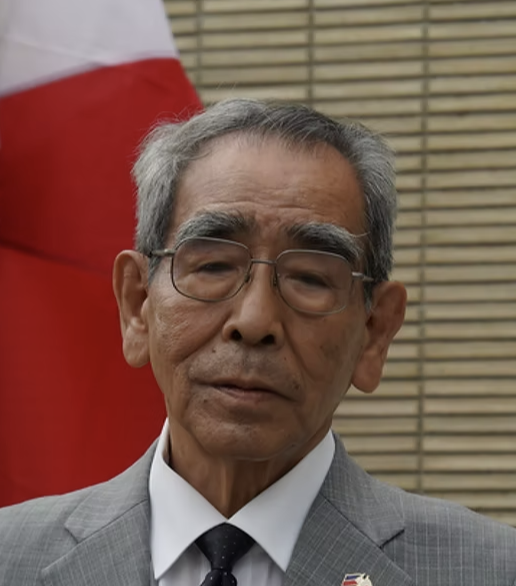
Pinoy-Hapon United Foundation (PHUF), a non-profit organization, Honorary Chairman Takeshi Asanuma
The Second World War produced what are often called the “three great urban battles,” each of which destroyed a city and cost enormous numbers of lives.
The first was the Battle of Stalingrad. Beginning in June 1942, the Nazi army committed a massive force to this industrial city on the west bank of the Volga River and came to control 90% of the city. But the Soviet side made use of the ruined buildings and the lay of the land, sending sniper units in everywhere to keep up resistance. The Nazi army, its supply lines stretched far too thin, was hit by a fearsome Russian winter, and in February 1943 an entire army group finally surrendered. The city of Stalingrad was reduced to rubble; the two sides together are said to have lost a million men, with more than 90,000 German soldiers taken prisoner.
The second was the Battle of Berlin. In April 1945, the Anglo-American forces crossed the Elbe and were closing in on Berlin from the west, while the numerically superior Red Army, attacking from the east, split into two columns and pushed into the city. The defense was thin: no regular army units remained in the city, and only a small force of SS troops together with a home guard hastily organized from old men and boys was thrown into the fight. Surrounded and overwhelmed by the mass of Red Army troops, Hitler took his own life together with his mistress Eva Braun in the bunker beneath his headquarters on April 30; on May 8, Nazi Germany surrendered. The center of Berlin was left completely destroyed.
And the third was the fierce Battle of Manila, fought between the Japanese and American forces.
On October 20, 1944, General MacArthur landed at Leyte and declared over the radio, “I have returned.” The American carrier task forces scattered the Japanese Combined Fleet off Leyte, sinking the battleship Musashi on October 24. Pushing north as they broke the Japanese forces, the Americans made for Manila. The Japanese, for their part, launched the first kamikaze unit, the five planes of the “Shikishima Unit” of the Special Attack Corps led by Captain Yukio Seki, on the following day, the 25th, and scored results.
The American mechanized forces, some 200,000 strong in total, landed at Lingayen Gulf and pushed south. General Yamashita, commander of the Fourteenth Army, chose to avoid a decisive battle in Manila, a great city of 700,000 people, and in January 1945 withdrew a force of about 100,000 men, including tank regiments and artillery, to the mountainous Baguio region roughly 200 km north of Manila, where he set up his defense. He entrusted about 80,000 of these men to Lieutenant General Yokoyama, deploying them in the mountains northeast of Manila.
The Navy, however, would not give up Manila. Rear Admiral Sanji Iwabuchi organized a Manila Naval Defense Force of roughly 26,000 men as its commander. It was a hastily assembled mixed force made up of about 15,000 naval landing troops, about 4,000 Army supply troops, locally conscripted men, and survivors of the crews of sunken warships.
The Manila Defense Force deployed across the city. On February 3, an American advance unit liberated the internment camp for American prisoners of war and civilian internees held at the University of Santo Tomas in northern Manila. With overwhelming strength, the Americans broke through the Manila Defense Force from the south and west as well; backed by aircraft and artillery, the American attack was overpowering. Anti-Japanese guerrillas were also active throughout the city. Even so, the Japanese forces resisted fiercely in many places. Wherever the Americans found even a single Japanese soldier, they poured in bombing and shelling severe enough to destroy the entire building, regardless of whether local residents were living there or not. It amounted to a kind of mass killing.
The Japanese forces were driven back into Intramuros, the old walled city, and the area around Fort Santiago, a sixteenth-century Spanish fortress that had been made the headquarters of the Japanese command. On February 26, Commander Iwabuchi sent a farewell telegram to Imperial General Headquarters and took his own life. Even so, the Japanese forces continued to resist, and Corregidor Fortress also fell. On March 3, this ultimate war of attrition, the Battle of Manila, came to an end. The old city was left utterly destroyed, and the surviving Japanese troops escaped to the southwest. The number of Filipino civilians killed is said to have reached 100,000.