

MANILA NEWS DAILY
That War and Me (12) The Far East Military Tribunal
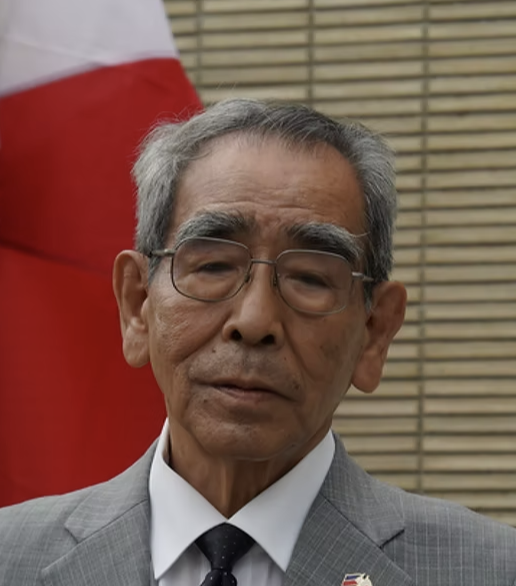
Pinoy-Hapon United Foundation (PHUF), a non-profit organization, Honorary Chairman Takeshi Asanuma
The Potsdam Declaration explicitly called for the trial of war criminals. The so-called Tokyo Trial (the International Military Tribunal for the Far East) was held from May 1946 to November 1948 at the former Army Military Academy in Ichigaya, Tokyo (now the site of the Ministry of Defense). No legal specialists took part; military officers and military-affiliated personnel from each Allied nation conducted the proceedings. Under an ex post facto law, 28 Japanese military men (including a few civilian officials) were indicted, 25 were found guilty, and the death sentences of seven — including former General Hideki Tojo — were finalized and carried out. I have also heard that their remains were never returned, but were instead thrown into the sea.
Justice Radhabinod Pal of India, who took part in the tribunal, strongly argued that it was an unlawful trial. This one-sided proceeding conducted by the Allied Powers, known as the “Class A” trial, was in truth a political trial run by the victors to judge “crimes against peace.” Defense counsel was nominally present, but…
Were not the indiscriminate bombing of cities across Japan and the dropping of the atomic bombs by the U.S. military — the mass killing of innocent civilians — also a “crime of war”?! The total number of victims is estimated at around 350,000.
The so-called Class B and C war crimes trials dealt with charges such as the abuse and execution of prisoners of war and the massacre of civilians. These were held in Yokohama in Japan, and abroad in Nanjing, Singapore, Malaysia, Indonesia, Hong Kong, Papua New Guinea, and other locations — all conducted by the military of the former colonial powers that had previously been defeated by the Japanese army. The ordinary local populations in each of these places are said to have been largely uncooperative with the proceedings.
“Requite resentment with virtue” (以徳報怨) — these were the words Generalissimo Chiang Kai-shek, head of the Nationalist Party, addressed to the Japanese people at the war’s end. The phrase is said to originate from Laozi. He had not one single Japanese soldier or civilian prosecuted as a criminal, and instead worked to speed the return of every one of them to their homeland.
In turn, the Japanese government gave the Nationalist government the destroyer Yukikaze — the celebrated “unsinkable ship” — as war reparations.
The Philippines’ case is a bit more complicated, so I will address it separately.
Prosecutions in British colonies other than Singapore seem to have been relatively few, but the Class B/C war crimes prosecutions in Indonesia, then under Dutch colonial rule, appear to have been quite severe, with a considerable number of death sentences. Baron Toshitaka Maeda, an army captain and a graduate of Keio University from a cadet branch of the Maeda clan of Kaga, is said to have shouldered the guilt alone to shield his subordinates, and — as a soldier of the Empire — to have faced his end with dignity after bowing in the direction of Japan.
In Indonesia, Sukarno and Hatta — who had been released from Dutch custody by the Japanese military — launched their war of independence and issued a Declaration of Independence dated “17 August, Year 2605.” That “Year 2605” is the Japanese Imperial calendar, corresponding to 1945 — a telling sign of just how much respect Sukarno held for Japan. A great many former Japanese soldiers chose not to return to their homeland and instead fought in this war of independence, supporting the Indonesian independence army and supplying it with weapons and ammunition. They achieved real results in battle, and several dozen of them died in the fighting — their names are still inscribed at Indonesia’s National Heroes’ Cemetery today. Whenever a member of the Japanese Imperial Family or the Prime Minister makes an official visit to Indonesia, they are certain to lay flowers there.
Indonesia formally gained independence on December 27, 1949.
Even so, roughly 10,000 Japanese servicemen were detained on suspicion of Class B/C war crimes both in Japan and abroad; of these, about 5,700 were indicted and 4,500 were found guilty. 984 were sentenced to death, and the sentences were carried out. Most of these Japanese soldiers offered no defense of themselves, and are said to have quietly bowed toward the east and climbed the scaffold while praying for their homeland’s peace. They too were casualties of war. In later years, some of our predecessors chose to enshrine their souls together at Yasukuni Shrine, and I understand their feelings. It remains deeply regrettable to me that this continues to be turned into a political issue even now.
General Tomoyuki Yamashita and Lieutenant General Masaharu Homma were likewise executed as war criminals, and they rest in this land.
“Great Men of the Philippines: José Rizal” (Part 32 — Final)
Yasotarō Mōri
Was Rizal a Revolutionary?
Was Rizal a revolutionary or a reformer? On this question, I offer below an abridged translation of a passage from Philippine Social Science, by Professor Maximo Kalaw of the University of the Philippines.
Rizal was, without doubt, a revolutionary at heart — but not a revolutionary of the extremist type. Before resorting to actual armed uprising, he sought first to move the heart of Spain, and then to exhaust every legal means available. One could say that Rizal was, and was not, the instigator of the revolutionary uprising of Bonifacio’s faction. His words — his writings — contributed enormously to that uprising. It was thanks to what he wrote that the Filipino people came to feel themselves a single nation, set aside their minor differences in favor of the greater common cause, and rose in a unified voice against the suffering of the whole people.
Yet he himself did not realize that his words were already stirring grave unrest among the whole nation. He did not know that the Katipunan — the League of Filipino Youth — inspired by his life and his writings, had elected him its honorary president and hung his portrait in its headquarters’ meeting room. Rizal underestimated the capacity of the masses. He always believed that, should a revolution ever come, it would have to be led and supported by the educated and the wealthy. When he said he had no connection to the actual movement, he was speaking the honest truth. As the very model of a scientist and a philosopher, he abhorred bloodshed, and never considered taking up arms until he was utterly convinced that no other course remained. A certain Spanish commentator once wrote of Rizal in words that hold true to a considerable degree:
“Rizal’s soul feared revolution. Yet in some deep corner of his heart, he hoped for it. He feared it because revolution threatened the work of civilization; and even as he feared it, he probably wished for it against himself.”
Rizal’s Spanish biographers claim that he never approved of the Philippines separating from Spain, yet no one denies that his work El Filibusterismo (the sequel to Noli Me Tángere) preaches a revolutionary spirit. That revolutionary spirit, however, was — as expressed through the opinion of Father Florentino in that book (said to represent Rizal’s own ideal) — one of separation or independence achieved through legitimate means, not brought about through criminal acts. It was to be accomplished through the united demand of a people conscious of its own rights and duties, not through impure, vengeful motives.
The greatest reason Rizal deserves to occupy the foremost place in the political history of the Philippines is that he was the true creator of Filipino nationalism. Where other heroes and martyrs, in resisting Spain’s misrule, had sown the seeds of political awakening, it was Rizal’s writings that cleared away the weeds around that sapling, his tears that nourished it, and his own precious blood, shed as a martyr, that hastened its growth. So swift and so remarkable was that growth that Rizal himself could scarcely have recognized the tree that had sprung, so vigorously, from his own labor. (End of Chapter Seven: His Noble Spirit Lives On Through the Ages) THE END