

MANILA NEWS DAILY
“Great Men of the Philippines: José Rizal” (Part 25)
Yasotarō Mōri
Chapter Six: Toward a Tragic End
The world moves in ironic ways. While Rizal was still at anchor in Manila — exactly fifteen days before his own departure (August 20) — the “conspiracy” of the Katipunan (rendered here as the League of Filipino Youth) was exposed, sending shock waves through the small Spanish community. There is no reliable record of exactly how this inside information leaked out. It is generally held that it was carelessly let slip, by the wife or sister of a member named Patiño, to a certain friar, and that the story was considerably exaggerated and then used by the authorities to justify a crackdown on the League.
About four years had passed since the League’s founding, its membership had grown, and its influence had steadily expanded — though some members grumbled that they were only ever asked to pay dues, and no small number were disappointed once it became clear that Rizal had absolutely no connection to it. The League’s leaders were well aware of the danger of rashly taking action with poorly armed, untrained members, yet they also recognized the need to do something to strengthen the League’s unity. So on August 20 they met at Balintawak, near Manila, and resolved to finally raise the banner of revolt on the 30th of that month. It was this plan that leaked out beforehand.
This “conspiracy” was said to involve the mass slaughter of Spaniards. League members who were captured were tortured into giving up the names of other members, and arrests spread in a chain reaction — some of those swept up were apparently not even League members — until the total reached 4,377. In the sudden crisis, Bonifacio himself managed to escape, and with a spirit of desperate resolve raised the torch of revolution and declared the founding of the Philippine Republic.
Amid all this turmoil, Rizal was sailing toward Spain. Looking back on his own conduct, his conscience was entirely clear. He carried with him a warmly worded letter of introduction from Governor-General Blanco, who understood and sympathized with him, addressed to senior officials in the home country. Armed revolution was a principle he had long opposed. Yet the authorities and the friar faction, who had been looking for any opportunity to bring him down, were bitterly frustrated at having let the bird escape the cage by allowing Rizal to sail abroad, and were already seething with discontent at the Governor-General’s handling of the affair. Convinced, as they had long believed, that Rizal was secretly the movement’s leader, they could not help but tie this revolutionary uprising to him. It was widely put about, as though it were simply the natural course of events, that the uprising had been incited by Rizal.
When the ship called at Singapore, Rizal’s friends there, keenly aware of the danger closing in on him, urgently advised him to disembark and seek safety on British territory. He firmly rejected this advice, saying that to flee now would be tantamount to confirming the suspicions against him regarding the revolutionary movement, and he continued on his voyage, leaving his fate to providence. One Filipino traveling with him, however, sensing the danger, disembarked there and so escaped unharmed.
Meanwhile, in Manila, the campaign to summon Rizal back grew ever more intense. The disreputable Spanish residents of the Philippines who appeared, thinly disguised, as characters in his novel Noli Me Tángere — and who had long resented Rizal, suspecting they were the models for those portrayals — now joined in a chorus of condemnation against him. The Governor-General, however, knew Rizal well and believed that the authorities and the friars themselves bore much of the blame for provoking the uprising, and expected it to be quelled soon regardless; so he did not act as aggressively as the anti-Rizal faction wished.
At this point the anti-Rizal faction finally moved the military, and in the name of a special court-martial, ordered Rizal’s arrest and recall. The Governor-General, left with no choice, at last issued the order for his arrest and recall as well. Rizal received this order when the ship reached Suez.
That War and Me (9) Nihilism and Romanticism
Pinoy-Hapon United Foundation (PHUF), a non-profit organization, Honorary Chairman Takeshi Asanuma
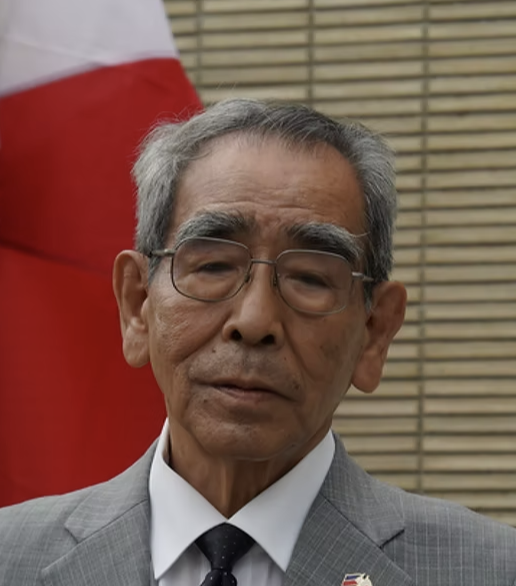
By the time I became aware of myself as an individual (1942–45), the Greater East Asian War was in full swing — and, moreover, a losing war. I fled here and there through bombs, incendiaries, and strafing attacks.
Before my young eyes, destruction and killing unfolded one after another.
Human lives vanished right before my eyes. I was powerless against it. What man builds, man destroys. Through the destruction of war, that karma of humanity seeped into my young heart — a sense of human powerlessness. The whole human world felt utterly empty. Carrying this hollow feeling within me, I grew into a detached person, with little appetite for material things or worldly success. I came to harbor the mindset of a “lost generation.”
In April of Shōwa 29 (1954), I entered high school, and in the spring of Shōwa 32, I sat for the entrance exam of a certain national university in Tokyo — and failed, spectacularly. So, what to do? I found the College of Art at Nihon University, which held its entrance exams later than most. I applied to its Department of Film and was accepted. My father paid the somewhat higher tuition.
I studied film direction and screenwriting. The methods of writing I learned back then still serve me today, and I read voraciously across all kinds of books. It was the era of the 1960 Anpo protests — the era of the student movement. I did not take part.
Great despair leads to great hope. The ultimate nihilism is romanticism. This is the understanding I came to hold.
Around the age of eighteen, I secretly resolved to live by “a man’s romance,” coming to believe that a man’s dream is to keep chasing romance and adventure. So even after finishing university, I did not go into the film industry, nor did I take a job at a company — or rather, I could not bring myself to.
I could speak English, poorly though it was. In my early elementary school years, the NHK radio program “Come Come English” began broadcasting, and I developed a strong interest in foreign languages. There were also occupation troops loitering around the neighborhood at the time. I listened to that program diligently, and attended a local English conversation school until sixth grade, taught by a man who worked as an interpreter at a U.S. military camp. Through junior high and high school, English was the one subject in which my grades were reasonably good. Nothing close to professional interpreting, of course, but I could get by.
I had a strong interest in foreign languages from childhood, and taught myself by ear; even now I can manage broken German and French. Spanish and Italian, too, at the level of basic greetings — all of it picked up by ear.
A relative on my grandfather’s side was a member of parliament for the Liberal Democratic Party, and through his introduction I became the private secretary in charge of public relations (1963–68) for a certain powerful LDP Diet member. I also helped with the fair-copying and proofreading of his written works, and accompanied him on several short overseas inspection trips.
In 1962, I married. I was twenty-four, my wife twenty. She passed away last year in Tokyo, having supported this ne’er-do-well husband of hers for sixty-three years. I offer my hands in prayer for her.
In 1964, I was involved, to a small extent, with the Tokyo Olympics — political work connected to the Japan Amateur Sports Association (today’s Japan Sport Association). During the summer breaks of 1965 and 1966, I toured various European countries for about a month each time. In June 1967, I was invited to the People’s Republic of China — then in the midst of the Cultural Revolution and without diplomatic relations with Japan — to observe the political situation there (accompanying the Diet member, for about a month). After returning home, I published an account of the visit in Iwanami Shoten’s magazine Sekai.
In the summer of 1968, I traveled by bus across the American continent from west to east, twenty-five days in all, at times following the old Route 66. All of this I owed to my boss, the powerful Diet member — but at the end of 1968, I resigned my post as private secretary. I set out to put the roughly six years of experience I had accumulated to use in a new challenge — in pursuit of romance and adventure!