

MANILA NEWS DAILY
2026 Okinawa Gubernatorial Election: Comparing the Leading Candidates’ Platforms and Debate Developments
With voting set for Sunday, September 13, 2026, and the official announcement of candidacy just around the corner (August 27), the race for Okinawa governor is heating up. The incumbent and several newcomers — six candidates in total — have declared their candidacy, and the policy debate is now in full swing. This article summarizes the lineup and platforms of the leading candidates, along with the debates held so far.
1. Comparing the Leading Candidates and Their Platforms
Beyond how voters assess the incumbent administration’s record, the main points of contention in this race are rebuilding the economy and the approach to the base issue.
Denny Tamaki (incumbent, age 66)
- Main stance: Continuity of current administration, emphasis on peace, positioning himself as representing “the people of the prefecture” rather than a party
- Key points:
- Citing the record of his two terms (eight years) in office — including expanded childcare support and welfare — he calls for continuing a “compassionate society that leaves no one behind.”
- He clearly opposes construction of the new base at Henoko, maintaining a peace-oriented administration even at the risk of conflict with the national government.
- He emphasizes governance grounded in citizens’ everyday concerns, aiming to balance the economy with welfare.
Genta Kosha (newcomer, age 42)
- Main stance: Reform of prefectural government, emphasis on practical economic management (endorsed by the LDP, Ishin, DPFP, Sanseito, and others)
- Key points:
- At 42, he positions his youth and administrative experience — at the Ministry of Internal Affairs and Communications and as former deputy mayor of Naha — behind a platform of “reforming prefectural government.”
- He is focused on practical economic measures, including raising Okinawa’s lagging per-capita prefectural income and easing worsening traffic congestion.
- With an eye toward eliminating the dangers posed by Futenma Air Station, he “accepts” relocation to Henoko as a realistic solution.
Mikio Shimoji (newcomer, age 64)
- Main stance: Breaking the conservative-progressive standoff, distinctive infrastructure and childbirth-support policies
- Key points:
- He presents himself as a “third force” aiming to end the long-standing conservative-versus-progressive divide.
- He proposes bold policies such as introducing a north–south rail line on the main island and free bus and monorail fares for children.
- On the Henoko relocation project, he takes a distinct stance of “not accepting” it, citing the length of time it would take to complete.
2. Debate Developments and Points of Focus
As the campaign enters its early stage, local media and groups such as the Junior Chamber (JC) have held public debates and roundtable discussions in which the candidates have engaged directly with one another.
- Roundtable hosted by the Ryukyu Shimpo
- Date: July 29, 2026
- Overview: Denny Tamaki, Genta Kosha, and Mikio Shimoji appeared together and exchanged views on Okinawa’s future, the economy, and the base issue.
- What was discussed: The exchange grew heated over concrete approaches to boosting the economy and raising per-capita prefectural income, and — the biggest flashpoint — the response to the Henoko relocation, pitting the incumbent’s continuity-focused line against the newcomers’ reform-minded, more pragmatic positions.
Can You Legally Carry a Gun in Bangsamoro? — The Law on Unregistered Firearms, Security Companies, and Private Armies (Part 3 of 4)
Can You Legally Carry a Gun in Bangsamoro? — The Law on Unregistered Firearms, Security Companies, and Private Armies
In the Bangsamoro Autonomous Region in Muslim Mindanao (BARMM), in southern Philippines, a peace process is underway between the government and organizations that had waged an armed struggle.
This leads some people to assume that “ordinary residents and former combatants in Bangsamoro can freely carry guns,” or that “the private armies of politicians and powerful clans are tacitly tolerated.”
The legal answer, however, is clear.
Even in BARMM, possessing an unregistered firearm is illegal, and firearm registration, carry permits, and the licensing of security companies are governed, in principle, by the same national laws that apply throughout the Philippines.
If there is a distinctive feature of BARMM, it is not that firearm possession has been liberalized — it is that the disarmament of former combatants and the dismantling of private armed groups are being pursued through special mechanisms tied to the peace agreement.
Unregistered Firearms Are Illegal in BARMM Too
The basic law governing firearms in the Philippines is Republic Act No. 10591, the Comprehensive Firearms and Ammunition Regulation Act.
This law applies nationwide, including in BARMM. There is no general legal exemption for BARMM residents, politicians, powerful clans, or former MILF/MNLF members.
At minimum, the following steps are required to legally own a firearm:
- LTOPF: an individual license to own and possess firearms
- Firearm registration: registration of each owned firearm with the PNP
- PTCFOR: a permit to carry a registered firearm outside the home
- Firearm transport permit: required to transport a firearm to a shooting range or other designated locations
Holding a firearm-ownership license does not automatically entitle a person to possess any and every firearm. Each individual firearm must be registered with the Firearms and Explosives Office of the Philippine National Police (PNP).
Unregistered guns, guns with serial numbers filed off, stolen guns, guns possessed by someone other than the registered owner, and guns whose license or registration has lapsed can all qualify as a “loose firearm.”
Even a legally registered firearm requires a separate permit to be carried outside the home. Having a license and registration does not mean one can freely walk around with a gun on one’s hip.
During election periods, the Commission on Elections’ (COMELEC) gun ban adds a further layer of restriction — a separate COMELEC permit may be required in addition to an ordinary firearm license.
Can Former MILF/MNLF Members Carry Guns?
Being a former member of the MILF (Moro Islamic Liberation Front) or MNLF (Moro National Liberation Front) does not, by itself, constitute a firearm license.
Circumstances such as “having taken part in the peace agreement,” “having held an organizational weapon since before,” or “needing it for local security” do not, on their own, entitle a person to privately possess an unregistered firearm.
For the MILF, “decommissioning” — the phased registration, verification, and disarmament of combatants and weapons — is being carried out under the peace agreement.
This is not, however, a system for converting a former combatant’s weapon into a legally private civilian firearm. It is a procedure, as part of the peace process, for removing combatants and weapons from organized armed status.
Nor does the fact that decommissioning has not yet been completed for a given weapon mean that former combatants are free to carry it.
The disarmament process between the government and the MILF has not been fully completed through its final stage. The disarmament issue within the peace process therefore needs to be considered separately from the firearm registration system that applies to individuals.
The JPST Is Not “MILF’s Private Police”
BARMM has what are called Joint Peace and Security Teams (JPST).
The JPST is composed mainly of:
- The Armed Forces of the Philippines (AFP)
- The Philippine National Police (PNP)
- Selected, trained members of the BIAF, the MILF’s former armed wing
Looking at this structure alone, it might appear that the MILF holds its own police authority.
But the JPST is a limited, transitional joint body formally established under the peace agreement. Its area of operation and mandate are confined to what the government and the MILF have agreed to; it is not a permanent police organization run independently by the MILF.
There is a clear difference between someone formally part of the JPST handling weapons in the course of official duty, and a former MILF member carrying an unregistered firearm on their own judgment.
BARMM’s regular police force remains, without exception, part of the PNP — the Police Regional Office Bangsamoro Autonomous Region — under the command and supervision of the national police.
Are Security Guards Really Capped at 500?
Under the former Republic Act No. 5487, the number of guards a security company could employ was capped at different levels depending on the region.
Under the old system, the cap was 1,000 in Metro Manila and similar areas, 500 in other cities and first-class municipalities, and 200 in other municipalities. This is why the belief that “security companies are capped at 500” remains widespread.
This law, however, has been replaced by the new Republic Act No. 11917, the Private Security Services Industry Act.
Under current law, a private security agency may employ up to 2,000 licensed private security personnel, in principle, per company.
- Old law — Metro Manila and similar areas: 1,000
- Old law — other cities, first-class municipalities: 500
- Old law — other municipalities: 200
- Current law — private security agency: 2,000
This 2,000-person cap applies equally in BARMM. The BARMM government has no independent authority to grant security companies unlimited personnel or weapons.
In-house security units that protect a company’s own facilities may be classified differently from private security agencies that offer services to outside clients. Even so, they remain subject to PNP licensing, supervision, and firearms regulation.
Can a Security Company Build an Armed Group?
A security company is a private business that obtains a proper license and provides security services for facilities, businesses, residences, banks, and the like.
When guards use firearms in the course of their duties, they must comply with conditions covering company and firearm registration, guard qualifications, Duty Detail Orders, deployment locations, and working hours.
A security company license is not a means of legitimizing the private armies of politicians or powerful clans.
If guards are used to intimidate during election campaigns, pressure political rivals, run private checkpoints, police residents, or intervene by force in land disputes, that goes beyond the scope of ordinary security work.
Even firearms registered to a security company can create separate legal liability if taken off the work site without authorization, or handed to someone other than a registered guard.
What matters is not simply whether the gun itself is registered — but who is using it, under what qualification, where, and for what purpose.
Politicians’ and Clans’ “Private Armies” Are Not Permitted
In the Philippines, cases of politicians, powerful clans, and business figures maintaining large numbers of armed personnel have long been a problem.
The 1987 Constitution, however, mandates the dismantling of private armies and armed groups not recognized as legitimate state institutions. This applies to BARMM as well.
In government documents, a Private Armed Group (PAG) is generally characterized by the following features:
- Composed of two or more people
- In possession of legal or illegal firearms
- Uses fear, intimidation, or violence
- Operates for private political or economic gain
It should be noted that even if a group’s members hold registered firearms, that does not make the group’s activities lawful.
If several people carrying legal firearms intimidate voters or attack a rival clan on a politician’s orders, they may be assessed as a private armed group even though their firearms are registered.
Conversely, simply employing multiple guards through proper channels does not automatically make an entity a PAG. What matters most is whether the activity constitutes authorized security work, or intimidation and violence for private political or economic ends.
How Far Are “Vigilante” Groups Permitted to Go?
It is not inherently illegal for local residents to prepare for crime or disasters by providing information to police or conducting night patrols.
But if a community group starts holding unauthorized firearms, running checkpoints, making arrests, conducting interrogations, imposing punishment, or evicting people from land, that goes beyond ordinary crime-prevention activity.
Belonging to a vigilante group is not, by itself, grounds for possessing an unregistered firearm. Local custom, preparation for clan feuds known as “rido,” or distrust of the police likewise do not provide a blanket legal exemption.
At the same time, groups formally established as auxiliaries to the military or police, and incorporated into the state’s command structure, are distinguished from ordinary private armies.
That said, if members of a formally recognized auxiliary group act privately on the instructions of a politician or clan, their official status does not exempt them from responsibility.
Special Measures Are in Place to Dismantle Private Armies Around BARMM
In 2015, the Philippine government established the National Task Force for the Disbandment of Private Armed Groups, targeting the Bangsamoro region and its surrounding areas.
The scope covers not only BARMM but also neighboring areas of Mindanao.
This measure was deemed necessary due to circumstances including the following:
- Clan feuds
- Powerful local families maintaining continued political dominance
- The prevalence of illegal firearms
- Poverty and gaps in public services
- Private misuse of police and military auxiliary organizations
- Violence and intimidation tied to elections
According to a Philippine government announcement as of July 2025, the task force had dismantled 15 private armed groups, processing 94 members and 86 firearms, and had begun dismantlement measures targeting 37 groups identified as potential private armed groups, covering 187 members and 304 firearms.
While this represents some progress, it does not mean the problem of private armies has disappeared entirely from BARMM and its surrounding areas.
Rather, because regular police, former anti-government organizations, security personnel for local politicians, armed clan groups, and criminal organizations all coexist in the same areas, the work of clarifying who holds legitimate authority continues.
Does Being a Private Army Alone Lead to Immediate Punishment?
The Constitution calls for the dismantling of private armies and unrecognized armed groups, but in criminal cases, specific charges are applied based on the actual conduct involved.
These include violations such as:
- Possession of an unregistered firearm
- Carrying a firearm without a permit
- Threats, coercion, and assault
- Murder, injury, and kidnapping
- Illegal detention or checkpoints
- Election obstruction and voter intimidation
- Involvement in rebellion or terrorism
So the mere fact that a group has been labeled a PAG does not mechanically determine guilt. At the same time, if members of a private army possess illegal firearms and commit acts of violence or intimidation, they may face liability for multiple offenses.
BARMM’s Firearms Regulations Are Not Uniquely Lax
The key points can be summarized as follows:
- Unregistered firearms: illegal under nationwide law
- Carrying a registered firearm outside the home: in principle requires a PNP carry permit
- Weapons held by former MILF/MNLF members: organizational history alone does not legalize them
- Cap on security company personnel: 2,000 in principle under current law
- Private armies of politicians and clans: not permitted, subject to dismantlement
- JPST: a formal, limited joint body established under the peace agreement
- A BARMM-specific firearms license: does not exist; the PNP’s nationwide system applies
The influence of firearms and armed groups on society and politics may appear more conspicuous in BARMM than in other regions. But that is not because firearms regulation there is more relaxed.
It reflects the difficult transitional process of collecting weapons accumulated over years of armed conflict, reintegrating former combatants into civil society, and dismantling private armed groups.
Under the law, former combatants, politicians, clans, and religious leaders alike are not free to possess unregistered firearms.
The real challenge in BARMM is not whether the laws exist, but whether they can be enforced consistently, without being swayed by local politics or clan relationships.
Coming Up in Part 4:
Part 4 will look at the armed organizations that became parties to the Bangsamoro peace process.
What distinguishes the MNLF, the MILF, the BIFF, Abu Sayyaf, and the Maute Group from one another? How far has disarmament progressed? What are their leaders and former commanders doing today?
It will also examine whether former members who received amnesty or immunity can run for office, and under what circumstances a past criminal record results in the loss of the right to vote or run for election.
*This article is a general explanation based on laws and government materials confirmable as of August 2026, and is not legal advice regarding any specific case.
Key References:
- Republic Act No. 10591 — Comprehensive Firearms and Ammunition Regulation Act
- Republic Act No. 11917 — Private Security Services Industry Act
- Republic Act No. 11054 — Bangsamoro Organic Law
- 1987 Constitution of the Republic of the Philippines
- Office of the President Memorandum Circular No. 83 — Task Force for the Disbandment of Private Armed Groups
- Executive Order No. 79 — Bangsamoro Normalization Program
- Philippine government peace agency — July 2025 statement on decommissioning and dismantlement of private armed groups
Building the “Okinawa Brand” in the Philippines — The Story of PUOA’s Partnership with the Okinawa Industry Promotion Public Corporation
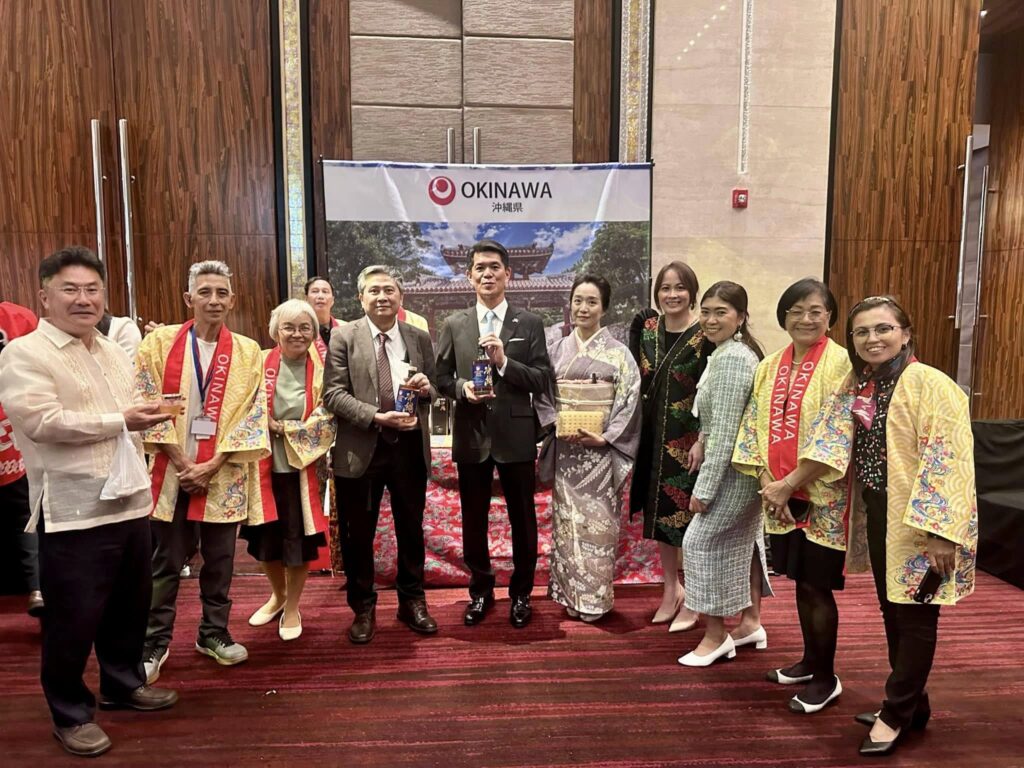
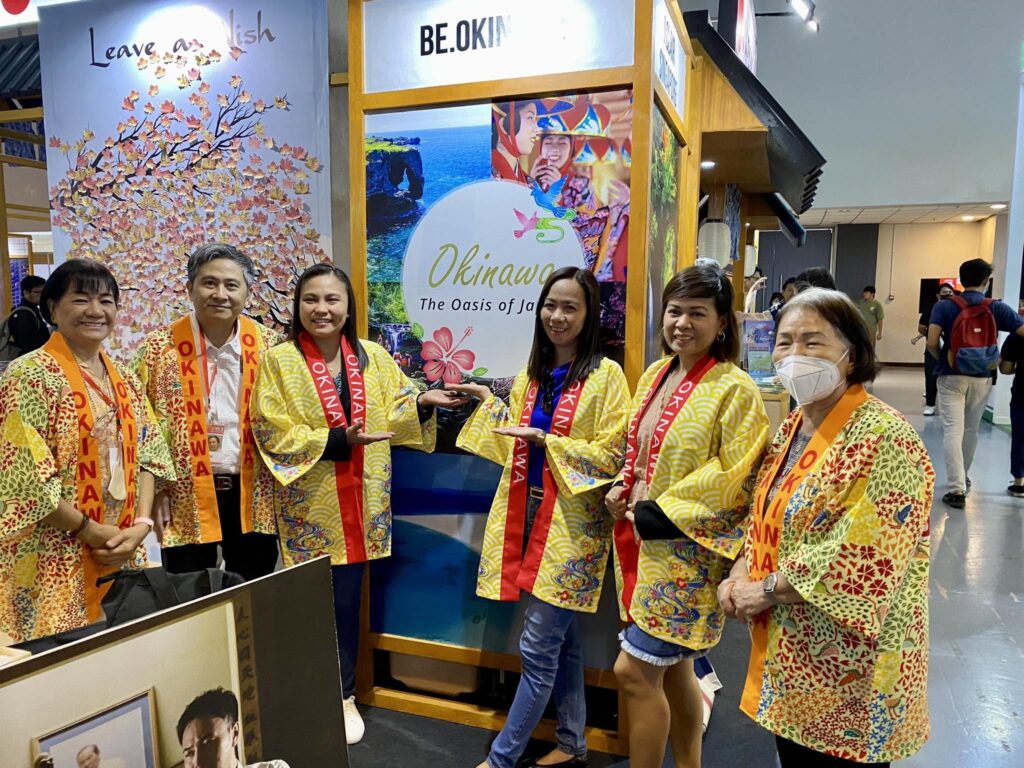
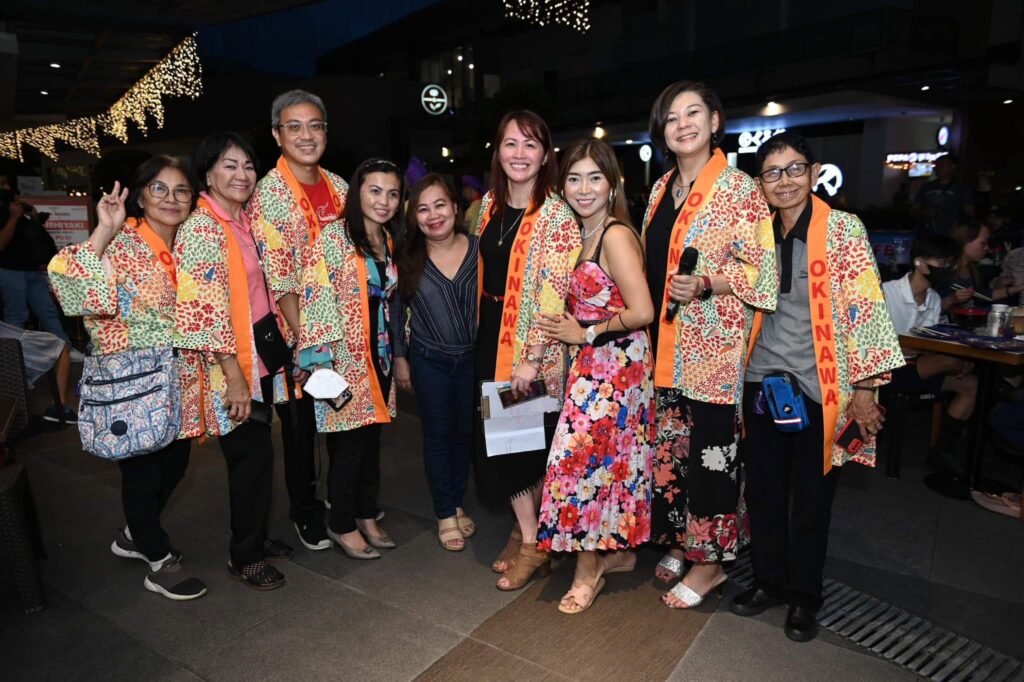
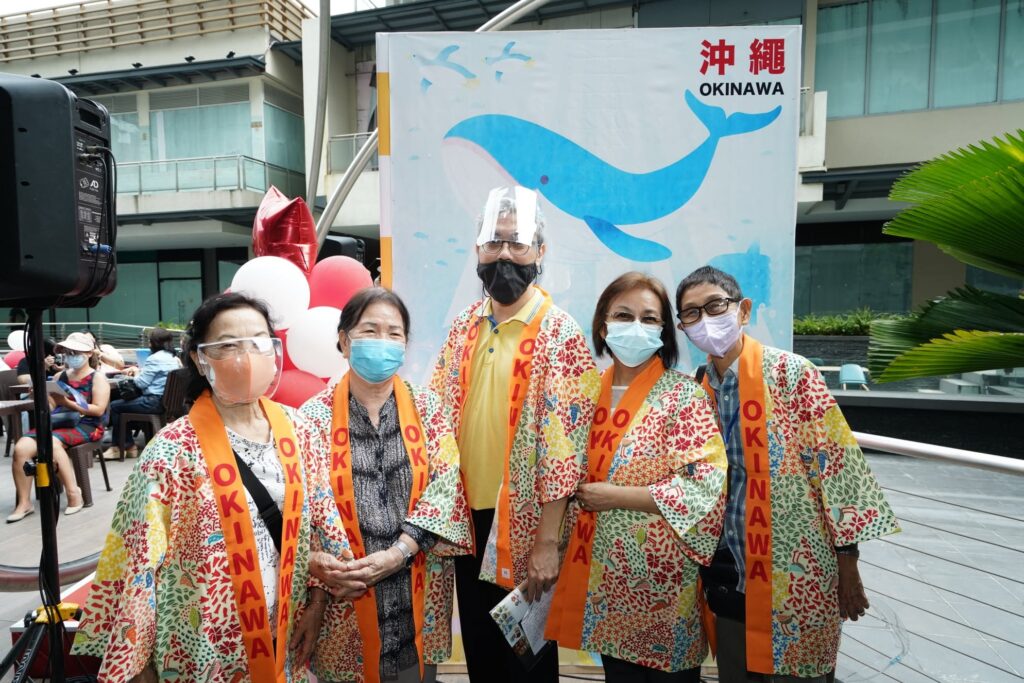
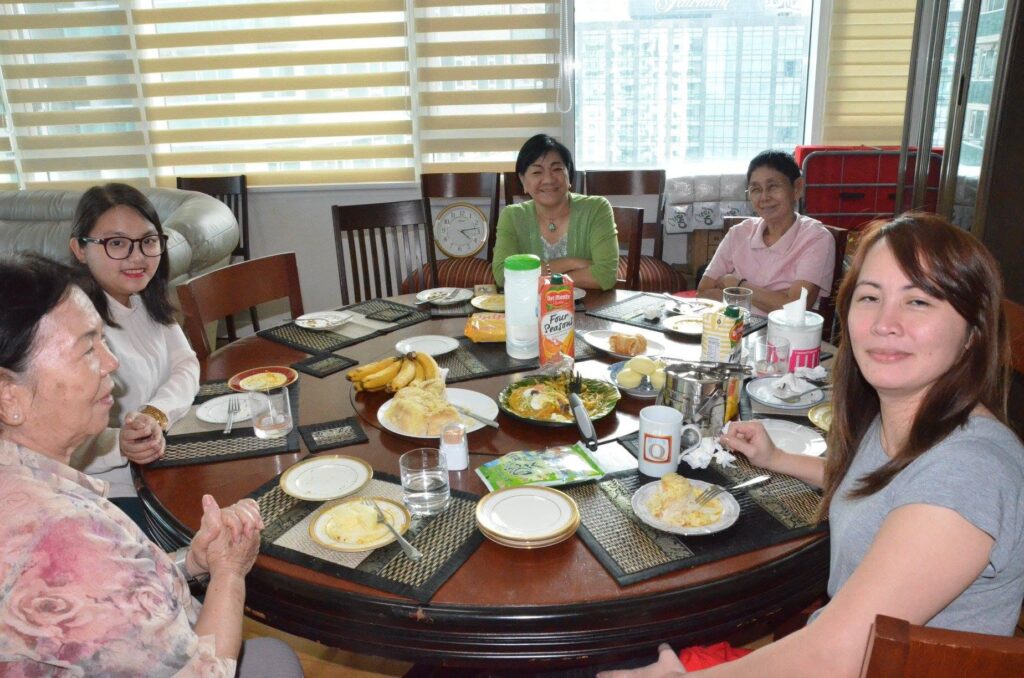
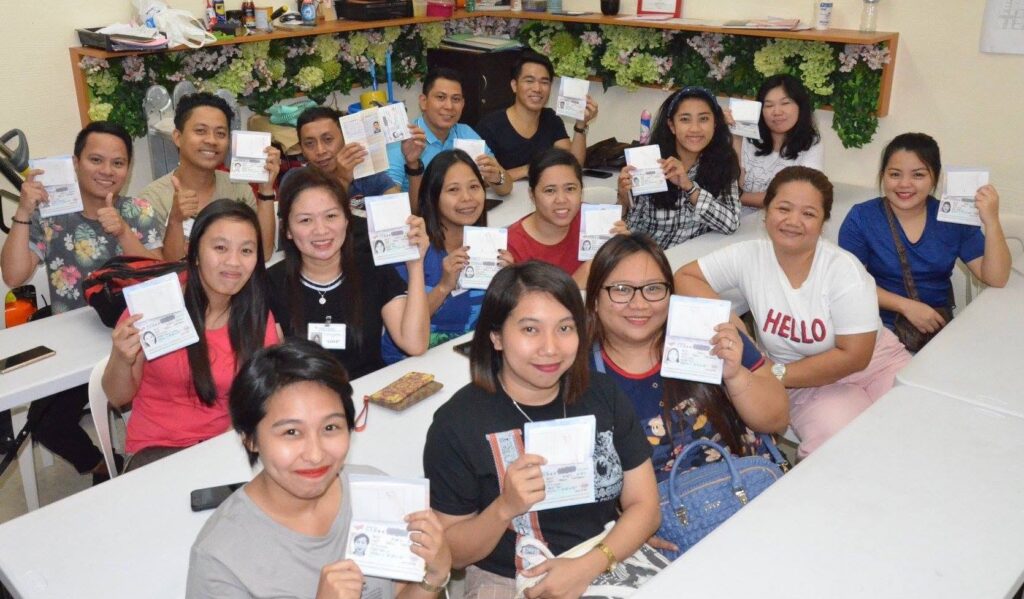
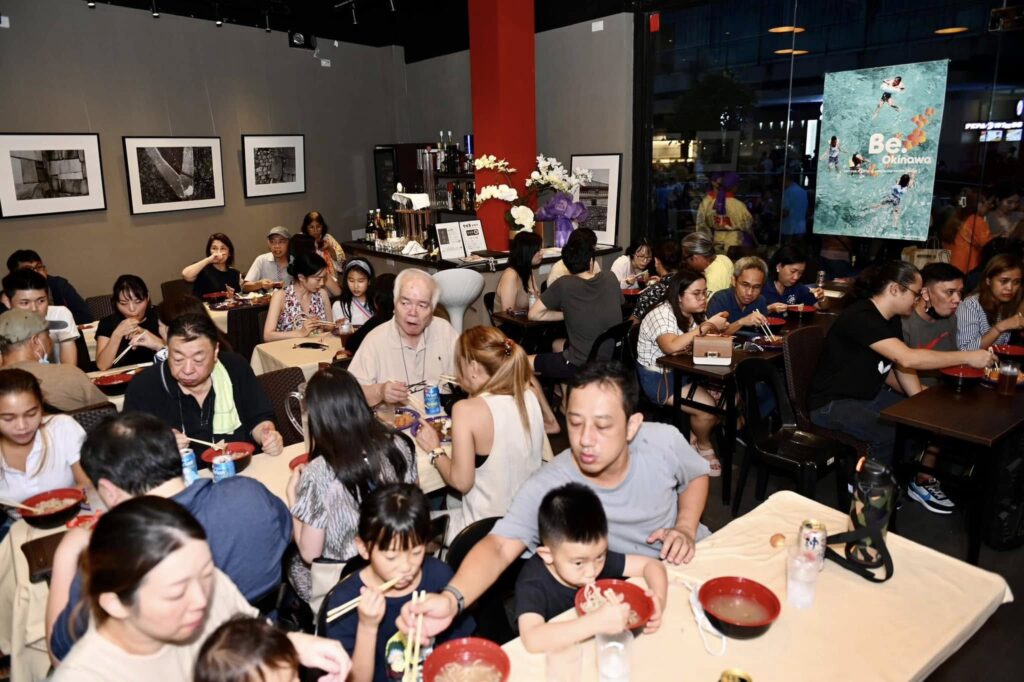
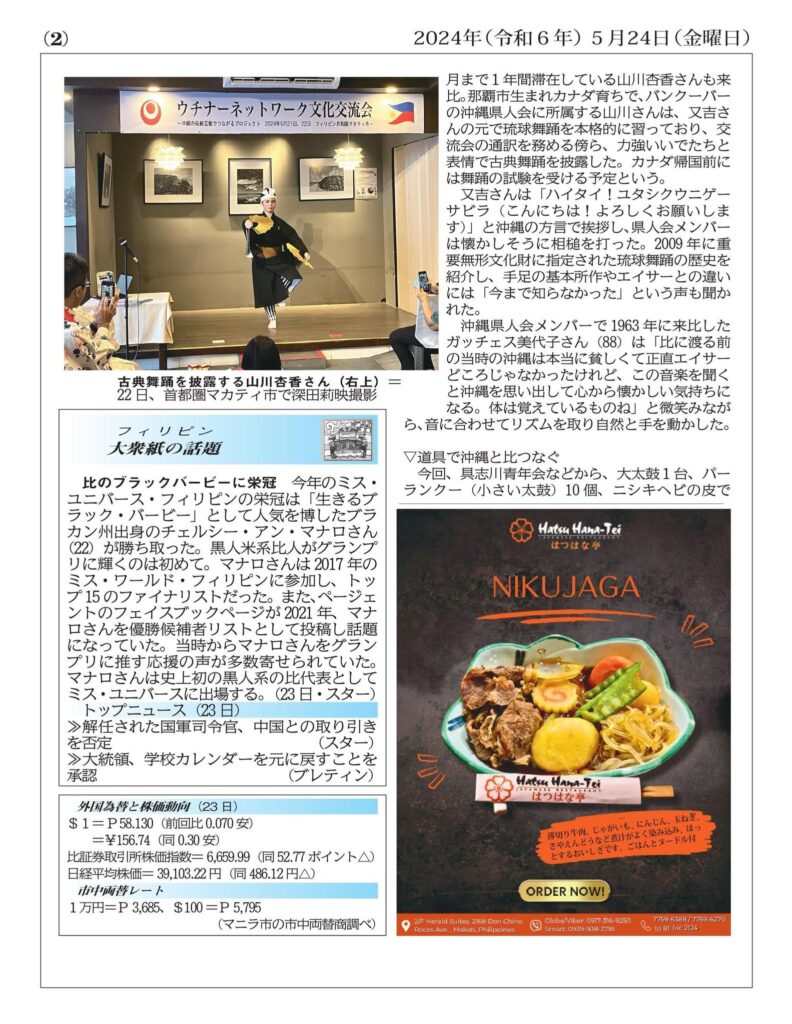
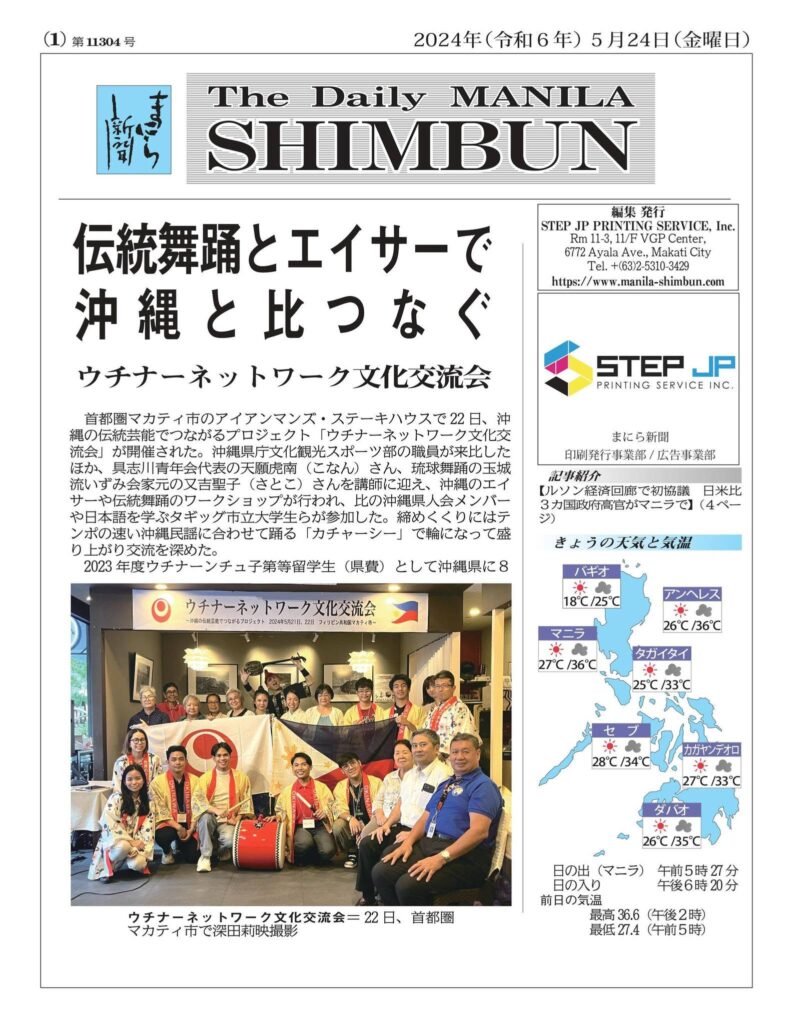
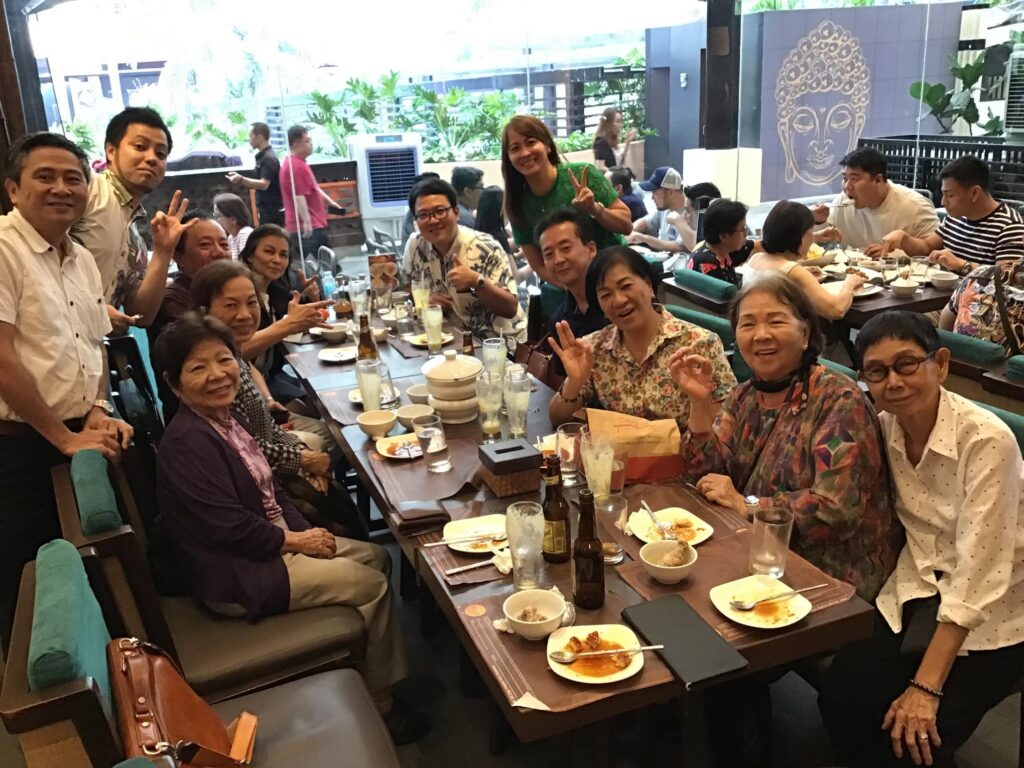
There are people working tirelessly to put down roots for Okinawan culture in the Philippines. Under the leadership of Chairperson Virgie Higa Solis (a 2nd-generation Okinawan-Filipino) and Vice Chairperson, Asahiko Yara, a 1st -generation Okinawan, the Philippine United Okinawa Association (PUOA) has formed a close partnership with the Okinawa Industry Promotion Public Corporation, successfully running a series of events and evolving beyond a traditional prefectural association into a platform for economic and cultural diplomacy.
This article looks back at the journey so far by tracing the many events the two organizations have carried out together.
Activity Timeline: A Record of the Bond Between Okinawa and the Philippines
- 2018: PUOA (Philippine United Okinawa Association) founded — Established a new structure to replace the former POS (Philippine Okinawa Society, Inc.), laying the groundwork for cooperation with government and the Public Corporation.
- 2021: First Okinawa Food Festival held — [Co-hosted] A powerful showcase of Okinawa immediately after the pandemic.
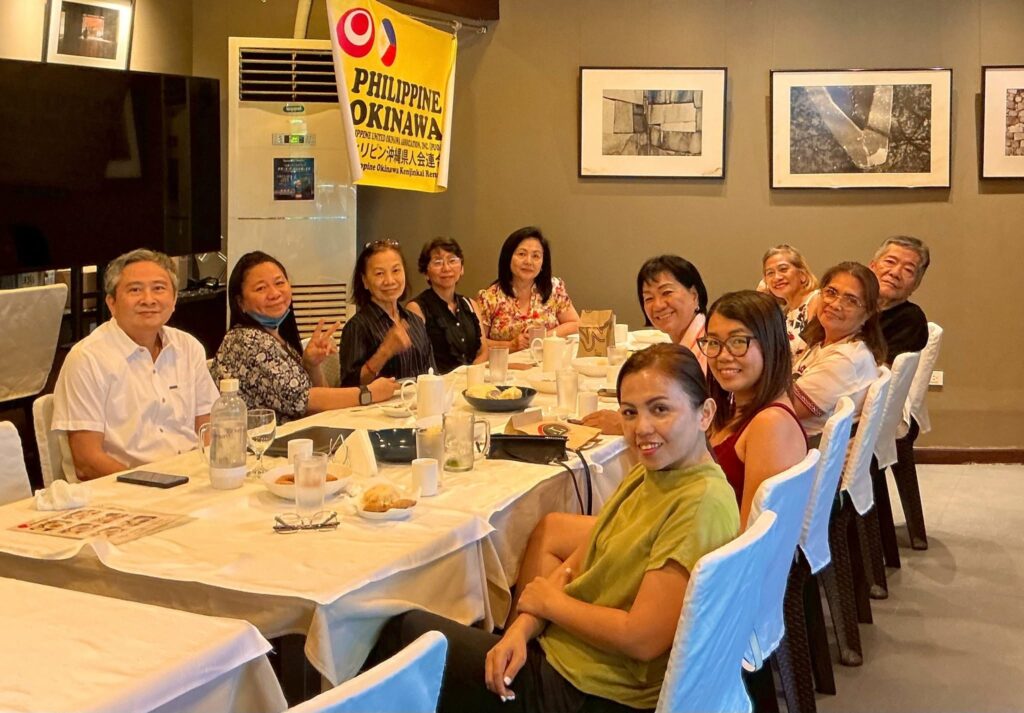
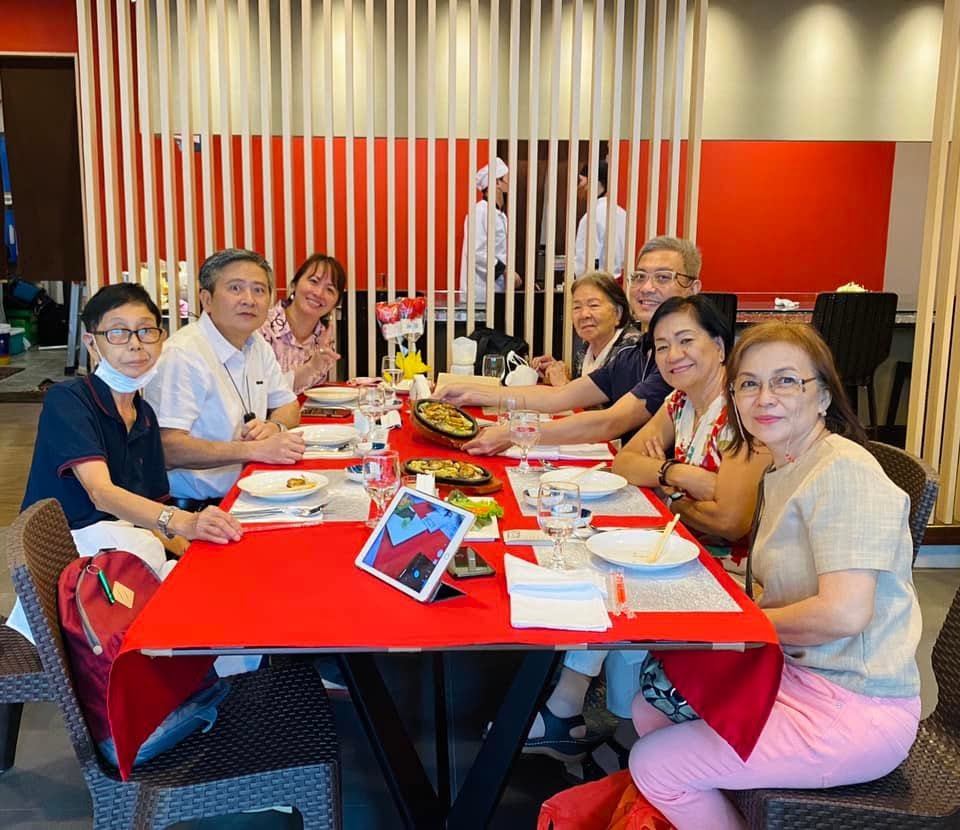
- 2022: Relocated its base to “Ironman Steakhouse” — [Base] Became a permanent hub for Okinawan books and liquor.
- 2022–present: Exhibited a booth at the Emperor’s Birthday reception (Embassy of Japan) for four consecutive years — [Partnership] Official promotion of Okinawan products to the top tier of the diplomatic community.
- 2023: Second Okinawa Food Festival — [Co-hosted] Promoted tourism to Okinawa through its food and drink.
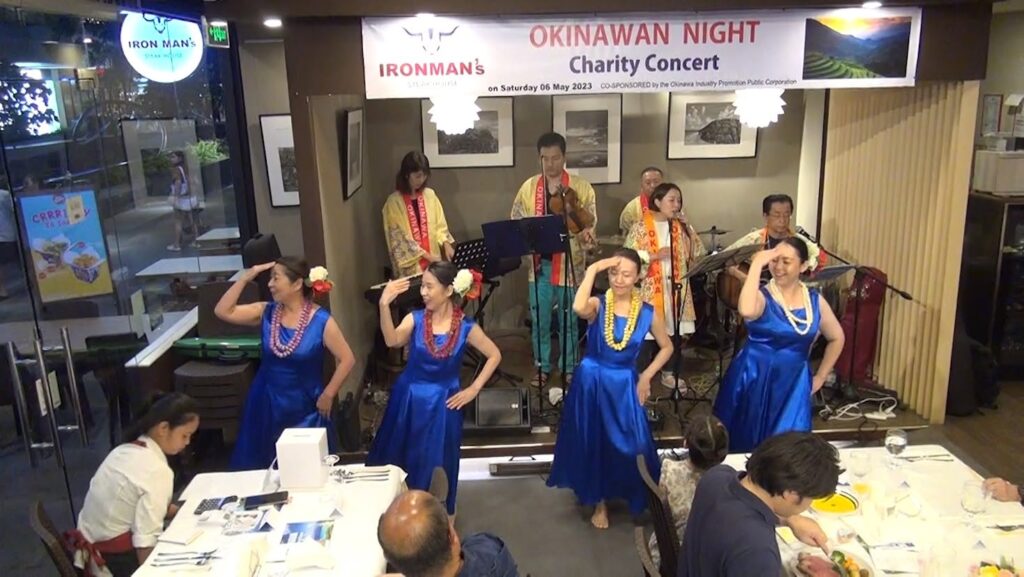
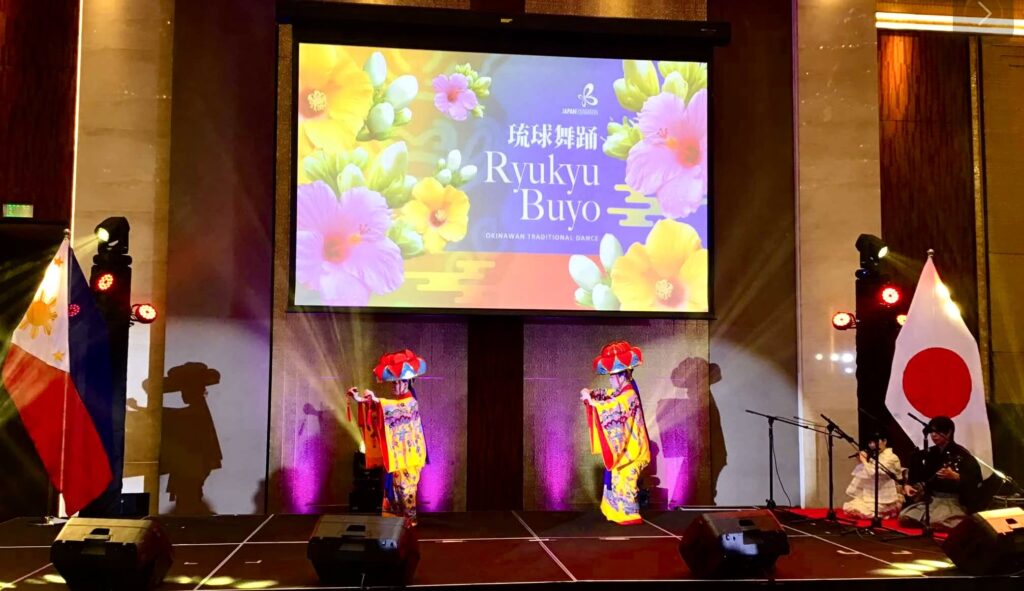
- 2023: Okinawan dance performance at SM Aura shopping mall — [Hosted/supported] Raised brand value through refined performing arts.
- 2024: Hosted a welcome reception for visiting Okinawa Governor Denny Tamaki — [Partnership] Reaffirmed the bond among Uchinanchu (Okinawans).
- Ongoing: Cultural and economic exchange, attendance at memorial services for the war dead, community service, and building the Okinawa brand — maintaining the presence of Okinawa Prefecture and its diaspora in the Philippines, and prayers for peace.
What the PUOA–Public Corporation Partnership Means
The reason our activities have earned unwavering trust locally rests on three pillars.
1. A Continuous, Official Okinawan Presence
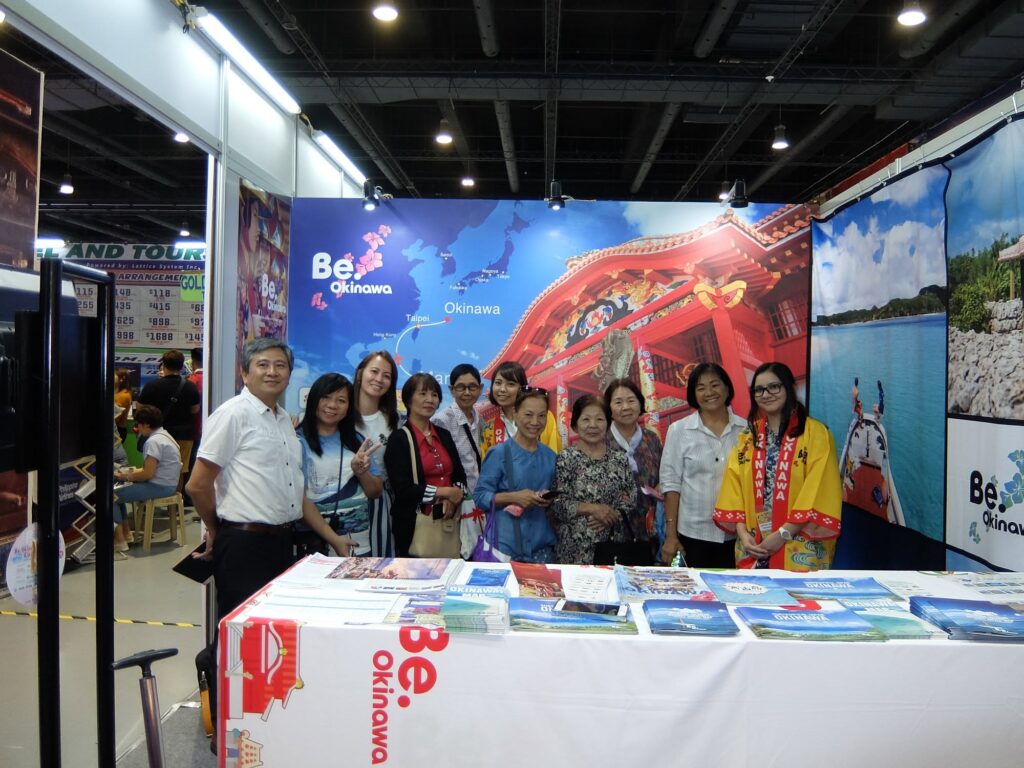
As seen in four consecutive years of exhibiting at the Japanese Embassy’s Emperor’s Birthday reception, and in organizing official receptions during the Governor’s visits, partnering with the Okinawa Industry Promotion Public Corporation has established Okinawa’s standing as an “official, special partner” in the Philippines.
2. Cultural Exchange Centered on Makati City
Rather than simply holding events, PUOA operates its Makati City headquarters, “Ironman Steakhouse,” as a permanent community hub. There, visitors can browse Okinawa-related books, purchase prefectural specialties such as awamori and whisky, and take part in programs introducing eisa and Okinawan dance.
3. Facing History with Sincerity
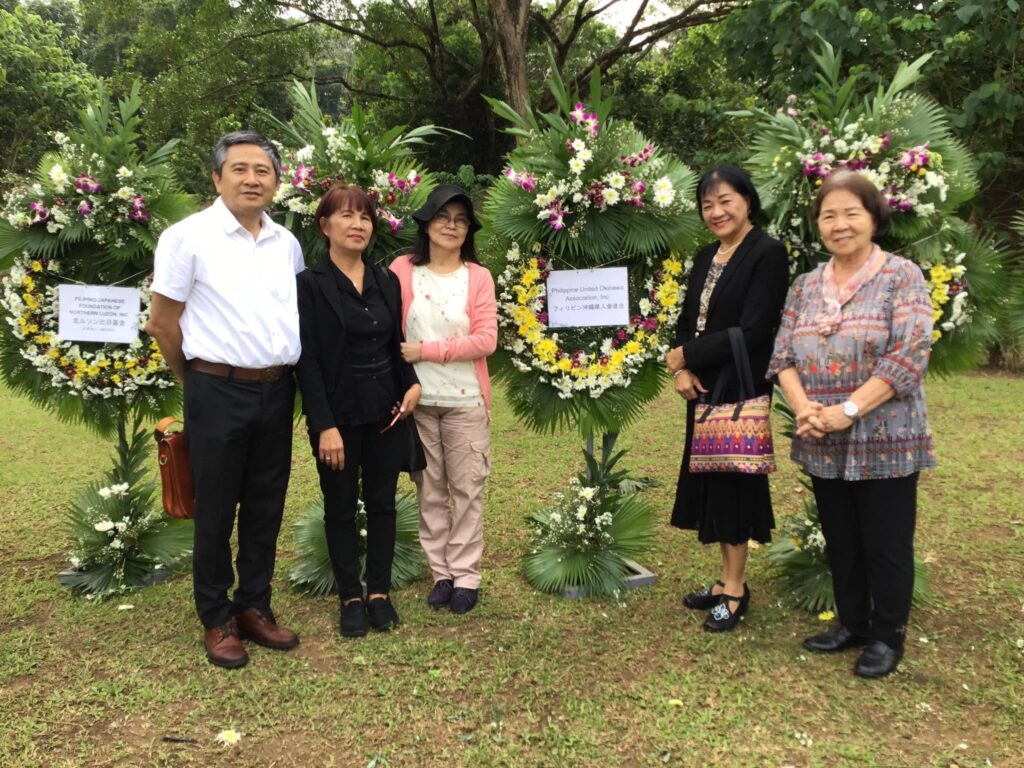
Every year without fail, PUOA attends the memorial service for the war dead at the Calirayan Japanese Garden and lays a wreath. Beyond business or cultural and economic exchange, this stands as proof that PUOA members with ties to Okinawa sincerely honor those who came before and engage seriously with the region’s history — an important activity that must continue.
In Closing — Looking to the Future
With the continued strong backing of Okinawa Prefecture and the Okinawa Industry Promotion Public Corporation, PUOA will keep serving as a bridge between the Philippines and Okinawa, creating new value in both culture and the economy — so that the bonds our predecessors built can be passed on securely to the next generation.
First Okinawa Food Festival https://youtu.be/h8fPbrc6N6A?si=KaUkqAbkcNYu0NXT
(November 26, 2021)
Second Okinawa Food Festival https://youtu.be/mqns_C0zAVg?si=olkukvb83aBrKMIg
(November 20, 2022)
An Evening in Okinawa Mini Concert https://youtu.be/p88WR8KKRDE?si=hpXfYrbK4wIuhZCc
(May 10, 2023)
Welcome Reception for the Visiting Okinawa Governor https://youtu.be/O3DdkN5XAxw?si=0K7kLvgeVTb17pjC
(February 4, 2024)
Okinawa Gin and Okinawa Island Blue Tasting https://youtu.be/L2FpaOshftc?si=nBrrZlaW9KRYnVrq
(September 9, 2025)
The Narita Summit Between the President and the MILF Chairman — How Japan Supported the Peace Negotiations (Part 3 of 4)
The Narita Summit Between the President and the MILF Chairman — How Japan Supported the Peace Negotiations
In 2006, the Japanese government launched J-BIRD (Japan-Bangsamoro Initiatives for Reconstruction and Development) and dispatched socioeconomic development experts to the International Monitoring Team (IMT) in Mindanao.
Japanese experts visited villages in conflict-affected areas to assess the need for schools, health clinics, wells, and farm roads. Through this work, Japan built a distinctive relationship of trust with the Philippine government, the Moro Islamic Liberation Front (MILF), local governments, and residents alike.
That trust produced a major diplomatic breakthrough in August 2011: the first-ever summit between President Benigno Aquino III and MILF Chairman Al Haj Murad Ebrahim, held in Japan.
The meeting took place neither in Manila, nor in Cotabato near the MILF’s home base, nor in Malaysia, which was mediating the peace talks.
It was held at a facility in Japan, near Narita International Airport.
How did Japan — a development donor — come to serve as the diplomatic go-between linking the Philippine president and the MILF’s supreme leader?
Japan’s Involvement Grew Into Three Layers
Japan’s and JICA’s support for peace in Mindanao combined three functions:
- Peacekeeping: the International Monitoring Team (IMT) — ceasefire monitoring and socioeconomic development
- Peacemaking: the International Contact Group (ICG) — advising the peace negotiations and building trust between the parties
- Peacebuilding: J-BIRD — poverty reduction, regional development, and human resource development
The “peacekeeping” referred to here is not the same as a UN peacekeeping operation.
Japan did not deploy its Self-Defense Forces; instead, it sent civilian experts, primarily responsible for socioeconomic development, to the IMT. Rather than enforcing a ceasefire by force, Japan used the space the ceasefire created to build schools, wells, and health clinics — letting residents feel the tangible benefits of peace.
Development assistance alone, however, could not bring about a final political agreement between the government and the MILF.
So in 2009, Japan moved into the field of peacemaking itself — supporting the negotiations directly.
From the 2008 Collapse of the Peace Talks to Their Resumption
Negotiations between the Philippine government and the MILF suffered a major setback in 2008.
The two sides had prepared a draft agreement known as the MOA-AD (Memorandum of Agreement on Ancestral Domain), covering the Bangsamoro’s ancestral domain, governance, and land issues.
But local politicians and others opposed to the negotiation process and the treatment of territory filed a petition with the Supreme Court, blocking the agreement from being signed. The Supreme Court itself ruled the draft agreement unconstitutional.
Fighting subsequently flared up again between some MILF units and government forces, displacing large numbers of residents.
Restarting the peace process would require more than the negotiating methods used before.
Malaysia continued to serve as the lead mediator, but a new mechanism was needed to advise both the government and the MILF, liaise with the international community, and support the continuation of talks.
In December 2009, the International Contact Group was established.
What Was the International Contact Group?
The International Contact Group was a mechanism to support the peace negotiations between the Philippine government and the MILF from the outside.
Japan was involved from the group’s founding, attending the peace talks as an observer.
Japan’s role was not to take over as lead negotiator from Malaysia. Rather, it was to advise on the substance of the talks, help the parties communicate with each other, and connect international support to the peace process.
The IMT and the ICG have similar-sounding names but different roles.
- IMT (International Monitoring Team): mainly active in Mindanao’s conflict-affected areas — monitoring the ceasefire, conducting field surveys, and supporting socioeconomic development
- ICG (International Contact Group): mainly active at the negotiating table — advising the talks, mobilizing international support, and building trust
- J-BIRD: mainly active in local communities and government institutions — development, human resource development, and poverty reduction
Following the ICG’s establishment in 2009, formal peace negotiations between the government and the MILF resumed in February 2010.
Japan had become a country involved in all three stages: on-the-ground development support, ceasefire monitoring, and political negotiation.
How Development Assistance Became Diplomatic Credibility
As a general matter, a country mediating peace talks needs the trust of both parties.
A country with strong ties only to the Philippine government would be viewed by the MILF as lacking neutrality. A country seen as too close to the MILF’s demands would be viewed by the Philippine government as interfering with national sovereignty.
For the Philippine government, Japan had long been a major ODA donor and an important partner supporting infrastructure, public administration, agriculture, and education.
For the MILF, meanwhile, rather than trying to dismantle the organization by force, Japan — through J-BIRD — built schools, health clinics, and wells even in areas under MILF influence.
Japanese experts worked not only in government-controlled areas, but also in areas that could only be accessed with the cooperation of people connected to the MILF.
Through this fieldwork, Japan did not merely declare itself neutral — it demonstrated, in practice, that it could work with both sides.
Trust was further reinforced by the fact that the Japanese government and JICA continued their support even after the 2008 collapse of the peace talks.
Japan came to be seen not as a country that provided funding only when peace was going smoothly, but as one that stayed engaged even when negotiations failed and security deteriorated.
The Aquino Administration Takes Office
In June 2010, Benigno Aquino III was inaugurated as President of the Philippines.
The Aquino administration made peace with the MILF one of its key policy priorities. Yet deep mistrust still remained between the government and the MILF.
The MILF believed that past administrations had failed to honor their commitments. For its part, the government harbored doubts about whether the MILF would genuinely disarm and accept autonomy as part of the Philippine state.
Under the normal negotiation process, government and MILF negotiating teams met for talks in Malaysia.
But meetings between negotiating teams alone take time to produce politically difficult decisions. It was necessary for the top leaders of both organizations to meet directly and confirm their will for peace.
The Japanese government therefore brokered a direct meeting between President Aquino and Chairman Murad.
Why Was the Meeting Held in Japan?
There were political and security concerns around a sitting Philippine president meeting domestically with the supreme leader of an anti-government armed group.
Meeting in Manila would have raised concerns for the MILF side about the risk of arrest or safety.
Meeting at an MILF stronghold would have posed security risks for the president, and risked political criticism that the Philippine government had traveled into territory controlled by an anti-government organization.
Meeting in Malaysia, the lead mediator, risked drawing formal peace-negotiation-level attention both domestically and internationally, making it harder for both sides to speak freely.
Japan was a relatively neutral third location for both parties, politically, and one where security could be more easily assured.
The Japanese government was not an ally of the Philippine government, but it was an important economic partner. It also had a relationship of trust with the MILF, built through J-BIRD and the IMT.
Meeting on Japanese soil also allowed the two leaders to speak directly with each other at some remove from the domestic conflicts within the Philippines.
In this way, in August 2011, the meeting between President Aquino and Chairman Murad took place near Narita International Airport.
What Made the Narita Meeting Historic?
The Narita meeting was the first direct summit between a sitting Philippine president and the MILF’s supreme leader.
Until then, the government had treated the MILF as an anti-government armed group challenging the state. The MILF, for its part, viewed the Philippine government as the party that had taken away the Bangsamoro’s land and right to self-determination.
The fact that the top leaders of both sides sat at the same table was itself a sign of a changing relationship.
The meeting did not involve negotiating the detailed text of an agreement. What mattered was that both sides directly confirmed their political will to achieve peace.
Once trust is established between top leaders, negotiating teams working through difficult issues can proceed with the shared understanding that “the top leadership wants peace.”
President Aquino later said, in a summit meeting with the Japanese government, that the 2011 Narita meeting led to the historic Framework Agreement of 2012.
Ministry of Foreign Affairs of Japan, “Japan-Philippines Summit Meeting”
The Narita meeting was not the meeting that completed the peace process — it was the meeting that built the political trust that made peace possible.
The 2012 Framework Agreement on the Bangsamoro
In October 2012, the Philippine government and the MILF signed the Framework Agreement on the Bangsamoro.
The agreement laid out the basic policy for establishing a new political autonomous entity, “Bangsamoro,” to replace the former ARMM.
The main directions set out in the Framework Agreement were as follows:
- Establish the Bangsamoro autonomous government
- Preserve the sovereignty and territorial integrity of the Philippine state
- Divide powers between the central government and the autonomous government
- Build the fiscal foundation of the autonomous government
- Progressively address MILF combatants and weapons
- Advance normalization and socioeconomic development
- Establish a transition commission to prepare the basic law
What matters here is that the MILF accepted a strong autonomous government within the Philippines, rather than immediately establishing an independent state.
The government, for its part, agreed to the creation of a new political entity with far broader powers than an ordinary local government.
Both sides gave up part of their maximalist demands and chose a path of converting armed struggle into a political system.
Sajahatra Bangsamoro — Connecting the Agreement to Daily Life
Even once the Framework Agreement was reached, establishing BARMM still required numerous further steps — a basic law, a plebiscite, a transition government, and more.
In the meantime, if residents’ living conditions failed to improve, hope for peace risked turning into disappointment.
So in February 2013, the Philippine government and the MILF launched Sajahatra Bangsamoro, aimed at socioeconomic development in MILF-affected areas.
“Sajahatra” was used as a word carrying meanings close to peace, blessing, and prosperity.
Its main focus areas were as follows:
- Health and medical care
- Education
- Scholarships and vocational training
- Livelihood improvement
- Agriculture
- Basic services for local residents
JICA also cooperated in this effort.
Sajahatra Bangsamoro was intended to deliver an early “peace dividend” to residents without waiting for the final completion of the peace agreement.
The idea was that peace is not simply an agreement between the government and the MILF leadership — it only takes root once residents feel its benefits and support the political transition.
Training Administrators Before the Autonomous Government Even Existed
In July 2013, JICA launched the “Comprehensive Capacity Development Project for the Bangsamoro.”
At this point, neither the comprehensive peace agreement nor the Bangsamoro Basic Law yet existed.
Even so, Japan began developing human resources and administrative systems in anticipation of the future autonomous government.
The project targeted the Bangsamoro Transition Commission, former ARMM government officials, local governments, and people involved in agriculture and industry.
The support covered the following areas:
- Institutional and organizational design of the autonomous government
- Training personnel to handle administrative services
- Water supply and road management
- Promotion of agriculture and local industry
- Formulation of regional development plans
- Policy planning and inter-agency coordination
The ability to run an armed organization and the ability to run an autonomous government are different things.
Being able to command troops does not necessarily mean being able to manage budgets, personnel, public works, education, agriculture, and health services.
Japan began preparations before the government was even established, so that the MILF — once it chose to lay down arms and enter politics — would not lose the support of residents through administrative failure.
2014: The Comprehensive Peace Agreement Is Signed
The government and the MILF continued detailed negotiations even after the Framework Agreement.
The negotiations covered four main areas:
- The transition system and how it would be implemented
- The division of powers between the central government and the autonomous government
- The allocation of tax revenue, funding sources, and natural resource revenue
- Normalization, including disarmament, security, and the reintegration of former combatants
Once these annexes were finalized, the Philippine government and the MILF signed the Comprehensive Agreement on the Bangsamoro on March 27, 2014.
It was the basic agreement that brought a political end to more than 40 years of armed conflict.
Japan was not the lead mediator. But through the IMT, ICG, and J-BIRD, it was one of the countries that continuously supported all of the ceasefire, the negotiations, and development throughout.
Why Was a Peace Seminar Held in Hiroshima?
About three months after the Comprehensive Peace Agreement, in June 2014, JICA held the “Consolidation for Peace for Mindanao” seminar in Hiroshima.
The gathering brought together key figures in the peace process, including President Aquino, MILF Chairman Murad, and Philippine government peace negotiators.
Choosing Hiroshima carried symbolic weight.
Hiroshima is a city that suffered catastrophic devastation in war, and rebuilt its city and society afterward.
For those involved in Bangsamoro, the peace agreement was not an endpoint. Destroyed areas had to be rebuilt, former combatants reintegrated into civilian life, and a society built in which residents who had once been in conflict could live under the same government.
Hiroshima’s experience was presented as an example of achieving reconstruction and peace while preserving the memory of war.
JICA used the Hiroshima gathering as an occasion for the government and the MILF to reaffirm their commitment to implementing the peace agreement.
JICA, “Mindanao Peace Stakeholders Gather in Hiroshima”
The Transition to J-BIRD 2
Alongside the Hiroshima gathering, the Japanese government announced plans to develop the existing J-BIRD program into J-BIRD 2.
The original J-BIRD had emphasized urgent improvements to daily life and trust-building in conflict-affected areas.
J-BIRD 2 shifted its focus toward helping the future autonomous government and regional economy function independently.
It rested on three main pillars:
- Community development: schools, clinics, wells, and the like
- Human resource development for the transition period: government officials, local leaders, and practitioners
- Sustainable economic development: agriculture, manufacturing, infrastructure, and local industry
If pre-peace support had been about creating “an environment where people don’t return to fighting,” post-peace support shifted toward building “the capacity for the autonomous government and the regional economy to sustain peace on their own.”
Did Japan Achieve the Peace?
Japan’s role should not be overstated.
The parties to the peace negotiations were the Philippine government and the MILF. Malaysia, as lead mediator, supported both sides’ negotiations over a long period. Other countries, international organizations, NGOs, religious groups, and local communities also played important roles.
Japan alone did not bring about peace.
But Japan had features that set it apart from other supporting countries.
- It was involved in the ceasefire and local development through the IMT
- It advised the peace negotiations through the ICG
- It delivered the peace dividend to residents through J-BIRD
- It provided a safe venue for the Narita meeting
- It trained administrators before the autonomous government was even established
- It continued its engagement even after the 2008 collapse of the peace talks
It is more accurate to characterize Japan not as the central mediator drafting the negotiating text, but as a “backer” supporting the peace process from multiple angles so that it would not collapse.
Conclusion to Part 3
Japan was able to move from a development donor to a third party supporting the peace negotiations because its fieldwork from 2006 onward had earned the trust of both the government and the MILF.
Through its participation in the ICG from 2009, Japan became formally involved in the peace negotiations.
At the 2011 Narita meeting, the top leaders of the government and the MILF, stepping back from domestic political and security constraints, directly confirmed their will for peace.
That trust led to the 2012 Framework Agreement on the Bangsamoro and the 2014 Comprehensive Peace Agreement.
Japan, moreover, did not treat the signing of a peace agreement as its only goal — through Sajahatra Bangsamoro and administrative capacity-building projects, it began preparing the future autonomous government and local communities in advance.
JICA’s development assistance supported Japan’s diplomacy, and Japan’s diplomacy supported the political space JICA needed to operate in conflict-affected areas.
The Narita meeting was the clearest expression of Japan’s “linkage between diplomacy and development.”
Coming Up Next
The final installment, Part 4, will cover Japan’s support from the 2014 Comprehensive Peace Agreement through the period after BARMM’s establishment.
What was needed for a former armed organization to transform into an autonomous government handling budgets, personnel, roads, agriculture, education, and health?
It will examine JICA’s training of administrators, the Bangsamoro Development Plan, the reconstruction of Marawi, road and bridge development, agricultural and livelihood support, and the reintegration of former MILF combatants into society.
It will also address issues that Japan’s support alone cannot resolve — the delayed final disarmament, illegal firearms, clan politics, and gaps in administrative capacity.
*This article is based on materials from the Japanese government, JICA, the Philippine government, and others available as of August 2026.
Key References
- Ministry of Foreign Affairs of Japan — 2009 International Contact Group and the Resumption of Peace Negotiations
- Ministry of Foreign Affairs of Japan — Japan’s Engagement in Peace in Mindanao
- Ministry of Foreign Affairs of Japan, “Japan-Philippines Summit Meeting”
- Ministry of Foreign Affairs of Japan — Visit of the MILF Delegation to Japan
- JICA, “Mindanao Peace Stakeholders Gather in Hiroshima”
- JICA, Peace and Development in Mindanao
- JICA — Comprehensive Capacity Development Project for the Bangsamoro
- Ministry of Foreign Affairs of Japan — J-BIRD 2 and Support for Bangsamoro