

MANILA NEWS DAILY
Takeshi Asanuma’s Philippine Column (27) Mabalacat West Airfield
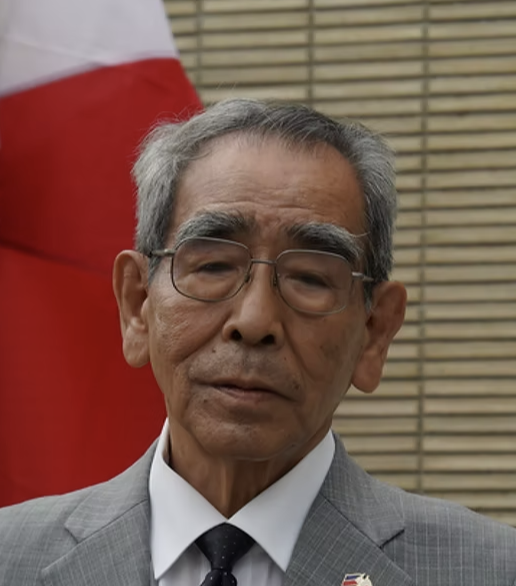
Pinoy-Hapon United Foundation (PHUF), a non-profit organization, Honorary Chairman Takeshi Asanuma
From early 1943 until January 1945, the “Naval Air Corps base, Mabalacat West Airfield” stood here. It lies just southwest of today’s “Clark Special Economic Zone (airfield).”
On October 25, 1944, the “Naval Special Attack Corps, Unit No. 1, the Shikishima Unit, five Zero fighters under the command of Lieutenant Seki Yukio” took off from here, and you are all aware that they achieved results. That was 82 years ago.
I first visited this country in 1982, during the time of the “late President Marcos.” At the time, I was asked by a “certain general trading company” that was already expanding its business widely here to carry out a confidential survey; I stayed for two weeks and submitted a report.
At the client’s request, I did not make contact with the “Embassy of Japan in the Philippines” or the “Japanese Association of Manila,” but I came to have some connection with “Japanese-affiliated travel agencies” and “Filipino society,” and requests for Philippines-related work also came in from Japan, and so my association with this country began.
I had more opportunities to visit, mainly at the request of the “tourism industry” and the “hotel industry,” but at the time I was also under contract for advisory work on business development — “fashion-related” business in “France,” and a plan to open “a medical facility for Japanese residents” in “Britain” — so I also had business trips to Europe, and could not stay in this country for long.
In 1999, once my work in “Europe” had settled down, I obtained a “permanent residence visa” for this country and settled in Manila. That same year I first paid my respects at the “Special Attack Corps memorial” at the “site of Mabalacat West Airfield.”
This “memorial” is a magnificent “reinforced-concrete” structure, built at personal expense in 1974 on the “site of the runway from which the Special Attack Corps sortied” by “Mr. Daniel Dizon,” a “painter and sculptor” who lived nearby and who, as a boy, had come into contact with the brave “special attack” airmen.
While I was paying my respects with a friend who had come along, an old man who looked to be over 60 appeared and said: “I live nearby. When I was a small child, Japanese pilots played with me and gave me sweets, but at that time I did not understand what these people were doing. Later, when I was grown, I asked an elder of the town who had erected this memorial what the ‘special attack corps’ had been, and I was asked to look after the memorial; even now I sometimes cut the weeds and clean the surroundings.”
I handed him a modest offering, thanked him politely, and asked him to keep taking care of the “memorial,” as I would come to pay my respects again.
Later, from 2010 to 2017, I was engaged under contract by a German-owned “aircraft manufacturing and maintenance company” within the “Clark Special Economic Zone,” which meant visiting “Clark” once every two or three months, and I sometimes paid my respects at the “memorial.” I also sometimes guided Japanese clients who came from Tokyo or Manila for business meetings to pay their respects there.
The “pandemic” kept me away for a time, but on October 25, 2023, a “grave-visiting group” of about 30 people, arranged by “Sankei Travel,” came to the Philippines, and a solemn “memorial service” was held with the backing of officials from the local government, the Air Force, the Japanese Embassy, and others; I too took part, together with three executives of the “Philippine-Japan United Foundation,” which I run, and offered flowers.
Twenty-seven years have already passed since I first paid my respects at “Mabalacat.”
At the “memorial” at the “site of the West Airfield,” the “souls of the honored dead” who gave their lives in the nation’s time of crisis rest quietly. May they rest in peace.