
Philippines-based operators who illegally solicited Japanese investors to purchase foreign bonds without registering with Japan’s Financial Services Agency have been targeted in an investigation by a joint task force led by the Metropolitan Police Department’s Livelihood and Economic Affairs Division, which has been pursuing key figures behind a massive cross-border financial scandal.
A total of nine men and women have been arrested and charged in the case so far (some reports and the ongoing investigation have cited varying breakdowns, including seven or nine suspects). Damages are believed to exceed ¥17 billion, or roughly ¥46 billion when affiliated companies are included.
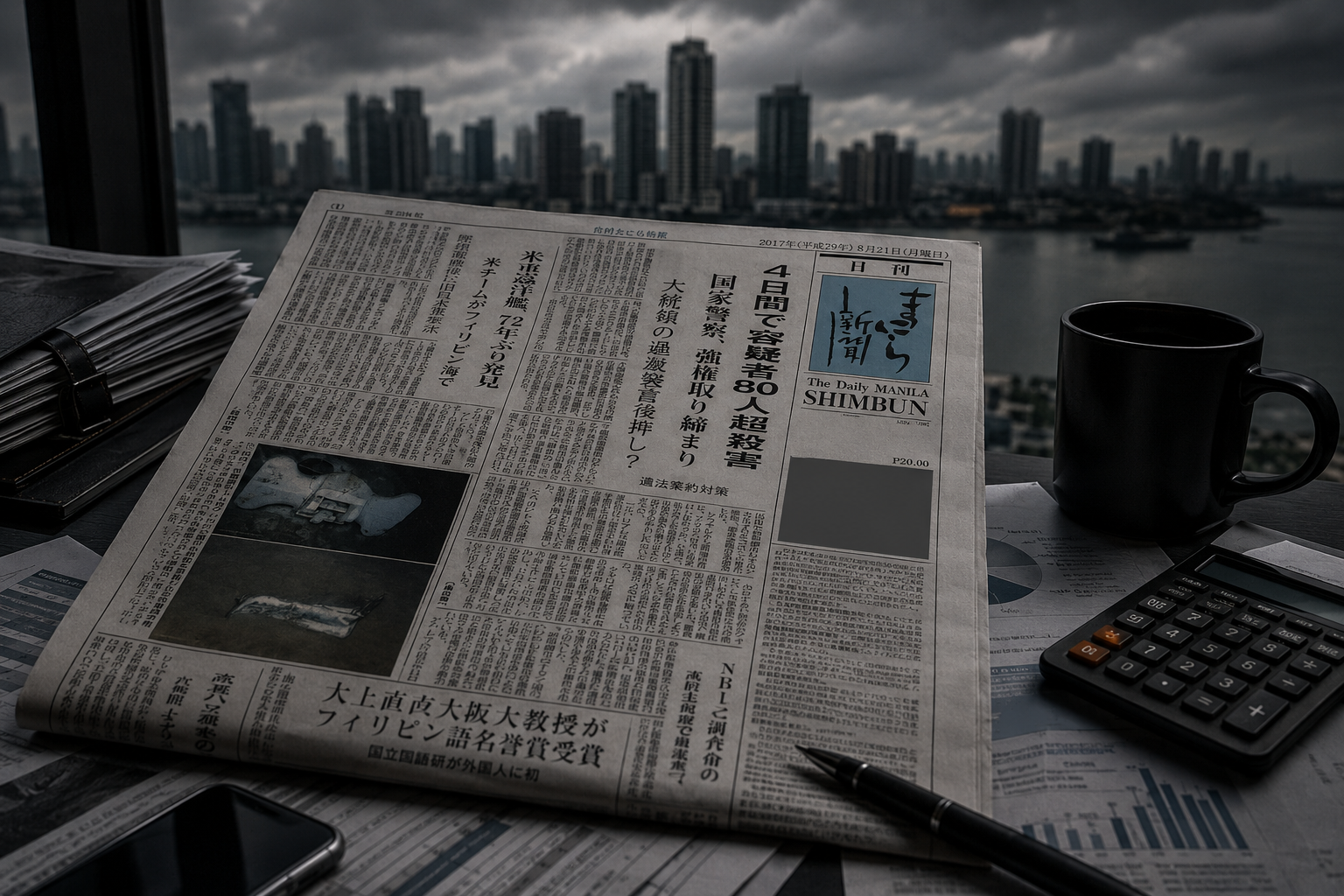
The case also sent shockwaves through the Japanese community and media in the Philippines, in particular through its strange entanglement with the once-prominent Japanese-language newspaper Nikkan Manila Shimbun.
1. Overview of the Case
At the center of the case is a Philippines-based overseas entity called S Division Holdings (SDH).
- Method: SDH aggressively solicited Japanese investors to purchase high-yield foreign bonds advertised with returns of “24% annually” and similar figures. However, it never filed the notifications or registrations with Japan’s regional Finance Bureaus required under the Financial Instruments and Exchange Act.
- Sophisticated recruitment tactics: The group held money seminars and schools in Tokyo, Osaka, Nagoya, Fukuoka, and elsewhere, inviting guests such as former National Tax Agency officials to lend an air of credibility, and skillfully targeted women raising children and novice investors known as “freeters” to gather funds.
- Scale of funds: From around 2016 to 2024, the group is estimated to have illegally collected close to ¥46 billion from more than 5,500 people in total.
2. Key Individuals Arrested
The investigation has led to the arrest of the group’s de facto executives and the heads of its brokerage and agency networks on suspicion of violating the Financial Instruments and Exchange Act.
- Hajime Sumi, 45: The de facto head of SDH, based in the Philippines.
- Aoi Ikeda, 38: A former president of SDH.
- Toyomi Hashimoto, 44: The de facto head of “Dzero,” an agency that brokered the financial products; she solicited housewives at seminars.
- Takahiro Imai (real name: Jeong Seung-ho), 42: Head of “Zero Management.”
- Nine people in total, including other accomplices involved in the illegal solicitation and fundraising, have been targeted in the crackdown.
3. Scale of the Damages
- Period and amount covered by the charges: Direct funds collected in the case, in which bonds were solicited without registration from around June 2021 to February 2023, alone amount to roughly ¥17 billion.
- Broader scope and total amount: The total funds the group is believed to have collected overall, including at its peak, reach an estimated ¥46 billion — among the largest overseas-based unregistered bond schemes in recent years. Many victims have been left with no recourse, reporting that “payments suddenly stopped” or that they “lost all contact” with the operators.
4. The Complex Ties to the Nikkan Manila Shimbun
One reason the case sent such shockwaves through the Japanese communities in Japan and the Philippines was its connection to the Nikkan Manila Shimbun, a newspaper long cherished by the local community.
- Acquisition and financial trouble: The Nikkan Manila Shimbun, the Philippines’ only long-established Japanese-language newspaper, was going through financial difficulties around the time reports emerged of capital and management ties between the paper and organizations connected to this case.
- The end of an era for the paper: Despite its reputation for trust and tradition, the shadow cast by this murky flow of funds and the ensuing troubles thoroughly destabilized the paper’s finances, becoming one of the underlying factors that ultimately led it to end its history as a print publication (suspending, and later ceasing, publication).
- The paper’s own position: After the case came to light, voices from local media and other parties argued that “the illegal fundraising scheme itself should be viewed separately from the Manila Shimbun’s legitimate work as a news organization” — a painful episode that has come to symbolize both the light and shadow of the Japanese community abroad.
Summary
This is a textbook case of a high-yield, unregistered bond fraud scheme that presumed — mistakenly — that basing itself overseas, in the Philippines, would keep it beyond the reach of Japanese law enforcement. Although Japan’s Financial Services Agency and police have advanced the crackdown, recovering the enormous sums that flowed out of the country remains an uphill battle, and the case has once again driven home for investors the risks lurking behind sweet-sounding promises.

コメント