

MANILA NEWS DAILY
Takeshi Asanuma’s Philippine Column (34) Manila, the Pearl of the Orient (Part 2)
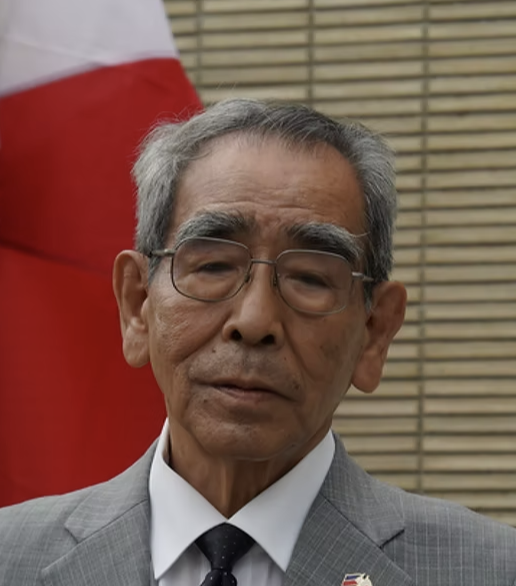
Pinoy-Hapon United Foundation (PHUF), a non-profit organization, Honorary Chairman Takeshi Asanuma
<The previous installment (33) was an unfinished manuscript. The completed version is here, but because there are many changes, we have left the published (33) as it is and made this (34), Part 2. Editor>
In the 1940s, “Manila” was a beautiful city known as the “Pearl of the Orient.” The sheltered inner reaches of Manila Bay, where the “Pasig River” flows in, formed a quiet delta and a natural “harbor.”
During the Age of Discovery, “Spain” regarded the “East Indies and Luzon region” as a relay point across the Pacific linked to the “Central and South American regions” under its rule, and sought to govern it directly.
In the mid-1500s, the King of Spain dispatched his subject “Miguel Legazpi” to the “East Indies and Luzon area” to bring this land under control and colonize it.
He advanced to “Luzon Island” and, from 1571 onward, built “Intramuros” (a walled stone fortress district) from which “Spanish rule” over “all of Luzon,” with “Manila” as its capital, was carried out, and established the powerful military stronghold of “Fort Santiago.”
This land came to be called the “Spanish East Indies” or the “Philippine Islands.” The Philippines was governed through the Viceroyalty of New Spain in Mexico City until 1821, and thereafter directly by the central Spanish government in Madrid.
He pursued a “policy of evangelization and conversion,” teaching the local inhabitants the “Catholic faith” and that “loyalty to God is loyalty to the Spanish Crown,” erecting fine “places of worship” in every corner of the country, and succeeded in converting more than 90 percent of the inhabitants to “Christianity.” Even today, the “Republic of the Philippines” is the largest “Catholic nation” in Asia.
In 1898, the “Spanish-American War” broke out in “Cuba.” The “United States” won, and as a result the “United States” purchased the “right to administer this land as a colony.” In 1899, the “War of Independence (Philippine-American War)” led by “President Aguinaldo (of the Malolos Republic)” began. It is said that 300,000 to 400,000 local people lost their lives, but in April 1901 “President Aguinaldo” surrendered to the U.S. forces, and in 1902 “American colonial rule” was established.
”Spanish rule,” which had lasted nearly 300 years, had become a “system” in its own right. The “United States” inherited it, did not hurry to impose American-style rationalism, gradually advanced “political reforms,” and left in place the “privileges and landholdings” of the “mestizos (a small mixed-blood ruling class).”
As “Spanish rule” continued for centuries, a consciousness spread even among the “mestizos,” who carried “Spanish” “blood,” that “this is not ‘Spain’; this is our ‘country.'” A sense that “this is our own country” also began to emerge among the “Malays and other common people,” who had never been granted “rights,” and under “American rule” these feelings slowly spread. This was the wellspring of “independence.”
”Manila,” richly influenced by the “Southern European culture” of the Spaniards, became a beautiful “capital.” The government quarter of “Intramuros,” lined with majestic stone buildings in the “neoclassical style” adorned with “white round columns,” was the center of “colonial administration.” The “Supreme Court” and the “National Assembly building” also stood serenely, a scene reminiscent of ancient “Rome.”
Adjoining it was the “city district,” where reinforced-concrete buildings stood in rows and “streetcars” and “public buses” ran along paved roads. Passersby were fond of the “kalesa (small horse-drawn carriage)”; “gentlemen” wore “white linen suits” and “boater hats,” while ladies strolled in stylish dresses with slightly squared shoulders, holding parasols. The bridges spanning the “Pasig River” were elegantly decorated. The cries of street vendors gave the city its color.
The broad seaside avenue later known as “Roxas Boulevard” was paved and ran wide and straight from in front of “Fort Santiago” to the west side of what later became “Manila Airport.”
The old city of “Manila” was called the “Pearl of the Orient,” but as noted earlier, it was utterly “destroyed” in the “Battle of Manila” in February 1945.
Praying at Muntinlupa: With the Death-Row War Criminals in the Philippines (7)
Chaplain Kagao Shunin
My vision went black, as if I had been struck by lightning.
Ah — again and again I had pinned my hopes on a retrial, had clung to hopes of petitions for clemency, and had done nothing but pray and pray, yet it had all been in vain.
At this late hour, what good would it do to plead for their lives?
“Just a moment, the papers—” I hurriedly asked to see the Warden’s documents, and there, lined up in a row, were the names of Mr. Mihara Kikuichi, and then those connected with the troublesome Nakamura case, Mr. Nakamura Shuichi and the others, thirteen names in all.
A truly astonishing number.
Bringing my swimming eyes close to the papers, I counted them one by one, name by name: there were eight Buddhists, and the remaining six were Christian believers.
“My group is eight—”
I told Dr. Nelson.
The doctor nodded in silence.
Then the Warden said,
“Please get ready as quickly as you can.”
With an irritated look, as if issuing an order, he hurried me along.
I rushed back to my room.
Struck by a truly abrupt storm, as if blown away by a gust of wind, I was so violently shocked that my heart and my legs faltered.
That ominous dream of mine — looking back now, it had not been a phantom that simply faded away!
It had been a true dream. The mystery of the universe, riding on a dream, had told me of the ominous cloud enveloping Muntinlupa.
On that merry day at the end of the year — who could have imagined that, a little over ten days later, I would be seized all of a sudden by the black demon of death?
And yet the karma of vengeance and retribution, rooted since the creation of humankind in the principle of “an eye for an eye, a tooth for a tooth,” must have been waging a fierce battle, against the sword-sharp words of Christ, who taught us to pray for our enemies, in the hearts of the Philippine leaders seated in Malacañang Palace.
And then, for reasons unknown, the execution order must have been suddenly signed.
The circumstances have never been made public, and even now no one can know the secret. Probably never.
Though it is said that no one can escape death, a harrowing night had thus come, on which fourteen men in the full vigor of life were to be thrown into the hellfire of death by fellow human beings.