

MANILA NEWS DAILY
That War and Me (24) Lieutenant General Masaharu Homma
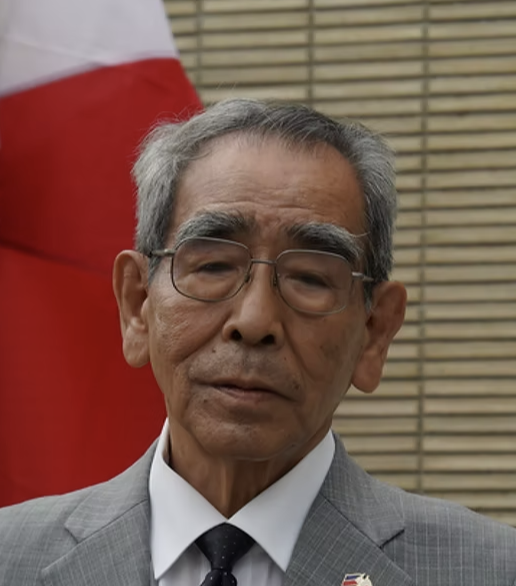
Pinoy-Hapon United Foundation (PHUF), a non-profit organization, Honorary Chairman Takeshi Asanuma
”Lieutenant General Masaharu Homma,” commander of the “14th Army,” who on December 22, 1941 landed against opposition in the northwest of the American-held “island of Luzon (present-day Republic of the Philippines)” and swept south to take the whole island, was a “gentleman” who in his younger years had spent a total of eight years in London as a resident military attaché and had also traveled through the countries of Europe.
On January 2, 1942, “Lieutenant General Homma” made a “bloodless entry” into “Manila,” which “General MacArthur” had declared an “open city,” gathered about 800 officers, and ordered them: “Do not take things from the local people, and treat everyone with courtesy.”
”General MacArthur” held out in the “Bataan mountains” west of Manila and on the “fortress island of Corregidor” in the bay, but under fierce Japanese attack he fled to Australia in March; on April 9 the “American forces” in the Bataan mountains surrendered, and in early May the “Corregidor fortress” also fell. It was around this time that the notorious “Bataan Death March” took place.
”Lieutenant General Homma” took responsibility for the delay in the “capture of Luzon,” was relieved of command, returned to Japan, and was placed on the reserve list, but he seems to have known nothing at all of how the “Death March” had unfolded.
The number of prisoners who surrendered there totaled 75,000 (the Japanese side had estimated 25,000), far too many; moreover, after more than four months of fierce fighting there were many wounded and sick, and there was no place nearby that could hold that many people, so it was decided to move them to the camp at “Capas” in Tarlac Province, about 120 kilometers to the north. Midsummer in this region falls in April and May, and daytime temperatures climb to nearly 40°C.
Walking in the heat of the day was avoided, and the schedule was in the early morning and evening, about 15 to 18 kilometers a day. The Japanese soldiers guarding them carried 40 kilos of heavy equipment while the prisoners went empty-handed, yet the prisoners still collapsed one after another along the way.
The last 40 kilometers or so were covered in sealed freight cars. About 55,000 prisoners reached the camp at “Capas,” and many more died even after arrival. This is the “Bataan Death March” that became famous worldwide. After the war, the American forces reported it on a large scale as a “mass massacre of prisoners.”
On August 15, 1945, the “Empire of Japan” surrendered and was placed under Allied occupation; the “International Military Tribunal for the Far East” was established in Tokyo, and in Manila too a “military tribunal” run mainly by the American forces was convened.
At the “trials,” the fact of “mistreatment of prisoners” came to light. Staff officer Masanobu Tsuji of “Imperial General Headquarters” had conveyed to some “field commanders,” without going through the “14th Army headquarters,” a “false order” that “defiant local soldiers and wounded men unable to move may be disposed of,” and several field commanders shot “local soldiers” dead. It was indeed a “massacre of prisoners.” The American side announced several hundred victims.
Because “Lieutenant General Homma” had been the Japanese commander-in-chief at the time of the “Bataan incident,” he was taken into custody by GHQ and sent to the military tribunal in Manila, where he became a defendant on suspicion of “mistreatment and command responsibility for prisoners.”
The Lieutenant General’s wife, “Mrs. Fujiko,” visited “Supreme Commander MacArthur” at GHQ and asked: “I have not come to beg for my husband’s life. I would like to be allowed to testify for him in the court in Manila.” The Supreme Commander granted this. In the Manila court she testified: “He is a true man. I too have a daughter, and if I were to give her in marriage, I would choose a person of character like him.”
Even so, the verdict was “death.” The sentence was carried out on April 3, 1946. Lieutenant General Homma said: “I am not a criminal. I am a soldier. If the post of commander-in-chief is guilty, I will abide by that. However, I ask that I be allowed to wear the uniform of an Army lieutenant general and be shot by firing squad.” The presiding judge approved this. The Lieutenant General straightened himself in his uniform, bowed reverently toward the east, and stood quietly before the guns, preserving the honor of “His Majesty’s general.”
”General Tomoyuki Yamashita” and all the other condemned men wore work clothes and were hanged. Staff officer Tsuji Masanobu fled “when the Japanese forces surrendered” and hid somewhere in Southeast Asia.