
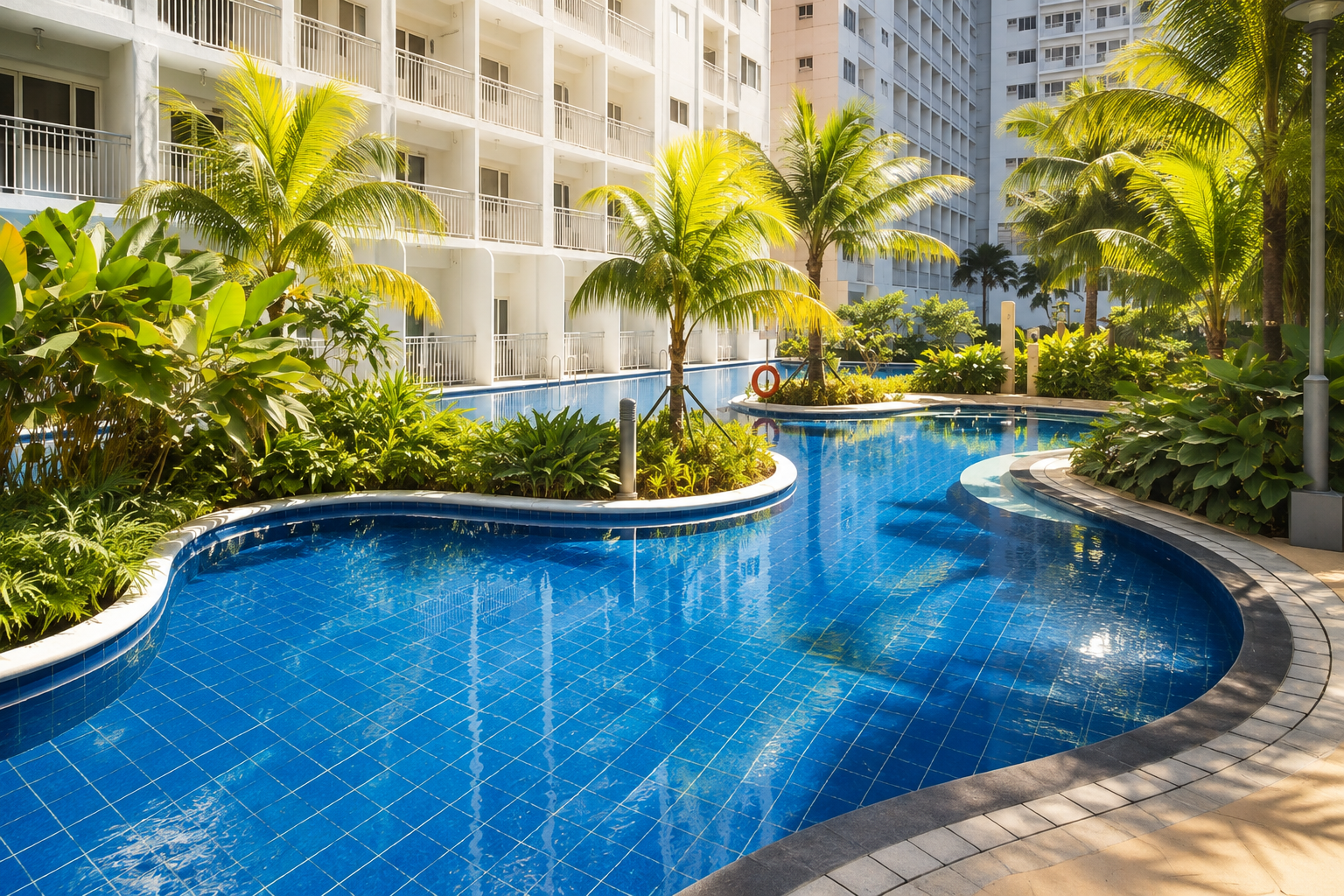
- The exit of POGOs (Philippine Offshore Gaming Operators): The Chinese-oriented POGO operators that once powerfully drove demand for Bay Area condominiums withdrew one after another amid tighter government regulation and a policy shift. This caused rental demand to collapse, and a large number of units that had been purchased for investment purposes were suddenly left vacant or put up for sale all at once.
- A construction boom mismatched with demand: Developers built an oversupply of high-rise condominiums before and during the pandemic, but subsequent interest rate hikes, an economic slowdown, and shifting buyer preferences (a growing tendency to favor larger houses in the suburbs, for example) combined to leave developers unable to absorb the resulting inventory.
- A massive glut of unsold units: Tens of thousands of unsold, ready-for-occupancy (RFO) units exist across Metro Manila as a whole, and the Bay Area is one of the areas where this oversupply is especially concentrated.
2. Just How Steep Are the Discounts and Incentives?
According to real estate experts and observers of local market trends, developers have avoided sharply crashing listed prices outright, but are competing to offer substantial effective discounts and extraordinary promotions that favor buyers. Specific examples include the following.
- Steep cash promotions (discounts): Depending on the property and purchase terms, cash discounts of 15% to 30%, and in extreme cases as much as 50%, off the list price have been offered.
- Dramatically eased down-payment and payment terms: The normally strict payment terms for pre-selling (units sold before or during construction) have been significantly relaxed — with lower initial down payments, interest-free installment plans, or longer-than-usual payment schedules (spread over several years, for example).
- “Fully furnished” units and waived fees: Developers eager to move inventory quickly commonly furnish units from the outset with air conditioners, refrigerators, beds, and other furniture and appliances (fully furnished), or waive or absorb various fees normally borne by the buyer, such as registration and transfer taxes.
- Use of rent-to-own arrangements: Sales structures that minimize buyer risk are also becoming common — such as living in (or paying rent on) a unit first, with that amount later applied toward the eventual purchase price.
Summary
The reason the discounts are described as “severe” is that sellers, cornered by the exodus of POGOs and cooling demand after prices had been inflated beyond fair value during the boom years, now find themselves forced into indiscriminate discounting simply to recover their capital.
While this represents a fully buyer’s market that gives prospective purchasers considerable negotiating leverage, analysts familiar with the local market warn that, because future appreciation and a recovery in rental yields remain difficult to foresee, buying in too readily carries the risk of ending up with an asset that is difficult to resell — a potential trap for the unwary.

コメント